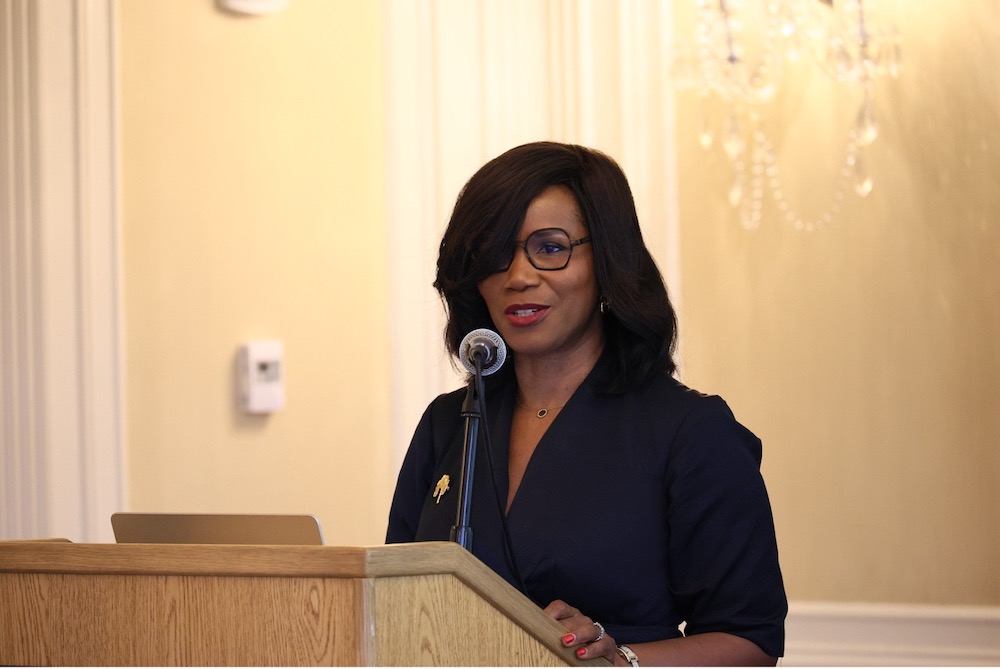
Powering Progress 24/7: Finance as a Force for Good
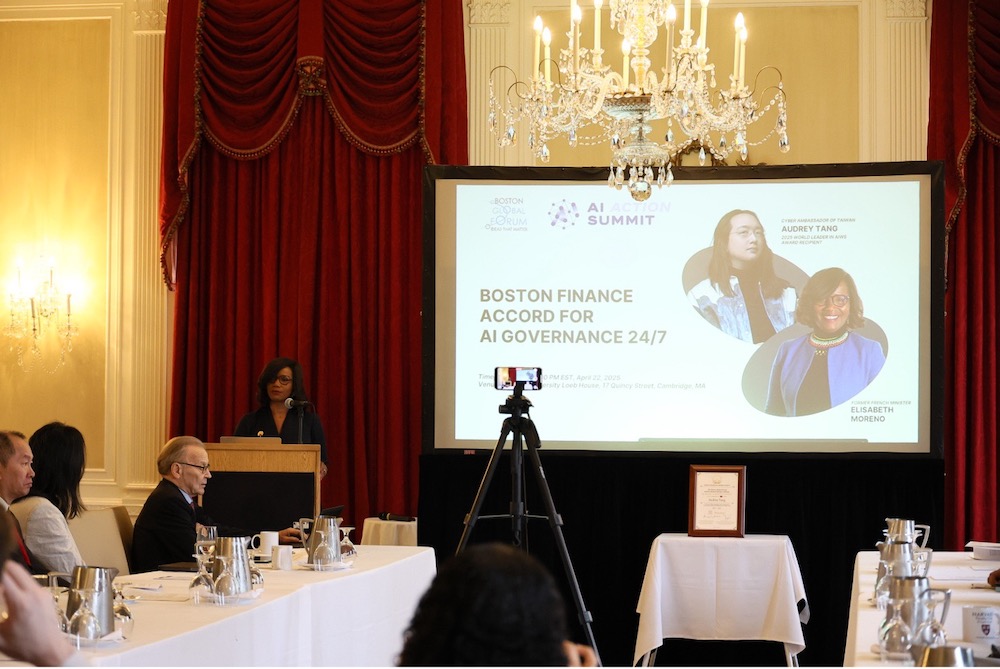
Distinguished Address by Élisabeth Moreno, Former French Minister
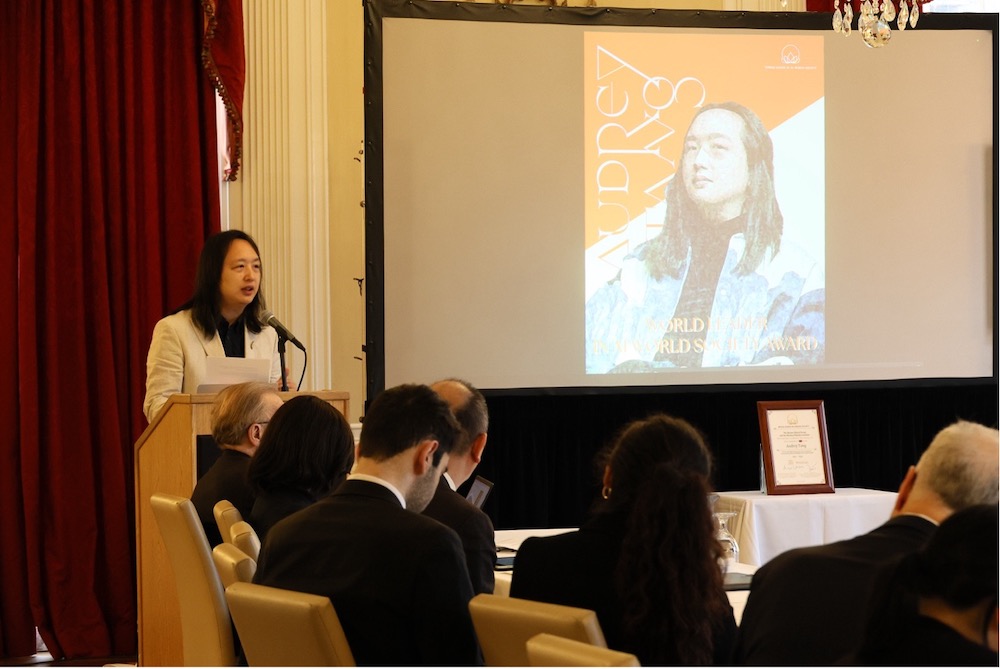
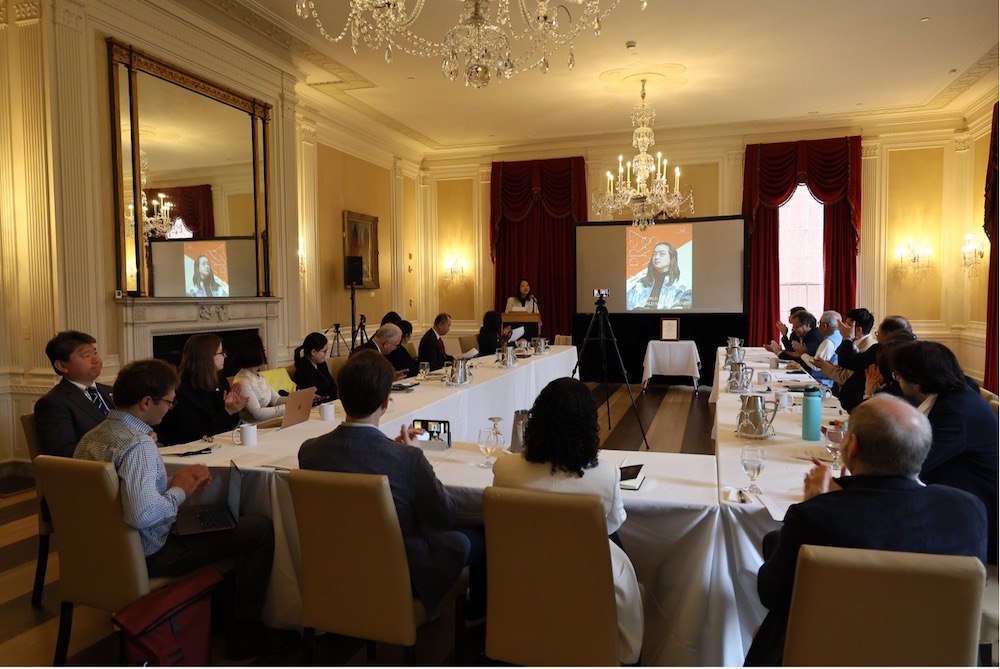
At the Boston Global Forum Conference: Boston Finance Accord for AI Governance 24/7
Harvard University, Loeb House – 17 Quincy Street, Cambridge, MA
April 22, 2025 | 8:00 AM – 11:30 AM EDT
Ladies and gentlemen,
Distinguished professors,
Leaders of today and tomorrow,
Standing here, at Harvard — one of the greatest temples of knowledge — is not just an honor. It’s a testament to a simple truth: when you believe that borders, obstacles, and expectations are not walls but starting lines, you can go further than you ever imagined.
I would like to thank Tuan for his invitation to join the Boston Global Forum, a space where leaders, thinkers, and dreamers come together to reimagine the world we want to live in.
Being part of this community reminds me every day: we may be idealists, but our mission is not to predict the future — it is to build it.
Today, my speech is not meant to inspire you. It is meant to mobilize you.
Because what I will share is not a dream. It is a reality within our reach — if, and only if, we choose to act as the leaders we claim to be.
We are not here to predict the future.
We are here to build it — with boldness, ethics, and unity.
And together, we are already laying the foundations of a more ethical and sustainable financial system:
- With the launch of the Boston Ethics Finance Protocol (ABEHP), we are setting a global standard to prevent ethical arbitrage and restore trust in finance. By 2028, we aim for 90% bias-free AI decisions, 100% blockchain transparency, and 20% inclusion of underserved populations.
- Through the AIWS Finance Labs in Boston, Tokyo, and Nha Trang, we are funding 1,000 startups — 50% women- or minority-led — and investing in breakthrough innovations like Senegal’s solar initiatives. Technologies such as photonic computing will help cut AI’s energy consumption by 30% by 2027, aligning with our 2030 carbon-neutral ambition.
- We are securing the future: with 50 cybersecurity hubs, modeled on Japan’s cyber defense expertise, aiming for 99.9% threat detection by 2028, to protect our financial ecosystems.
- And because values need champions, starting in 2025, the AIWS Ethical Finance Leadership Award will recognize firms and individuals who embody transparency, fairness, and public service — proving, as Ring Capital demonstrates, that profitability and integrity are not contradictions, but powerful allies.
This is not wishful thinking.
It is leadership in action.
And it starts with us. Today.
These initiatives show one thing clearly:
When we unite ethics and innovation, when we invest in inclusion and security, when we reward integrity — we do more than transform finance.
We rebuild trust.
We reshape the future.
But none of this happens by itself.
It happens because leaders — real leaders — choose action over intention.
So my question to each of us today is simple:
What will you choose to build?”
⸻
From the dusty streets of Cape Verde to the vibrant debates of the Boston Global Forum, from construction sites to corporate boardrooms, from entrepreneurship to government — every step was a leap of faith. And today, I am here to tell you:
The size of our dreams matters more than the size of our starting point.
I was born in a country poor in economic resources.
I grew up in a country rich in economic opportunities.
And across four continents, I have witnessed a simple, universal truth:
Access to finance changes destinies.
Investing shouldn’t be about gambling on the future.
It should be about planting seeds of hope.
It should be about cultivating dignity.
It should be about building possibilities for everyone.
Finance shouldn’t be an abstract game reserved for a privileged few.
It is a silent force that either irrigates life — or dries it out.
It either liberates — or suffocates.
And today, in a world fractured by inequalities, climate crises, and technological disruptions, we can no longer afford neutrality.
As Albert Camus wisely wrote: True generosity towards the future lies in giving all to the present. And considering the state of the present it’s becoming urgent to give.
to give our energy, our intelligence, and our courage, to restore finance to its original purpose:
not as a master of society, but as a servant of the common good.
Where do we stand today?
Some pretend that 99% of global wealth is owned by just 1% of the population.
It is not just a perception — it is a reality.
According to Oxfam’s 2024 report,
The richest 1% captured nearly 2/3rds of all new wealth created globally between 2020 and 2022. Almost twice as much as the bottom 99% of humanity combined. In other words:
A system designed to maximize financial returns without accountability naturally concentrates wealth, power, and opportunity — and leaves billions behind.
Finance, when left unguided, does not naturally lift all boats.
It widens the gaps.
It accelerates exclusion.
It deepens instability.
This is not an unfortunate side effect.
It is the predictable result of an economic model that has prioritized short-term gains over long-term value.
If we do not radically rethink how capital is deployed, we are not just risking financial crises.
We are undermining the very foundations of democracy, social cohesion, and planetary survival.
And to make things worse:
Even what we call “sustainable finance” is too often little more than a green façade.
Billions are poured into “green” funds that invest in luxury real estate, energy-hungry data centers, or speculative carbon credit schemes that fail to create real change.
Meanwhile, sectors essential to humanity’s future – regenerative agriculture, affordable housing, renewable energy for underserved communities – remain drastically underfunded.
We live in a paradox:
We have the financial means.
We have the solutions.
We still lack the moral compass.
Because investing without impact is like sailing without a compass: sooner or later, we crash.
*************************
Why is it becoming urgent to Act Now?
Some still argue, “Change is too expensive.”
I say, “Have you measured the cost of inaction?”
The IPCC reminds us: every dollar not invested today in climate action will cost between 5 and 10 dollars in damages within the next 30 years…..
Delaying is not neutral.
It is mortgaging our economies, our ecosystems, and our democracies.
Because climate collapse fuels social instability, and social instability erodes political systems.
Everything is interconnected.
Everything is already in motion.
And everything can still change — if we act.
*********************************
What economic model do we need? Can we use finance as Catalyst?
Today, two types of finance are emerging:
- Finance that perpetuates speculation, extraction, and exclusion.
- And finance that nurtures innovation, resilience, and inclusion.
The first promises quick returns — but sacrifices our collective future.
The second builds foundations for a regenerative, inclusive economy.
The good news?
Examples of the second path already exist.
Funds like Ring Capital invest in technologies that reduce carbon emissions, promote digital equity, and foster social inclusion.
The Rise Fund, by TPG, demonstrates that strict financial discipline and measurable social impact can — and must — go hand in hand.
In Africa, Novastar Ventures backs companies delivering clean energy, education, and healthcare to underserved communities, creating both value and dignity.
These are not isolated cases.
They are the blueprint for finance that works.
Because a return that ignores humanity and the planet is a return with no future.
Innovative Ideas exist and they are inspired by the Nobel Prize in Economics Esther Duflo and a former World Bank leader Bertrand Badré:
It’s not enough to move capital.
We must move it smarter because “Grand theories rarely change lives. Precise, practical interventions do.
A system designed to maximize financial returns without accountability naturally concentrates wealth, power, and opportunity — and leaves billions behind.
Finance, when left unguided, does not naturally lift all boats.
It widens the gaps.
It accelerates exclusion.
It deepens instability.
This is not an unfortunate side effect.
It is the predictable result of an economic model that has prioritized short-term gains over long-term value.
If we do not radically rethink how capital is deployed, we are not just risking financial crises.
We are undermining the very foundations of democracy, social cohesion, and planetary survival.
Finance must become an economy of evidence -where success is measured not by financial growth alone, but by the number of lives improved, ecosystems restored, futures secured.
We must finance real-world solutions — one solar panel, one regenerative farm, one accessible school at a time.
We must rebuild finance as a common good — as essential to human survival as education, healthcare, or clean air.
It’s time to shift from finance as a privilege to finance as a responsibility.
**********************************
What are the concrete actions to Power Progress?
If we truly want to power progress 24/7, we must not only shift mindsets — we must shift frameworks.
Here are three bold but achievable actions for legal and financial decision-makers:
- Make Impact Measurement Mandatory
Require all investment funds labeled “sustainable” to provide audited, transparent impact reports.
No proof, no claim.
True Impact will be trust, transparency, real change.
- Link Public Funding to Demonstrable Impact
We could tie every public dollar — from development banks, sovereign funds, investment guarantees — to measurable social and environmental outcomes.
True Impact will be public money serving the public good.
- Create an “Impact Stock Exchange”
We could launch a global market for companies legally committed to long-term social and environmental missions.
The Impact would be rewiring financial markets for resilience, not just short-term profits.
I am a dreamer but these ideas are not utopias.
They are leadership decisions waiting to be made.
And meanwhile, I would also harness Technology for good!
Because we have a potential powerful new ally:
Artificial Intelligence.
AI is not a magic wand.
It is a mirror — amplifying who we are, what we do and what we value.
If we guide AI with the right ethical compass,
it can accelerate finance for good:
- Detecting greenwashing, exposing false claims automatically.
- Predicting social and environmental risks, enabling smarter, earlier investments.
- Expanding access to credit and investment, bypassing traditional biases.
If we teach AI to measure not just profit, but human and planetary value, then finance will become not only smarter — but more just, more sustainable, more human.
The real challenge is not AI.
The real challenge is the vision, courage, and responsibility of those who design and govern it.
***************************
My final call for a collective mobilization – It’s time to choose Courage over Comfort!
We no longer have the luxury of polite concern.
We have the means.
We have the knowledge.
We have the technologies.
What we lack is not capacity.
What we lack is courage.
As Mariana Mazzucato reminds us: “We must move from an economy optimizing short term returns to one optimizing collective value “
We must dare to finance what truly matters.
We must dare to lead with conscience.
******************************
Conclusion
Progress will not happen by accident.
It will not happen by inertia.
It will happen because we choose to make it happen.
Changing finance means changing the world — nothing less.
We can choose to remain spectators — safe but irrelevant.
Or we can become actors — bold, uncomfortable, but alive with purpose.
Today, here at Harvard,
I choose to be an actor of change.
And you?
As Nelson Mandela once said: It always seems impossible until it’s done.
Let’s make it possible.
Let’s power progress.
Let’s serve life.
Together. 24 hours a day. 7 days a week. For good.
Thank you.