by Admin | Jun 16, 2019
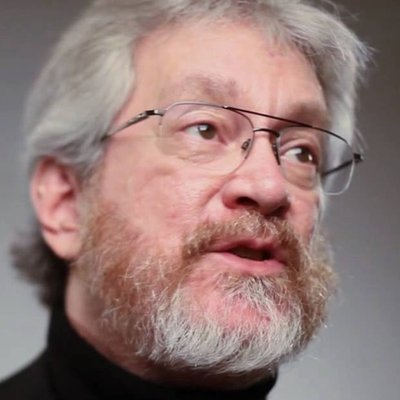
Professor Alex ‘Sandy’ Pentland directs the MIT Connection Science and Human Dynamics labs and previously helped create and direct the MIT Media Lab and the Media Lab Asia in India. He is one of the most-cited scientists in the world, and Forbes recently declared him one of the “7 most powerful data scientists in the world” along with Google founders and the Chief Technical Officer of the United States. co-led the World Economic Forum discussion in Davos that led to the EU privacy regulation GDPR, and was central in forging the transparency and accountability mechanisms in the UN’s Sustainable Development Goals. He has received numerous awards and prizes such as the McKinsey Award from Harvard Business Review, the 40th Anniversary of the Internet from DARPA, and the Brandeis Award for work in privacy.
He is a founding member of advisory boards for Google, AT&T, Nissan, and the UN Secretary General, a serial entrepreneur who has co-founded more than a dozen companies including social enterprises such as the Data Transparency Lab and the Harvard-ODI-MIT DataPop Alliance . He is a member of the U.S. National Academy of Engineering and leader within the World Economic Forum.
Over the years Sandy has advised more than 60 PhD students. Almost half are now tenured faculty at leading institutions, with another one-quarter leading industry research groups and a final quarter founders of their own companies. Together Sandy and his students have pioneered computational social science, organizational engineering, wearable computing (Google Glass), image understanding, and modern biometrics. His most recent books are Social Physics, published by Penguin Press, and Honest Signals, published by MIT Press.
Interesting experiences include dining with British Royalty and the President of India, staging fashion shows in Paris, Tokyo, and New York, and developing a method for counting beavers from space.

by Admin | Jun 16, 2019
Nazli Choucri is Cyber-politics Director of The Michael Dukakis Institute for Leadership and Innovation and Professor of Political Science. Her work is in the area of international relations, most notably on sources and consequences of international conflict and violence. Professor Choucri is the architect and Director of the Global System for Sustainable Development (GSSD), a multi-lingual web-based knowledge networking system focusing on the multi-dimensionality of sustainability. As Principal Investigator of an MIT-Harvard multi-year project on Explorations in Cyber International Relations, she directed a multi-disciplinary and multi-method research initiative. She is Editor of the MIT Press Series on Global Environmental Accord and, formerly, General Editor of the International Political Science Review. She also previously served as the Associate Director of MIT’s Technology and Development Program.
The author of eleven books and over 120 articles, Dr. Choucri is a member of the European Academy of Sciences. She has been involved in research or advisory work for national and international agencies, and for a number of countries, notably Algeria, Canada, Colombia, Egypt, France, Germany, Greece, Honduras, Japan, Kuwait, Mexico, Pakistan, Qatar, Sudan, Switzerland, Syria, Tunisia, Turkey, United Arab Emirates and Yemen. She served two terms as President of the Scientific Advisory Committee of UNESCO’s Management of Social Transformation (MOST) Program.

by Admin | Jun 16, 2019
Dr. David Silbersweig is a neurologist and psychiatrist, having trained in both psychiatry and neurology at The New York Presbyterian Hospital-Weill Cornell Medical Center Dr. He is now the Chairman of the Department of Psychiatry at the Brigham and Women’s/Faulkner Hospitals, and also Chairman of the Brigham and Women’s Hospital Institute for the Neurosciences. Dr. David Silberswei is Stanley Cobb Professor of Psychiatry at Harvard Medical School.
David Silbersweig graduated from Dartmouth College and Cornell University Medical College. At Cornell University, Dr. Silbersweig found and direct the Functional Neuroimaging Laboratory with Dr. Emily Stern; he was the Tobin-Cooper Professor of Psychiatry, Professor of Neurology and Neurosciences, and was Vice Chairman, for Research, in the Department of Psychiatry. Dr. Silbersweig was the founding Director of the Division of Neuropsychiatry, as well as the founding Director of the Neurology-Psychiatry Combined Residency Program. He is one of the pioneers of functional neuroimaging research in psychiatry. Along with his colleagues, they developed novel methods and paradigms for both PET and MRI imaging that are widely used, and have identified neural circuitry abnormalities associated with a number of major psychiatric disorders.
by Admin | Jun 16, 2019
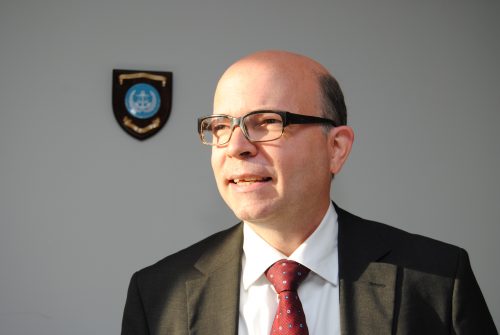
Paul F. Nemitz is the Principal Advisor in the Directorate General for Justice and Consumer.
He was appointed by the European Commission on 12. April 2017, following a 6-year appointment as Director for Fundamental Rights and Citizen’s Rights in the same Directorate General.
As Director, Nemitz led the reform of Data Protection legislation in the EU, the negotiations of the EU – US Privacy Shield and the negotiations with major US Internet Companies of the EU Code of Conduct against incitement to violence and hate speech on the Internet.
Before joining the Directorate General for Justice and Consumers, Nemitz held posts in the Legal Service of the European Commission, the Cabinet of the Commissioner for Development Cooperation and in the Directorates General for Trade, Transport and Maritime Affairs.
Nemitz has represented the European Commission in numerous cases before the European Court of Justice and has published widely on EU law.
He is a visiting Professor of Law at the College of Europe in Bruges; Member of the Board of the Verein Gegen Vergessen – Für Demokratie e.V., Berlin; Trustee of the Leo Baeck Institute, New York; Member of the Board of the Association for Accountability and Internet Democracy, AAID, Paris; Member of the Scientific Council of the Foundation for European Progressive Studies, Brussels. He is also a member of the Tönissteiner Kreis e.V., Berlin, the Commission for Media and Internet policy of the SPD, Berlin; the German Association for European Law and the Arbeitskreis Europäische Integration, Heidelberg.
Nemitz studied Law at Hamburg University. He passed the state examinations for the judiciary and for a short time was a teaching assistant for Constitutional Law and the Law of the Sea at Hamburg University.
He obtained a Master of Comparative Law from George Washington University Law School in Washington, D.C., where he was a Fulbright grantee. He also passed the first and second cycle of the Strasbourg Faculty for Comparative Law.
by Admin | Jun 1, 2019
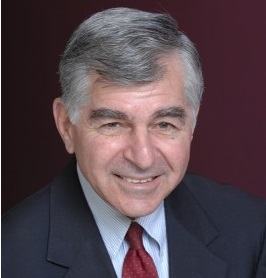
As Co-Founder and Chairman of The Board of Directors and Board of Thinker of The Boston Global Forum, Michael Stanley Dukakis culminates a half-century career dedicated to public service, political leadership, fostering the careers of young leaders, and scholarly achievement.
Together with Nguyen Anh Tuan, this former Massachusetts governor, has established The Boston Global Forum as a globally recognized think tank noted for developing peaceful solutions to some of the world’s most contentious issues, among them: fair labor practices in third-world nations, US-North Korean denuclearization negotiations, and the militarization of the South China Sea. Most recently, Gov. Dukakis has called for the ethical development and deployment of Artificial Intelligence, the Internet of Things and other 21st century Internet advances that permeate out daily lives.
To promote the work of the Boston Global Forum and to recognize those who support its goals, Gov. Dukakis co-created: “World Leader in Peace and Cybersecurity” Award; “World Leader in AI World Society” Award, and the AI World Society Initiative. Together with Nguyen Anh Tuan he also established December 12 as the annual Global Cybersecurity Day. Gov. Dukakis also coauthored, “The concepts of AI-Government,” “Ethics Code of Conduct for Cyber Peace and Security (ECCC),” and the “BGF-G7 Summit Initiative Report.”
Gov. Dukakis’s dedication to public service began modestly when he was elected Town Meeting Member in his native Brookline, Massachusetts, just outside Boston. He was later elected chairman of his town’s Democratic organization in 1960 and won a seat in the Massachusetts Legislature in 1962 where he served four terms as a state legislator. In 1970, he was the Massachusetts Democratic Party’s nominee for Lieutenant Governor and the running mate of Boston Mayor Kevin White in a gubernatorial race lost to Republicans Frank Sargent and Donald Dwight, Jr.
In 1974, he again ran for governor of the Commonwealth beating Gov. Sargent decisively in November of that year. He inherited a record deficit and record high unemployment and is generally credited with digging Massachusetts out of one of its worst financial and economic crises in history. But the effort took its toll. Dukakis was defeated in the Democratic primary in 1978 by Edward King, but came back to defeat King in 1982 and was reelected to an unprecedented third, four-year term in 1986. His colleagues in the National Governors’ Association voted him the most effective governor in the nation that year.
Gov. Dukakis ran for the presidency of the United States in 1988 but was defeated by George Bush. After announcing that he would not seek reelection as governor in 1991, he and his wife, Kitty, spent three months at the University of Hawaii where he was a visiting professor in the Department of Political Science and the School of Public Health. While at the University of Hawaii, he led a series of public forums on the reform of the nation’s health-care system that influenced the creation of Hawaii’s first-in-the-nation universal health insurance system whose lessons were incorporated into the national Affordable Care Act, championed by President Barrack Obama.
In addition to his Boston Global Forum role, Gov. Dukakis is currently a Distinguished Professor of Political Science at Northeastern University and Visiting Professor at the School of Public Policy at UCLA. Recently, he and former U.S. Senator Paul Simon authored, “How to Get Into Politics-and Why,” to provide young people with a road map to a career in public service.
As a life-long public transportation advocate, Gov. Dukakis was nominated by President Bill Clinton for a five-year term as a named to the Board of Directors of Amtrak in 1998. He served a full five-year term on the Amtrak Board as Vice-Chairman. He is often called upon to offer his expertise on rail service to Boston.
Gov. Dukakis continues to live Brookline, where he was born on November 3, 1933 to Panos and Euterpe (Boukis) Dukakis, who had emigrated from Greece and settled there after marrying. He graduated from Brookline High School (1951), Swarthmore College (1955), and Harvard Law School (1960), after which, he served for two years in the United States Army, sixteen months of which were with with the support group to the United Nations delegation of the Military Armistice Commission in Munsan, Korea.
Mike and Kitty Dukakis have three children: John, Andrea, and Kara, and are the proud grandparents of eight grandchildren.