
by Robert Whitcomb | Jun 17, 2016 | AI World Society Summit
U.S. Navy Secretary Ray Mabus said that the United States will maintain its military presence in the Black Sea despite, in Reuters’s words, “a Russian warning that a U.S. destroyer patrolling there undermined regional security.”
The USS Porter entered the Black Sea this month, drawing heavy criticism from Moscow. Turkey and Romania are expected to seek a bigger NATO presence in the sea at the NATO summit in Warsaw next month.
Mr. Mabus told Reuters that it was the U.S. Navy’s job to deter aggression, presumably meaning Russian aggression, and keep international sea lanes open.
Relations between Russia and NATO have been very strained over Moscow’s attack on Ukraine and military support of Syrian dictator Bashar al-Assad.
For more details, hit this link.
by Robert Whitcomb | Jun 10, 2016 | AI World Society Summit
(June 13th, 2016) Tensions between NATO and Russia, already high, have gone a bit higher with the vaguely threatening remarks by the Russian Foreign Ministry that Russian leader Vladimir Putin would respond to a U.S. Navy destroyer’s entry into the Black Sea with unspecified measures, Reuters and other news media report. Turkey, Romania and Bulgaria, all of which border on the Black Sea, are members of NATO.

Russian state media reported that the USS Porter, a U.S. naval destroyer, entered the Black Sea a few days ago, a move that state media said angered Moscow because the warship was recently fitted with a new missile system.
U.S. Navy officials told reporters on June 8 that the U.S. would also have two aircraft carriers in the Mediterranean this month ahead of a July NATO summit in Warsaw as Washington continues to seek to address Russia’s intensifying military activities in eastern Europe and Syria.
For more details, hit this link.
by Robert Whitcomb | Jun 7, 2016 | AI World Society Summit
(June 13th, 2016) An increasingly militaristic and aggressive Russia is building new military sites along what the Kremlin sees as its western frontline in a growing confrontation with NATO.

At the same time the NATO alliance is staging major military exercises and increasing deployments on its eastern flank in response to Russian aggression against Ukraine and threatening actions by the Russian air force over and near the Baltic Sea.
Russia and NATO member states share borders around the Baltic Sea; further south Ukraine and Belarus separate the two blocs.
Russia has pulled out of the treaty on Conventional Forces in Europe, a post-Cold War pact that limits the deployment of troops in Europe. This makes it feel freer to move extra troops and military equipment to its western border.
For more information, hit this link.
by Robert Whitcomb | Jun 6, 2016 | Initiative
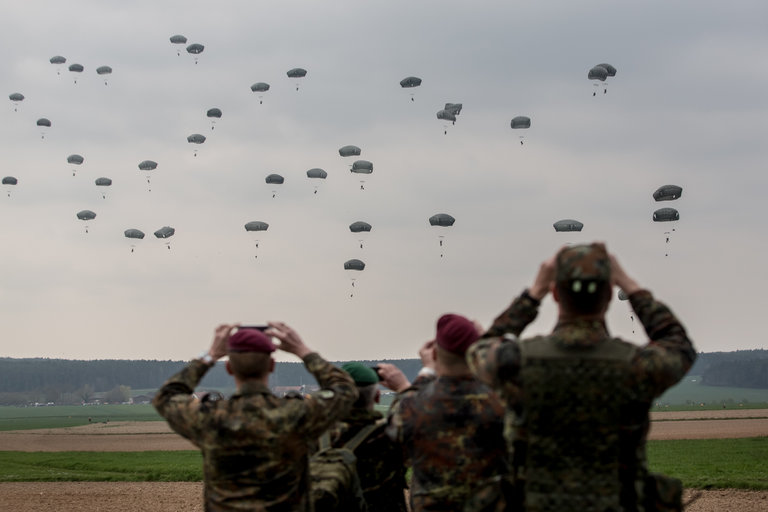
(June 13th, 2016) NATO’s largest war game in Europe since the end of the old Cold War is underway in Poland, as alliance members seek to show strength in response to concerns about Russia’s aggression.

NATO allies have welcomed the 10-day military exercise, involving 31,000 troops and thousands of vehicles from 24 countries, although some defense experts warn that any mishap/miscalculation could prompt an offensive reaction from Moscow.
Hit this link for more information.
by Robert Whitcomb | Jun 1, 2016 | Initiative
(June 6th, 2016) As Russia becomes more aggressive and implies that it might attack NATO with tactical nuclear weapons, the leadership of the alliance is trying to encourage deadbeat members to step up and pay more attention to the threat from Vladimir Putin’s aggressive dictatorship.

NATO’s leadership is trying to get all member nations to spend at least 2 percent of their GDP on defense, which is the long-established but often ignored guideline.
There has been a gradual move toward higher NATO defense spending since Russia seized Crimea from Ukraine, attacked the eastern part of that nation, harassed NATO ships and planes in the Baltic, unleashed cyberattacks against NATO members and showed its growing war-making expertise in its highly effective bombing to help Syrian dictator Bashir Assad.
Still, a few NATO members continue to cut defense spending. And while the alliance is carrying more military training and planning exercises in eastern and central Europe, they are little compared to what the Russians are doing. Read this New York Times story.