
China loses big South China Sea case


schina

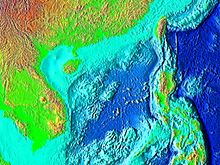
The northern  South China Sea.

China has lost an important international legal case over control of strategic reefs and atolls that it  asserts give it the right to control much of the South China Sea.  It has been rapidly militarizing some of  these features to cow other nations  with claims in the region, through which goes 30 percent of world trade in physical things.

But expansionist dictatorships have a tendency to ignore international law.

The judgment by an international tribunal in The Hague overwhelmingly favors claims by the Philippines and will intensify diplomatic pressure on Beijing to scale back military expansion in this geopolitically very sensitive area.

As The Guardian noted, “By depriving certain outcrops of territorial-generating status, the ruling effectively punches holes in China’s all-encompassing ‘nine-dash’ line that goes almost ridiculously far  into the South China Sea, far, far away from China.

China  predictably denounced the verdict, which declares large areas of the sea to be neutral international waters or in the exclusive economic zones of other countries. Xinhua, the country’s official news agency, attacked what it called  an “ill-founded” ruling that was “naturally null and void”.

The Communist Party  newspaper the People’s Daily said that the tribunal had ignored “basic truths” and “tramped” on international laws and norms. “The Chinese government and the Chinese people firmly oppose [the ruling] and will neither acknowledge it nor accept it,” it added.

The tribunal declared that “although Chinese navigators and fishermen, as well as those of other states, had historically made use of the islands in the South China Sea, there was no evidence that China had historically exercised exclusive control over the waters or their resources.”

To read The Guardian’s article on  this, please hit this link.
 

Kim regime calls U.S. sanctions ‘act of war’

Emblem_of_North_Korea.svg

The emblem of North Korea.

North Korea has  predictably called U.S.  sanctions against North Korean dictator Kim Jong-un and other senior  Kim regime officials for human-rights abuses a “declaration of war”. Pyongyang said the announcement of sanctions was a “hideous crime”.

It’s hard to believe that it took so long, but the United States imposed its first sanctions targeting any  individual North Koreans for rights abuses on July 6.  The assets of Kim and  10 other  high-level people and five government ministries and departments  within U.S.  jurisdiction are now blocked.

Meanwhile, U.N.  Secretary-General Ban Ki-moon, a former South Korean foreign minister, hopes  that China will urge its ally North Korea to cooperate internationally on human rights, his spokesman Stephane Dujarric said July 7 in New York. Such hopes have been expressed many times before with no effect.

For a longer article on this, please hit this link.

Brexit could be very bad for China


The United Kingdom’s apparent decision to leave the European Union could be very bad news for China. The U.K. has been its biggest economic ally in the E.U.  Further, Chinese investments in the U.K.  itself may suffer. The British have long pushed within the E.U. for freer trade with China  while other members have feared being economically overwhelmed by cheap imports from China.

“The U.K. leadership always said they would be the guys pushing for China’s interests in the West and the European Union,” a Western diplomat in Beijing  not authorized to be quoted by name in foreign media told The Washington Post. “This is quite bad news for China.”

To read The Post story, please hit this link.


Is China punishing N. Korea for nuclear tests?

Satellite imagery suggests that China might be punishing its ally North Korea for its nuclear-weapons tests by sharply restricting trade between the two dictatorships.

“It is apparent that shortly after North Korea did the fourth nuclear test in January, China took unilateral measures to drastically curtail trade interaction along their border,”  Victor Cha, director for Asian affairs at the National Security Council during the George W. Bush administration, told The Washington Post.

To read The  Post’s article on this, please hit this link.

Xi focuses on importance of Marxist ideology


Chinese President Xi Jinping emphasized the importance of ideological orthodoxy  to ensure the  power and legitimacy of Communist Party rule.

“The wavering of idealistic faith is the most dangerous form of wavering,” Mr. Xi told an assembly of party officials and members at Beijing’s Great Hall of the People on July 1. “A political party’s decline often starts with the loss or lack of idealistic faith.”

“Turning our backs or abandoning Marxism means that our party would lose its soul and direction,” he said.

Mr. Xi has  tried to energize the Communist Party with iron discipline and an appeal to nationalism meant to curb corruption and bureaucratic  sluggishness — all with the aim of perpetuating the party’s power.

China’s economic slowdown  has intensified the pressure to reinforce the party, including by appealing to national pride as expressed by China’s aggressive expansionism. But that, of course has met with increasing pushback from China’s neighbors.

“Xi’s speech was a celebration and a warning,” said Jude Blanchette, a Beijing-based researcher who is writing a book on Mao Zedong’s legacy, told The Wall Street Journal. It is “a reminder that Xi’s vision for China cannot be divorced from a strong, organized and highly disciplined Communist Party.”

To read a Wall Street Journal article on this news, please hit this link.