
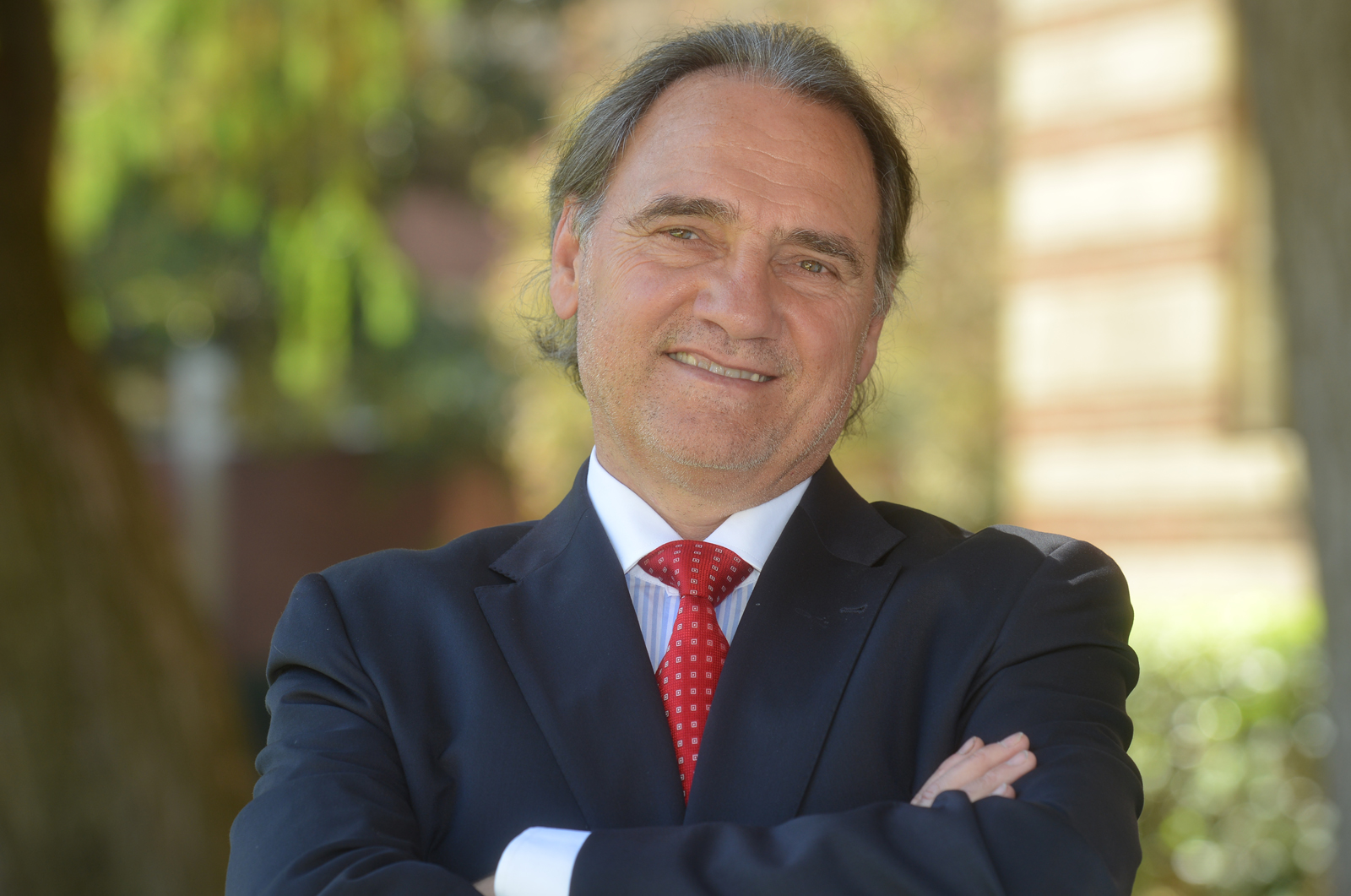
Video: Prof. Torres explains the value of global citizenship

Video: Prof. Torres explains the value of global citizenship

(7th March 2016) Boston Global Forum (BGF) friends will want to hear and see this learned and passionate presentation by Prof. Carlos Alberto Torres on the potential of global education and citizenship programs to promote world peace. At the end of his more formal remarks, he responds to questions about his ideas.

CarlosAlbertoTorresAMP

His presentation was another in the series of online dialogues produced by the BGF as part of its BGF-G7 Summit Initiative.

See more

Professor Torres, a BGF member, is Distinguished Professor of Social Sciences and Comparative Education and the UNESCO Chair of Global Learning and Global Citizenship Education at the University of California at Los Angeles.

The BGF has strongly collaborated with the UCLA program because of its potential to help create a global environment that encourages mutual understanding of national and other differences and similarities by people around the world, and thus cooperation and peace.

Dr. Torres discussed how promoting a sense of global citizenship (which he emphasized does not mean abandoning national citizenship) — to be spawned by emphasizing multicultural/multinational education — can help address such problems as:

  • Growing socio-economic inequality.
  • Property
  • Rapacious individualism eroding concern for the public good.
  • Rigid teacher-based, instead of student-based, education.
  • A “predatory’’ attitude toward the earth’s resources instead of acceptance of the need for sustainable use of what Professor Torres calls the “global commons.’’

He discussed how engendering a sense of global citizenship (and what he called “hospitality’’ ) through education can fight terrorism by encouraging mutual respect and understanding among different cultures and nations, thus facilitating conflict resolution and reducing “extreme nationalism,’’ and the bigotry and aggression that can accompany it.

He added that cyber-security (a major issue for the BGF-G7 Summit Initiative) can be strengthened by education programs to foster honorable behavior and respect for the truth on the Internet.

At the same time, he observed that there are limits to how much the Internet, which is vulnerable to many bad actions, can be used to develop and maintain healthy relationships. People, including students and their teachers, need to have frequent in-person encounters, too, if they are to better understand, and empathize with, each other.

He advised G7 leaders to promote global citizenship education out of enlightened self-interest. Professor Torres noted that “people (voters) want peace and the protection of the planet’’ and that they will support   leaders who encourage these things through such programs such as the Global Learning and Global Citizenship Education Program at UCLA.

He warned at the end of his remarks that the world faces a “race between chaos and education.’’
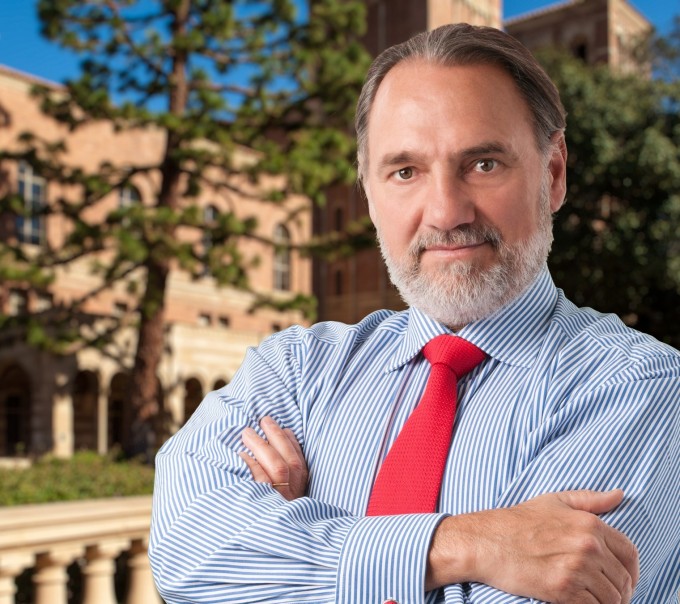
Global Citizenship Education and the Responsibility of Universities: A Short Note of Professor Carlos Alberto Torres, Distinguished Professor of Education and UNESCO Chair in Global Learning and Global Citizenship Education

Global Citizenship Education and the Responsibility of Universities: A Short Note of Professor Carlos Alberto Torres, Distinguished Professor of Education and UNESCO Chair in Global Learning and Global Citizenship Education

When Secretary-General of the United Nations, Mr. Ban Ki-moon, launched in 2012 the Global Education First Initiative (GEFI), he envisioned education as the linchpin for reducing poverty and hunger, to end wasted potential–and as a key element for the development of stronger and better societies for all.[1] Three pillars support this initiative: putting every child into school, improving the quality of learning, and fostering global citizenship. The GEFI, currently being supported by UNESCO, has encouraged national government agencies, transnational and non-governmental organizations, teachers and researchers to pursue various policies, programs, and pedagogies for global citizenship education (GCE). However, many questions remain regarding the nature and possibility of education that can foster global citizenship.

Traditionally, citizenship education has been associated to ‘civic education’, that is the teaching of constitutional democracy. Three categories are associated with civics education: civic knowledge, which in the context of constitutional democracy entails the knowledge of basic concepts informing the practice of democracy such as public elections, majority rule, citizenship rights and obligations, constitutional separation of power, and the placement of democracy in a market economy that is used as the basic premises of civil society. The second category associated with citizenship building is civic skills, which usually mean the intellectual and participatory skills that facilitate citizenship’s judgment and actions. The last category is civic virtues, usually defined around liberal principles such as self-discipline, compassion, civility, tolerance and respect. Universities will face their own perish if they do not build national and global citizenship based on substantive civic knowledge, civic skills, and civic virtues.

The UCLA UNESCO chair will be delighted to work with the Boston Global Forum-G7 Summit Initiative addressing how Global Citizenship Education can help Peace and Security in the world.  In our Global Citizenship Education Chair at UCLA one of the key goals is to help build a culture for peace and security, and our recent work with UNESCO and the Arab League in Egypt exemplifies how important is this topic. We hope the G7 Summit in Japan in 2016 will discuss how to build a culture of peace and security, with a particular focus on the current Middle East situation.

_______________________________

[1] http://www.unesco.org/new/en/education/global-education-first-initiative-gefi/