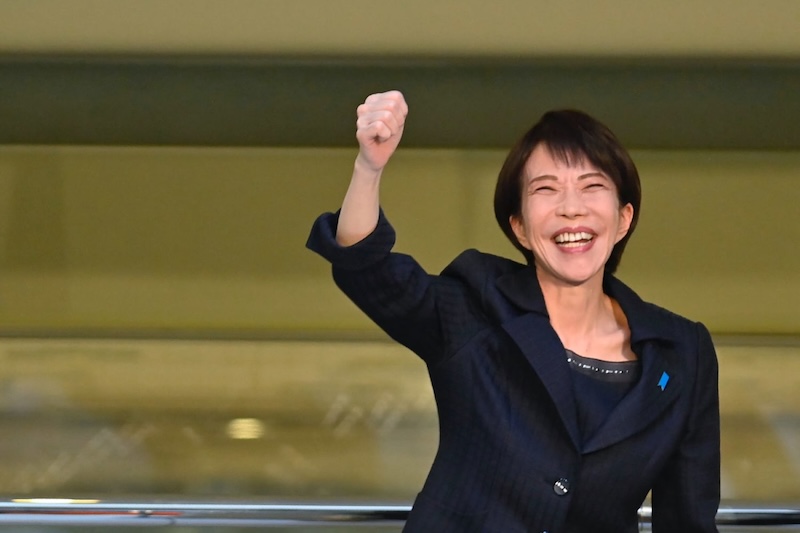
More than two-thirds of Japanese companies support Prime Minister Sanae Takaichi’s economic policies, according to a Reuters survey published on September 9. Her growth agenda calls for major public and private investment in AI, semiconductors and other strategic industries, with investment projected to exceed ¥370 trillion by fiscal 2040. Reuters
In 2023, while serving as Japan’s Minister of State for Economic Security, Takaichi was honored by the Boston Global Forum with the World Leader in AIWS Award. That recognition anticipated the growing importance of her leadership at the intersection of technology, economic security and national strategy.
The result reflects more than business approval of a new economic program. It signals the continuing development of Shinzo Abe’s vision for a confident, capable and internationally consequential Japan.
Abe’s Abenomics sought to restore growth, overcome stagnation and renew national confidence. Takaichi is extending that ambition into an era in which technological capability has become a foundation of national power.
AI and semiconductors are not simply growth industries. They shape technological sovereignty, economic resilience, secure supply chains and Japan’s ability to remain a trusted strategic power. The transition is therefore:
- From Abenomics to strategic investment in AI and semiconductors;
- From economic recovery to national technological capability;
- From traditional security to economic and supply-chain security;
- From a Free and Open Indo-Pacific to one that is also resilient and trusted.
This is continuity, not repetition. Abe restored Japan’s confidence and strategic purpose. Takaichi is adapting that inheritance to a world in which computing power, advanced chips and trusted technology increasingly determine the freedom of nations.
Shinzo Abe restored Japan’s strategic confidence. Sanae Takaichi is carrying that confidence into the age of AI, semiconductors, and economic security.