by Robert Whitcomb | Jul 8, 2016 | News

The emblem of North Korea.
North Korea has predictably called U.S. sanctions against North Korean dictator Kim Jong-un and other senior Kim regime officials for human-rights abuses a “declaration of war”. Pyongyang said the announcement of sanctions was a “hideous crime”.
It’s hard to believe that it took so long, but the United States imposed its first sanctions targeting any individual North Koreans for rights abuses on July 6. The assets of Kim and 10 other high-level people and five government ministries and departments within U.S. jurisdiction are now blocked.
Meanwhile, U.N. Secretary-General Ban Ki-moon, a former South Korean foreign minister, hopes that China will urge its ally North Korea to cooperate internationally on human rights, his spokesman Stephane Dujarric said July 7 in New York. Such hopes have been expressed many times before with no effect.
For a longer article on this, please hit this link.
by Robert Whitcomb | Jul 6, 2016 | News
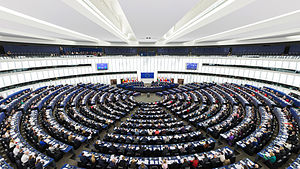
Inside the European Parliament.
The European Parliament has approved the first rules on cybersecurity for the European Union. This will force businesses to strengthen defenses against cyberattacks — and to promptly report to regulators when they do happen. This puts a particular onus on such digital giants as Google , Facebook and Amazon.
The new law will impose security and reporting obligations on such industries such as banking, energy, transport and health and on such all-digital operators as companies running search engines and online marketplaces. The law also requires the governments of E.U member states to cooperate much more than they have in network security.
The rules “will help prevent cyberattacks on Europe’s important interconnected infrastructures,” Andreas Schwab, a German member of the 28-nation Parliament who steered the measures through the parliament. E.U. governments had already supported the legislation.
Russian and Chinese government-linked and other hackers, some of them Islamic terrorists, have targeted essential infrastructure and services in several nations.
For the full article, please hit this link.
by Robert Whitcomb | Jul 6, 2016 | News
The United Kingdom’s apparent decision to leave the European Union could be very bad news for China. The U.K. has been its biggest economic ally in the E.U. Further, Chinese investments in the U.K. itself may suffer. The British have long pushed within the E.U. for freer trade with China while other members have feared being economically overwhelmed by cheap imports from China.
“The U.K. leadership always said they would be the guys pushing for China’s interests in the West and the European Union,” a Western diplomat in Beijing not authorized to be quoted by name in foreign media told The Washington Post. “This is quite bad news for China.”
To read The Post story, please hit this link.
by Robert Whitcomb | Jul 6, 2016 | News
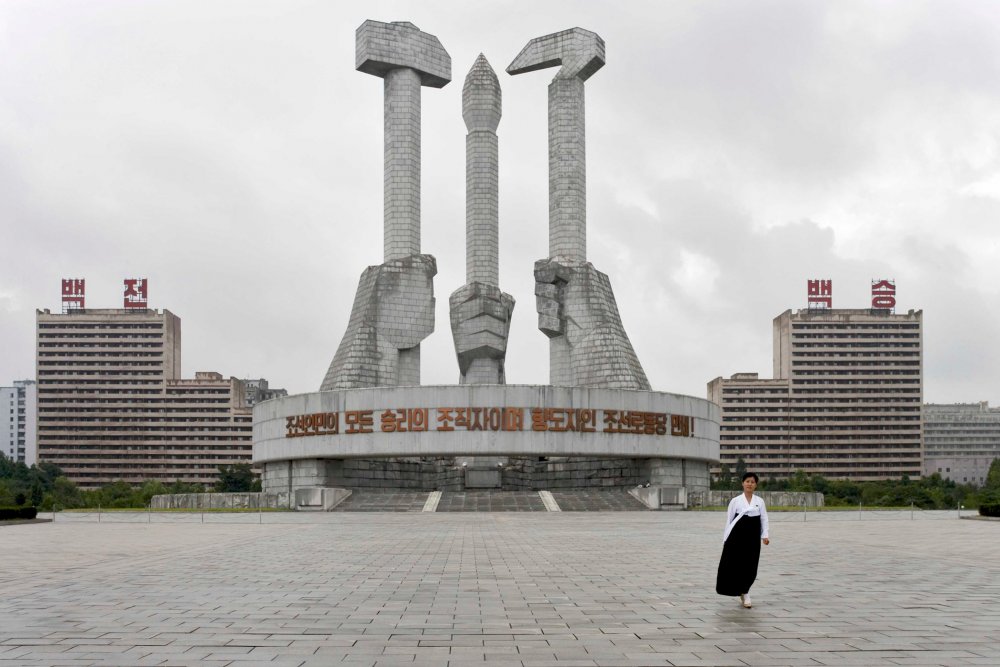
In the North Korean capital, Pyongyang.
It might surprise many readers to learn that the U.S. has put, for the first time, sanctions on North Korean dictator Kim Jong Un for his regime’s brutality toward his own people. Ten other high officials were also put on the financial-punishment list.
“Under Kim Jong Un, North Korea continues to inflict intolerable cruelty and hardship on millions of its own people, including extrajudicial killings, forced labor, and torture,” the U.S. Treasury Department’s top sanctions official, Adam Szubin, told The Wall Street Journal. The sanctions, he said, “highlight the U.S. government’s condemnation of this regime’s abuses and our determination to see them stopped.”
The paper reported that the penalties “freeze any assets the designated officials hold in dollars. They also bar Americans from doing business with them.”
“I think we have some evidence that more and more people in North Korea, including within the ruling regime, are conscious that the political situation on the Korean Peninsula may change at some point in their lifetimes,” a senior U.S. official involved in the sanctions told the paper. “It sends a message to people within the North Korean regime, particularly at those lower- to mid-levels, that if you become involved in abuses like running concentration camps or hunting down defectors, we will know who you are and you will end up on a blacklist that leaves you at a significant disadvantage.”
To read The Wall Street Journal story, please hit this link.
by Robert Whitcomb | Jul 5, 2016 | Initiative
Here’s a Wall Street Journal interview with cyberspace expert Tim Maurer on the future of Chinese-U.S. cybersecurity relations and Beijing’s ambitions for managing the Internet.
He says data-stealing is his greatest fear for the Internet:
“The vast majority of hacking incidents so far have been relatively unsophisticated stealing of data, which is the low-hanging fruit. In most instances, that’s because defenses are so bad — including at the government level. But now you’re starting to see increasingly sophisticated malware, and there’s a concern about hackers not just stealing data, but altering it.”
To read The Wall Street Journal article, please hit this link.