by Robert Whitcomb | Jul 11, 2016 | News
In this video, Bloomberg columnist Clive Crook presents some ideas on how the European Community can discourage other nations from following the United Kingdom’s exit.
To watch the video, please hit this link.
by Robert Whitcomb | Jul 11, 2016 | News
The European Union has approved a new agreement on how consumer data must be transferred with the United States. This brings to an end months of delay caused by fears about U.S. surveillance.
The so-called Privacy Shield, the new commercial data-transfer pact, had been tentatively agreed to by the E.U. and U.S. in February. It comes into effect July 11.
The E.U.’s top court had struck down the previous data-transfer agreement, Safe Harbor, because of fears of intrusive U.S. surveillance. This left such big U.S. companies as Google, Facebook and MasterCard in legal limbo.
To read The Guardian’s story on this, please hit this link.
by Robert Whitcomb | Jul 8, 2016 | News

Visualization of some routes on the Internet.
The Chinese government is imposing new regulations for online advertising that include a wide-range of practices from e-mail to videos. The increasingly authoritarian government is trying to impose more rigorous control of this part of the Internet, in this case, apparently, mostly for public-welfare concerns and not as part of the efforts of President Xi Jinping to tighten the political control of the huge nation by the Communist Party dictatorship.
The Wall Street Journal reports: “The rules are China’s most comprehensive to date, broadly defining online and electronic advertising as including e-mail ads, paid search results, and embedded links, images or videos ‘with the purpose of promoting goods or services.”’
“The regulations, which take effect in September, lay out guidelines against false or misleading practices and prohibit online ads for prescription medication and tobacco while requiring prior government approval for ads for medical supplies, pesticides, veterinary medicine and other health products.”
To read the entire Wall Street Journal article, please hit this link.
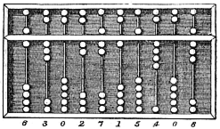
Ancient Chinese abacus, an early “computer”.
by Robert Whitcomb | Jul 8, 2016 | News

Syrian migrants passing through Slovenia on their way to Germany last year.
The German Interior Ministry reports that the number of migrants seeking asylum in Germany from the ravages of violence, corrupt and brutal dictatorships and poverty in the Muslim world fell sharply in 2016’s first half.
About 16,000 people registered as asylum seekers in Germany in June, way down from 92,000 in January, but the migrant crisis is expected to continue.
“I wouldn’t hold my breath that this {the migrant slowdown} will remain so in the coming months,” Interior Minister Thomas de Maiziere told reporters.
Officials cited border closings in the Balkans, a European Union-Turkey deal to try to block arrivals by sea from Islamic nations in Greece and tougher asylum rules in Germany were among the main reasons.
Germany took in more than a million migrants in 2015, mainly people fleeing Islamic terrorism and other conflicts in Syria, Iraq and Afghanistan and the endemic poverty — much of it related to corrupt and brutal regimes and relentless Islamic violence.
To read the full article on this, please hit this link.
by Robert Whitcomb | Jul 8, 2016 | News

Samuel Gibbs looks into the question of why so many consumers say that they care deeply about online privacy and yet are unwilling to pay for it.
Hit this link to read his essay.