
by BGF | Nov 4, 2018 | News
AI has become greatly influential to our lives. Despite its undeniable benefits, there are many risks as well. To avoid unexpected incidents, global regulations are essential.

In the recent incidents related to Facebook, many users’ data was leak since the world’s data protection and privacy was looked down on. While Facebook operates on an AI platform, it does not follow the Royal Society’s new publication on ethical and legal challenges of governing AI—implied by a senior European commission official, Paul Nemitz, principal adviser, one of the architects of the EU’s far-reaching General Data Protection Regulation. Facebook holds the information of billions of people, but their AI and employees are only a small group that is shaping the world.
With the power centralized to the group of Facebook’s developers, AI is becoming more and more pervasive. Realizing this issue, Nemitz wrote that “we need a new culture of technology and business development for the age of AI which we call ‘rule of law, democracy and human rights by design’,”. Without clear regulations, internet economy has resulted in a widespread culture of disregard of the law and put democracy in danger.
Nemitz also drafted the framework for AI including some of the principles to prove AI trustworthy:
- AI that makes decisions that affect individuals should give intelligible reasons; when a machine engages a human in political discourse, the machine should be required by law to disclose that it is a machine;
- AI that applies rules must conform to the same tests that are used to decide whether laws themselves are legitimate, such as consistency with fundamental rights, due process and proportionality.
Establishing the principles for AI is exactly what the Michael Dukakis Institute (MDI) are working on. So far, MDI has established the AIWS 7-layer Model with the fourth layer – Laws and Legislation: Laws for the Role of AI in Building Next Generation Democracy. This issue was also discussed at Boston Global Forum’s BGF-G7 Summit Conference, which was held on April 25, 2018.

by BGF | Nov 4, 2018 | News
According to AI Trends, AI World – one of the most important partners of the Michael Dukakis Institute, a meeting between representatives from Alphabet, IBM, JPMorgan Chase and other academic experts – was held by the White House Office of Science and Technology Policy to discuss about the future of the quantum computing.

Quantum can deliver results faster than any systems. “While a traditional computer has to sequentially explore the potential solutions to a mathematical problem, a quantum system is able to look at every potential solution simultaneously and generate answers—not just the single best but nearly ten thousand close alternatives as well—in less than a second,” explained Arthur Herman in Forbes.
Recently, Ford Motor Company “signed a $100,000 contract with NASA’s Quantum Artificial Intelligence Laboratory to have quantum computer installed in its autonomous car research,” said IEEE Spectrum’s Mark Harris. There is a great potential for this development, including diesel optimization for commercial truck fleets. It can come up with the shortest route through many cities.
Not only Ford, there are also other companies that are seizing quantum’s opportunity. Volkswagen is now using quantum computing to enhance software’s learning technique to facilitate environment learning. This application can be of great use to automated parking. It can also utilize the performance of other fields such as searching, cryptography, and machine learning.
“We expect quantum computing to develop toward maturity over three generations spanning the next 25 years,” they predict, “Companies could be using early-generation machines to address practical business and R&D needs much sooner.” This is also what the third layer (Standards for the Management of AI Resources and Development) of AIWS 7-Layer Model focuses on.

by BGF | Nov 4, 2018 | News
Google is giving the prize of $25 million to the group with the best AI solution for the world’s issues.

The contest, the AI Impact Challenge was announced on October 29 at AI for Social Good event held at the company’s Sunnyvale, California office. Whereby the competition will be held and supervised by the company’s Google.org charitable arm. Google aims to integrate nonprofits, universities, and other organizations not within the corporate and profit-driven world of Silicon Valley into future developments of AI.
The award will value up to $25 million to an appropriate number to “help transform the best ideas into action.” In addition to the sponsorship, Google also offer resources for the projects.
Google’s experts started the initiative with the hope to make use of AI to address environmental problems, health care, and wildlife conservation. One example is using AI to pin down the location of whales by collecting data on whale sounds or predict floods and wildfires. Another field which Google is looking forward to solving is the biases in AI software as a result of diversity in cultures and prejudice.
There are many other organizations share the vision of making AI beneficial to the society. The Michael Dukakis Institute (MDI) with the AIWS Initiative is a prime example. Recently, MDI has established the AIWS Standards and Practice Committee with over 20 members who are leading experts and leaders in the field of AI and technology.
by BGF | Nov 4, 2018 | News
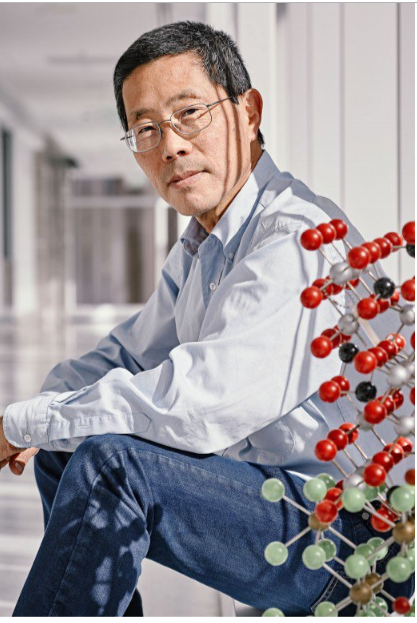
A manufacturing trick with magnetic fields produces a battery that may discharge fast enough to get an aircraft off the ground.

Yet-Ming Chiang, a materials science professor at MIT, and his colleague Viswanathan, an assistant professor of mechanical engineering at Carnegie Mellon, started the project teaming up with 24M, the lithium-ion battery manufacturer which Chiang co-founded in 2010, and an aircraft Start-up in Washington, to create a new powerful battery. Recently, they have achieved a remarkable progress: the prototype batteries are strong enough to provide the energy for an advanced hybrid plane.
Reducing emissions from aircraft is one of the most challenging dilemmas, hence, Chiang and Viswanathan’s goal is to create a battery that could power an airplane with 12 people capacity and 400 miles of range—about the distance from San Francisco to Los Angeles, or New York to Washington—and increase the capacity of the plane even more in the future. This development is currently encountering the issue of duration as the energy pack was not dense enough, and it dropped dramatically to take off and reach cruising altitude. The battery will need to be as light as possible and capable of charging or replacing during the flight in order to deal with this problem.
By facilitate ions and electrons flow through the battery, particularly the electrodes it can get lithium-ion batteries to discharge at a rate fast enough for airplanes. In 2016, Chiang and his team succeeded by mixing magnetic nanoparticles into the electrode materials, and applying a light magnetic field, helped to create aligned pathways through the electrodes. The result of subsequent test shows that the rate of flowing electrodes was more than double than that of the conventional batteries.
Until the batteries are successfully power the whole flight, we can tell how effective this approach is. For now, it is just a start; however, following the first layer (Charter and Principles) of AIWS 7-layer Model, it is necessary to ensure test protocol for this battery so that it won’t have casualty, prioritize the safety of people.

by BGF | Nov 4, 2018 | News
With no emotions, machines could make fair, rational decision with concrete evidence; in addition there will not be corruption as well as unethical behavior. So can we entrust robots making decision for us? Can robot leaders do better than our politicians?

The possibility has been questioned and analyzed by many experts with different origins such as UK, India, New Zealand and Japan. It is without a doubt that there will be much more evidence-based decision and less irrational call. A robotic government would be capable of higher and wider reach compared to any human leader with unlimited stamina and data analytic capability.
However, it also poses grand challenges for human beings to cope.
The first dilemma in giving the authority to robots is going to be its imperfection despite its abilities of deep learning: there will be hidden context that it has not been taught, complicated situation which requires diplomats making major decisions. Under this circumstance, robots are messy and incompetence.
The second one is the limited capabilities of education and infrastructure as technology has been developing at an incredible speed. However, not everywhere is the same. There is a great gap between areas, culture, nation in how developed AI is. It will result in programmer’s bias anyhow.
And finally, by giving robots administrative power and independence of making decision, we will be facing security risks such as cyberattacks, information leaks, error which might lead to dangerous outcome we cannot foresee.
In conclusion, the key is to use AI to form a safer, prosperous society. At the same time human right and data privacy should not be ignored. This fact is also included in the Layer 1 of the AIWS 7-layer Model. It is expected that we will be able to see online governance in the near future.

by BGF | Nov 4, 2018 | News
Last week, the Indian Prime Minister Narendra Modi paid a visit to Japan and met the Japanese Prime Minister Shinzo Abe at the India-Japan Annual Summit. The meeting brought about the collaboration in the effort of the technology’s innovation between the two countries.

Realizing the great potential of cooperation between the two nations, with Japan’s strength in hardware and India’s prowess in software, the two ministers shared a same goal for the future. Prime Minister Shinzo Abe, who was honored as the World Leader in Cybersecurity in 2015 by Boston Global Forum, signed the agreement with Prime Minister Narendra Modi. This agreement established a Japanese-Indian Digital Partnership with the aim to utilize the Start-up Hub in Bengaluru and IT Corridor Project in Hiroshima Prefecture. It might be the first step in the development of Internet of Things and AI solutions promoting the society.
The agreement included of these following terms:
- Implementing arrangement for deeper cooperation between Japan Maritime Self-Defense Force and Indian Navy;
- MoC between Ministry of Electronics and Information Technology and Ministry of Economy, Trade and Industry on Japan-India Digital Partnership;
- Statement of Intent between NITI Aayog and Ministry of Economy, Trade & Industry (METI), Japan on AI to encourage and develop cooperation on AI-based technologies;
- Memorandum of Understanding on further cooperation toward Indo-Japan Global Startup between Nagasaki University and IIITDM Kancheepuram;
- MoU on the academic and educational exchange between Indian Institute of Technology Hyderabad and Hiroshima University.

by BGF | Nov 4, 2018 | News
On October 17, President Vaira Vike-Freiberga – President of the World Leadership Alliance–Club de Madrid (WLA-CdM), Former President of Latvia – was awarded the “Luise 2018” at Friedenstein Castle, Germany. This is the most valuable prize in the field of national culture in Gotland, Germany.

Due to the Latvia’s relation with Germany, the Former President of Latvia holds a great respect and honor to Germany’s traditions. In October 2018, President Vike-Freiberga was awarded the “Luise 2018”. The announcement ceremony had the attendance of Igna Skujina, the Lavitan Ambassador in Germany and Gotas, the Mayor of the City. Mayor Gotas was the one to grant her this Prize.
One of many projects which President Vike-Freiberga is working on is the building of the Next Generation Democracy with Michael Dukakis Institute (MDI), a partner of WLA-CdM. They are together developing the AIWS 7-Layer Model in the upcoming age of AI.
by BGF | Nov 2, 2018 | News
– By Llewellyn King, Executive Producer and Host
“White House Chronicle” on PBS –

Dr. Elliot Salloway, Executive Social Media Director of the Boston Global Forum
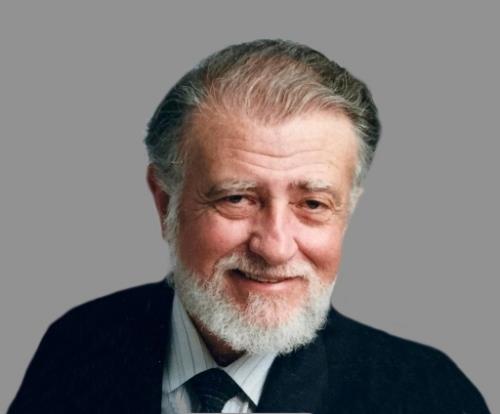
Elliot Salloway was my friend but, in his way, he was a friend of everyone.
Elliot was committed — albeit with a gleam in his eye and a spring in his step — to making the world a better place any way he could.
He was preoccupied with genocide and its causes and devoted his last several years to working on “empathy” as a teachable subject. He believed if you could get the young to think empathetically, you could avoid a lot of misery in conflict zones. Even while cancer was chewing up his body, he worked to support the teaching of empathy in Africa.
He was a highly empathetic man himself. I met him at my first attendance at the Boston Global Forum, and he drove me from Harvard Square to South Station to get a train to Providence, R.I. Trains came and went. He parked his car and we talked — and talked and talked. It was as though we had gone middle school together. Elliot was not just a friend, he was a total friend.
His life was as incredible as it was full. His father worked in a tanning factory and died early from the poisons which were part of that trade at that time. Elliot told me he vowed not to suffer the same fate; he went to dental school and became the first periodontist in Worcester, Mass. Earlier he did his military service in the Air Force as an officer-dentist.
But he did more than treat patients. He taught at Harvard for 30 years, and was an avid blue-water sailor, race car driver and tennis player.
He learned photography (he said street photography was his favorite) and painting and exhibited his work. All his art reflected his life’s passion: the contrast between good and evil. Every painting shows good balancing evil.
He and his wife Regina raised three sons and continued their life in Worcester — when he wasn’t in the driver’s seat of a race car, at the helm of a yacht, dabbing paint on a canvas, or looking through a camera’s viewfinder.
When the Boston Global Forum was getting underway, Tuan asked Elliot to be the chief operating officer. He threw himself into that with brio, as he did everything else.

Photo: Eliot Salloway (far left) at Boston Global Forum meeting in 2013 at Harvard University
In the end, if kindness is the greatest thing that can be said of a man, and I think it is, then Elliot was great that way as well as a physician, a father and a teacher of men. He was a man of action with a heart as big as the oceans he sailed. He had fun. He was fun.
Elliot Salloway was an incandescent presence wherever he was, and I am one of a legion who will miss him.
by BGF | Oct 28, 2018 | News
On October 23rd, 2018, The Public Voice Symposium on AI, Ethics, and Fundamental Rights was successfully completed under the moderation of “Public Voice Coalition”. This is a meaningful event held in conjunction with the 40th International Conference of Data Protection and Privacy Commissioners.

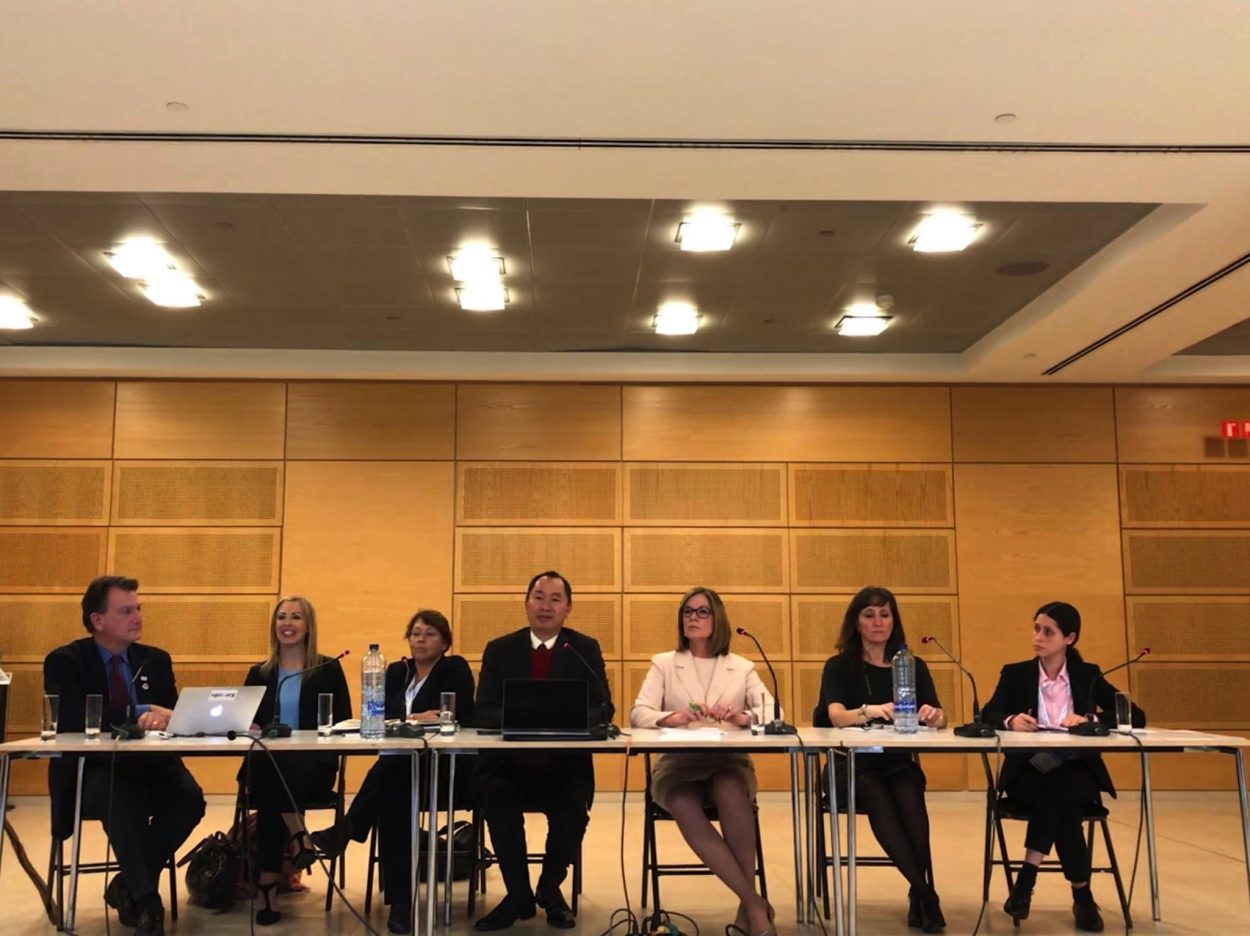
Photo: Speakers and Guest Panel at the Public Voice Symposium
A broad coalition of civil society organizations under the umbrella of the “Public Voice Coalition” jointly hosted the event. The event consisted of 3 parts: the first part is keynote speech from Professor Anita Allen, Vice Provost for Faculty, Henry R. Silverman Professor of Law, and Professor of Philosophy at University of Pennsylvania Law School. Following the keynote presentation, 2 panels discussing its impacts on human rights, consumer protection, competition; on how to enforce existing laws in the age of AI; on the relationship between ethics and the law and more. The first panel was moderated by Ms. Anna Fielder, Senior Policy Advisor, Trans Atlantic Consumer Dialogue (TACD), focusing on AI’s impacts on established legal frameworks. Panel 2, under the moderation of President Marc Rotenberg, Electronic Privacy Information Center (EPIC), who is also a member of the AIWS Standards and Practice Committee, covered the relationship of ethics and the law in the realm of AI. Especially, Panel 2 had the presence of Ms. Elizabeth Denham, UK Information Commissioner, Information Commissioner’s Office (ICO); Ms. Helen Dixon, Data Protection Commissioner for Ireland; Ms. Andrea Jelinek, Chair, European Data Protection Board, and Head, Austria Data Protection Authority, and Mr. Nguyen Anh Tuan, Director of the Michael Dukakis Institute for Leadership and Innovation (MDI).

Photo: Guest Panel at the Public Voice Symposium

Photo: Mr. Nguyen Anh Tuan, Director of Michael Dukakis Institute for Leadership and Innovation (MDI), and CEO of Boston Global Forum(BGF), is in the panel discussion at the 2018 Public Voice Symposium
The panelists officially published the Universal Guidelines for Artificial Intelligence, which are proposals to inform and improve the design and use of AI at the symposium. The Guidelines are intended to maximize the benefits of AI, to minimize the risk, and to ensure the protection of human rights. These Guidelines should be incorporated into ethical standards, adopted in national law and international agreements, and built into the design of systems. The Guidelines play an important role in finding a common voice on AI ethics by leaders in regions – also considered a Charter of the AIWS.