
by BGF | Jul 31, 2018 | News
Google has created Cirq, a software that lets developers create algorithms without needing a background in quantum physics.

According to MIT Technology Review’s article, quantum computers are at the beginning stage of this technology. In fact, it is a real challenge to program its circuits because of its distinct features. Instead of using standard digital bits which represent either 0 or 1, quantum computers are based on “qubits” which can be in both 0 and 1 due to superposition. Moreover, they remain in their delicate quantum state for no longer than the blink of an eye.
Cirq is an open-source initiative that allows programmers to access and modify its capability. Google created it based on TensorFlow open source which facilitates machine-learning software. Quantum algorithms can be created on simulators that can help build software that will run on a wide range of real machines in the future. Many other tech companies are taking this approach and developing initiatives to help developers build a code for quantum machines, but Google has put itself in the forefront of developing power quantum processors such as the Bristlecone chip, which hold the record for number of qubits.
Wit the current fast pace of technology, it should be kept in mind that the technology itself is not the achievement, what matters is how it benefits humankind.. It is necessary to have a certain set of moral standards in developing an advanced technology, the AIWS initiative with ethical standards in order to ensure every invention is for the benefit of humanity.

by BGF | Jul 31, 2018 | News
An international team of computer scientists, philosophers, religion scholars, and others is building computer models that can assist in carrying out experiments on policy making by creating virtual people to adopt with the policy.

In politics, it is difficult to tell whether a policy works out, when the decision is made. The only thing can be done is hope that it will be a success, if it isn’t, it cannot be undone. Now, the scenario is possible with the help of AI.
Over the past three years, Boston’s Center for Mind and Culture, and the Virginia Modeling, Analysis, and Simulation Center, as well as the University of Agder have been running a project on AI assessor. Experiments of religion-based policy are available with the Modeling Religion Project. It involves computer models populated with virtual people, or “agents”. The agents mimic the attributes and beliefs of a real country’s population by using data collected from that country.In addition, they are also trained on a set of social-science rules about how people tend to interact under various circumstances. The project gives politicians an assessment tool for policy making options in order to come up with the most decision.
Despite its usefulnes, it is the social problem the reserchers aim to deal with, as a mistake could lead to unintended consequence. It I, therefore, it is necessary to work on this with transparency and speak out about inherent ethical risks. This is in accordance with the first layer’s issue in the AIWS 7-layer model for AI ethical standards—its design and performance must be sufficiently transparent.
by BGF | Jul 31, 2018 | News
Collaborating with Pew Research Center and the IE School of International Relations, the WLA-CdM hosted an event where a finding of Pew Research Center was published on political attitudes in Western Europe.
In late 2017, a poll was conducted in eight countries of Western Europe; Germany, France, Italy, Spain, UK, Denmark, the Netherlands and Sweden. Where a trend toward disenchantment with politic was found. The poll underscored how populist parties are tapping into the frustration toward the establishment, according to WLA-CdM’s article, trust in democratic institution is low in countries such as the UK, Spain, France and Italy.


It can be seen that citizens with populist views didn’t perceive much economic benefit from being a member of the EU. The reasons for this is the increasing divergence between rural and urban environments, making it clear that democracies are not doing enough for many of their citizens, especially those who are behind in technology.
The WLA-CdM also plays the role of partner with BGF and MDI in developing the AIWS 7-layer model for AI’s development.
by BGF | Jul 31, 2018 | News, Practices in Cybersecurity
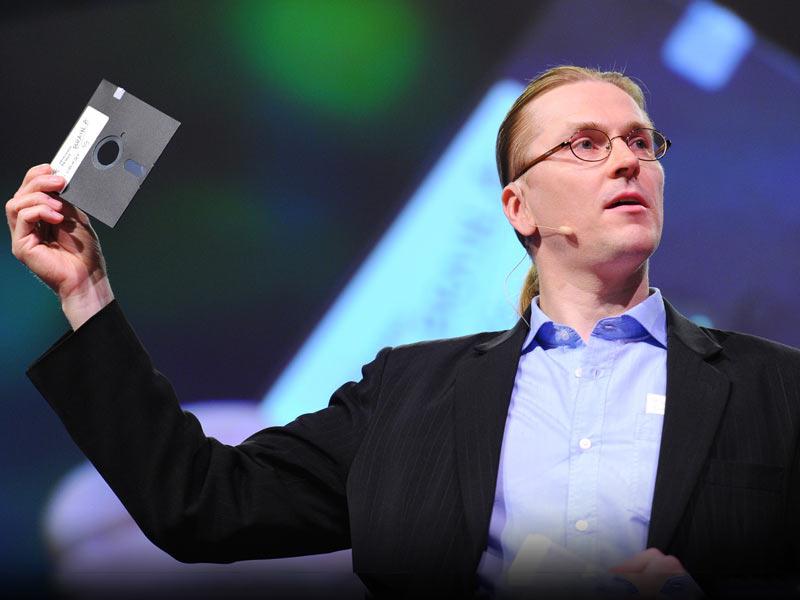
“There is no likelihood that cyberattack will happen in the near future”, said Mikko Hypponen, Chief Research Officer of F-Secure.

As reported by Computer Weekly, Mr. Hypponen, a researcher in machine learning-based security for several years, denied the AI’s ability to carry out attacks in the near future. His company F-secure, a Finnish cybersecurity and privacy company, conducted research to understand the potential of automating malware analysis with algorithms to differetiate malicious and non-malicious programs, Eevntually they failed due to the vast quantities of malware samples they tried to exmine.
“The algorithms also had to be able to determine when they were not able to tell if a program was malicious or non-malicious and to refer that to a security analyst instead, who could then improve the algorithm to be able to deal with similar situations in future.” said Mr. Hypponen.
Moreover, machine learning specialists and AI programmers tend to seek a well-paid job instead of committing crimes. Hence, criminals using machine learning will be way off in the future. However, if AI platforms become less complex, it is likely that criminals are going to exploit thm at some point.
Mr. Hypponen, a global security expert, has worked at F-Secure since 1991. In 2015, he also was honored as the Practitioner in Cybersecurity Award by BGF.

by BGF | Jul 31, 2018 | News
On July 25, Vietnam CEO Summit 2018 took place in Hanoi with the theme “The Age of AI Economy and Vietnamese Enterpriseshad the objective of giving the leading CEOs in Vietnam a glimpse of the current trend in technology advancement as well as management tools and methods to make the most of the opportunities offered by AI.

Vietnam CEO Summit is an annual event for enterprise executives held by Vietnam Report Jsc. and VietNamNet newspaper. At this year’s Summit, the leading experts in the field of AI and economics presented their recommendations for Vietnamese participants.
The keynote speakers were: Prof. Jason Furman – Harvard Kennedy School and Chairman of the Council of Economic Advisers of President Barack Obama, Mr. Le Quang Manh – Deputy Minister of Ministry of Planning and Investment in Vietnam, Mr. Nguyen Anh Tuan – Director of MDI and CEO of BGF, Dr. Kazuo Yano – Chief Engineer at Hitachi, Ltd., Dr. Masahiro Fukihara – Founder and CEO of Institution for a Global Society, Mr. Duong Tri Thanh – CEO of Vietnam Airlines, with over 300 experts, scholars and leaders. Among them, there are four members of MDI’s AIWS Standards and Practice Committee including: Prof. Jason Furman, Mr. Nguyen Anh Tuan, Dr. Kazuo Yano and Dr. Masahiro Fukuhara.
During the Summit, Prof. Jason Furman and Mr. Nguyen Anh Tuan presented a report and the breakthrough strategy for AI economy. Prof. Jason Furman gave a speech on the US – China Trade War and implications for Vietnam. Dr. Kazuo Yano discussed AI for Enterprises and Dr. Masahiro Fukuhara delivered a speech on the application of AI for human resource development.
In addition, business leaders in Vietnam held two discussions with speakers and other guests of the Summit about AI for business, and opportunities as well as challenges for Vietnam.