AI researchers have been created new techniques for training machine-learning algorithm while ensure patient’s privacy.
An innovative solution for privacy issues has emerged from the absorption of DeepMind’s health division in Google.
In response to the privacy concerns about the disclosure of patient data as Google moved its subsidiary DeepMind Health division into the main company, a split neutral network has been introduced as the latest advanced method to process data with confidentiality.
Its basic operation mechanism is similar to the process of data encryption. The neutral networks divide the data processing into separate stages that can be carried out by different people: one person starts training the machine learning model then another person can finish it. Based on this mechanism, patients’ raw data could be processed in hospitals and other medical institutions to form the training of the partway model in the first stage. These half-trained models would then be sent to a centralized location, either the clouds services, Google, or another company, to be completed in the final stages of training.
The superior advantage is that due to the obfuscation of medical data in the first stage, the centralized location can only be seen the output of the half-processed model plus the model itself. The raw patient data, therefore, is secure with the initial constitutions and the hospitals would benefit from a final model trained on a combination of every participating institution’s data.
This approach with split neural networks has been found to involve considerably fewer computational resources to train while producing much more accurate models.
Privacy issues stemming from AI have raised worries among users. AI is just a tool, and it is essential for people to closely supervise and moderate its operation with transparency. The importance of AI applications in key sectors including healthcare is the focus of Layer 7 – Business Applications for All of Society of the AIWS 7-Layer Model developed by the Michael Dukakis Institute.
On December 12, 2018 at Global Cybersecurity Day Symposium, Eliot Weinman – GM & Founder of AI World, Executive Editor of AI Trends, announced the future cooperation between AI World and Michael Dukakis Institute for Leadership and Innovation – Boston Global Forum (MDI-BGF) to form the strategic alliance to host AI World Government Conference & Expo. The event will be held on June 24-26, 2019 at the Ronald Reagan International Trade Center in Washington, DC.
At the Symposium, Eliot Weinman, Founder of AI World mentioned the problems of ethics, security, privacy have exploded for all the obvious reasons just until recently, especially for public sectors since he has been working in AI for 20-25 years. He emphasized that this requires a call for action. For that reason, together with Governor Michael Dukakis, Chairman of MDI and Mr. Tuan Nguyen, CEO of MDI, he has decided to organize an event in Washington DC in June 24 to 26, with two thirds of which will be an AI event for the government.
AI World Government Conference & Expo is expected to provide a forum to educate and inform public sector agencies (federal, state, and local governments) and its supply chain on the many benefits of deploying AI technologies. These agencies are like public and private “enterprises”, which AI World is established and known for. The government application of AI is already in its early adoption period and has been deployed in a wide variety of applications that have shown benefits. As AI continues to evolve at a rapid pace, the next generation of deployment will enable government agencies to:
Provide better and enhanced services to its constituents
Increase productivity and reduce costs
Accelerate the overall digital transformation efforts underway throughout government agencies
AI World Government is also the backdrop for shaping the discussion around ethics, safety, and regulatory requirements for machine learning, deep learning, computer vision, image and pattern recognition, and emerging intelligent automation solutions.
In the event, the Michael Dukakis Institute for Leadership and Innovation (MDI) will present a half-day special program to gather global political leaders and major research institutions for discussion of the requirements to address AI ethics issues.
For more information, updates and useful links, please visit the official website of AI World Government 2019: http://www.aiworldgov.com/
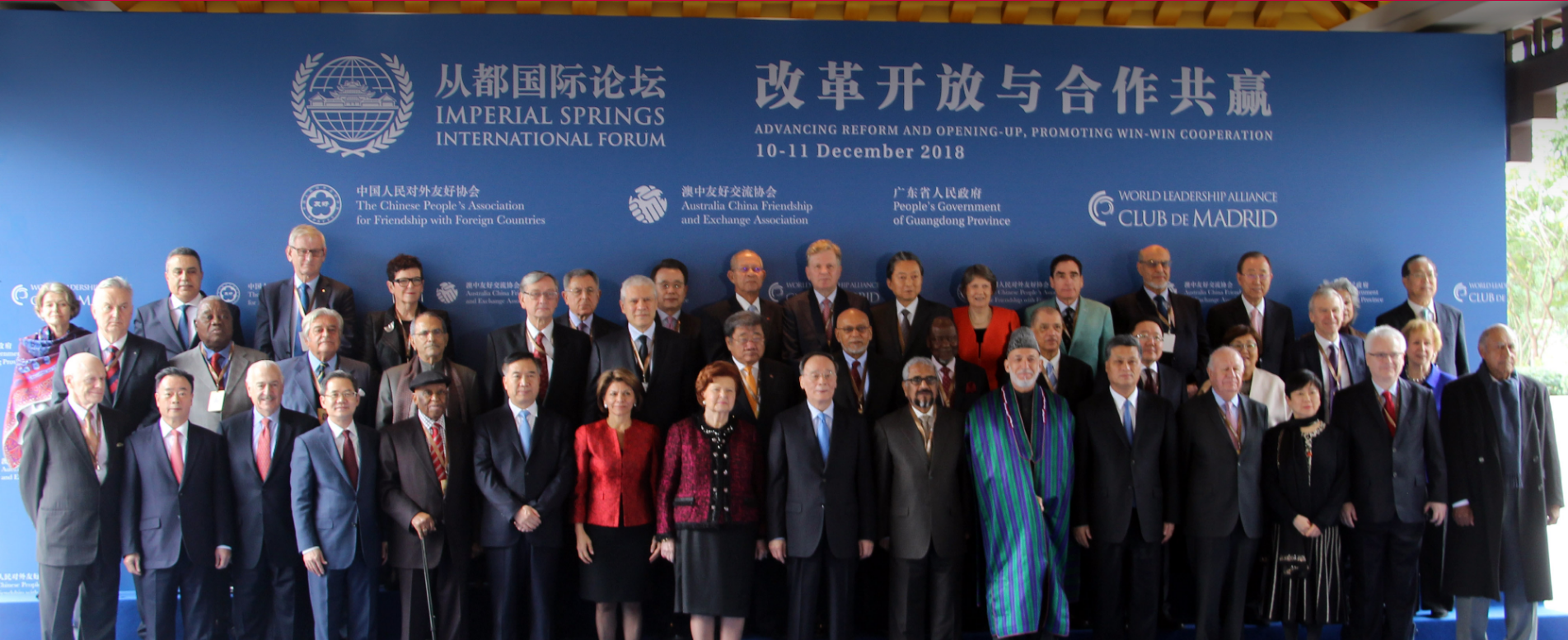
On the occasion of the 40th anniversary of China’s opening up and reform process, The 2018 Imperial Springs International Forum (ISIF) under the theme of “Advancing Reform and Opening-Up, Promoting Win-Win Cooperation” took place in Guangdong on December 10-11th with the participation of Vice-President of the People’s Republic of China, Wang Qishan and around 80 prominent leaders, distinguished experts from over the world.
The Imperial Springs International Forum has become an important platform for dialogue between China and the rest of the world, where leaders and experts constructively exchange views, contributing to improved global governance since 2014. It was jointly organized by the Chinese People’s Association for Friendship with Foreign Countries (CPAFFC), the People´s Government of Guangdong Province, the Australia China Friendship Association (ACFEA), and the World Leadership Alliance – Club de Madrid.
The 2018 forum concentrates on discussing interconnected topics including China’s new policies and its contribution to the world especially the Belt and Road Initiative (BRI) as well as sharing the view of building a community of shared societies, based on shared interests and shared responsibility to craft a shared future for humankind. The forum also found that protectionism and isolationist tendencies must be rejected in the context of the 21st century.
At the same time, noting that the interests of countries around the world are deeply intertwined nowadays, the forum was committed to work on a global system which uphold inclusive rules-based global governance architecture to promote peace and security, foster innovation and technological development to contribute to global trade and focus on international cooperation to achieve balanced development and prosperity with the aim to effectively implement the UN Agenda 2030 to “leave no one behind”.
The World Leader for Peace and Cybersecurity Award for 2018
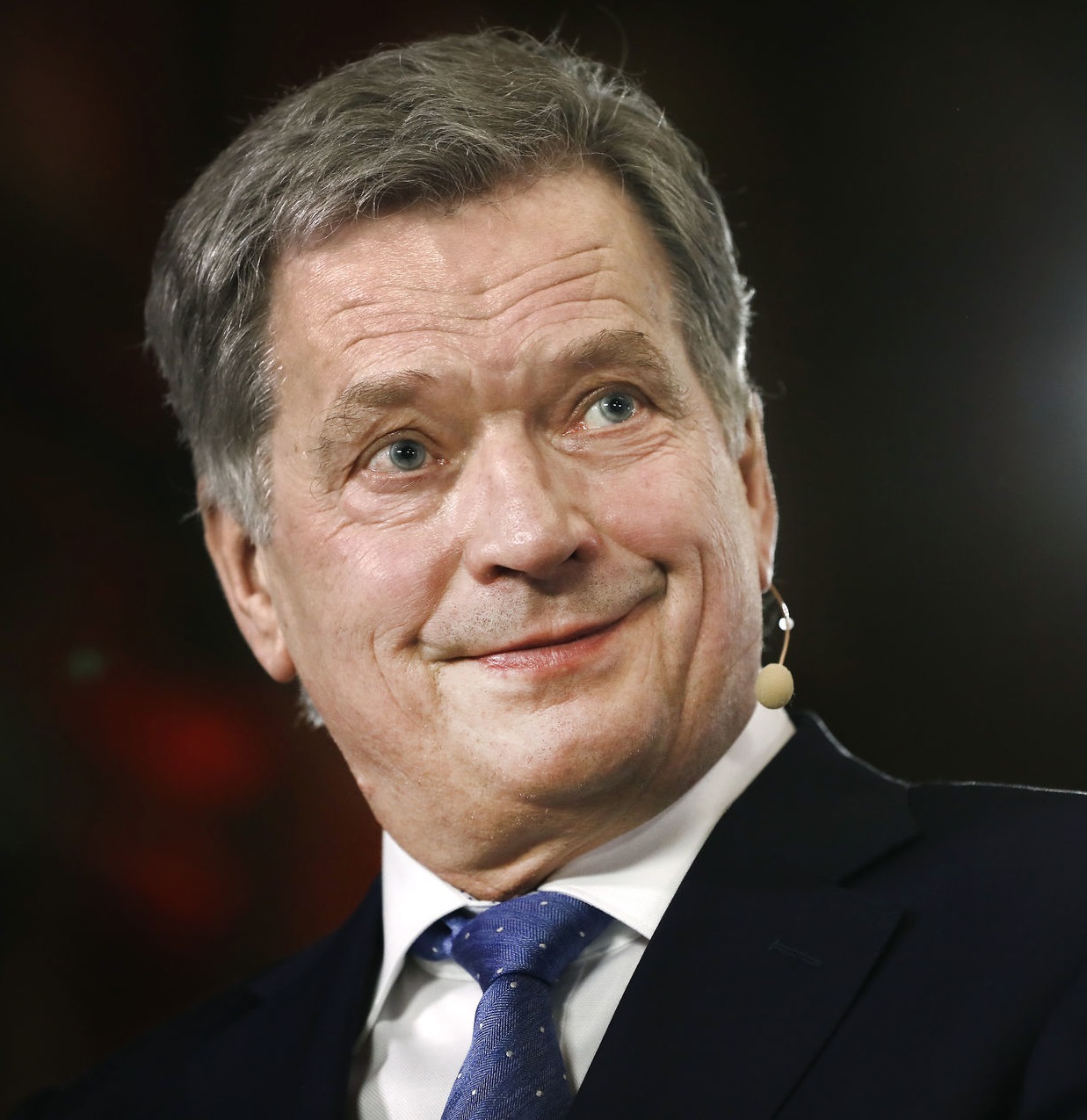
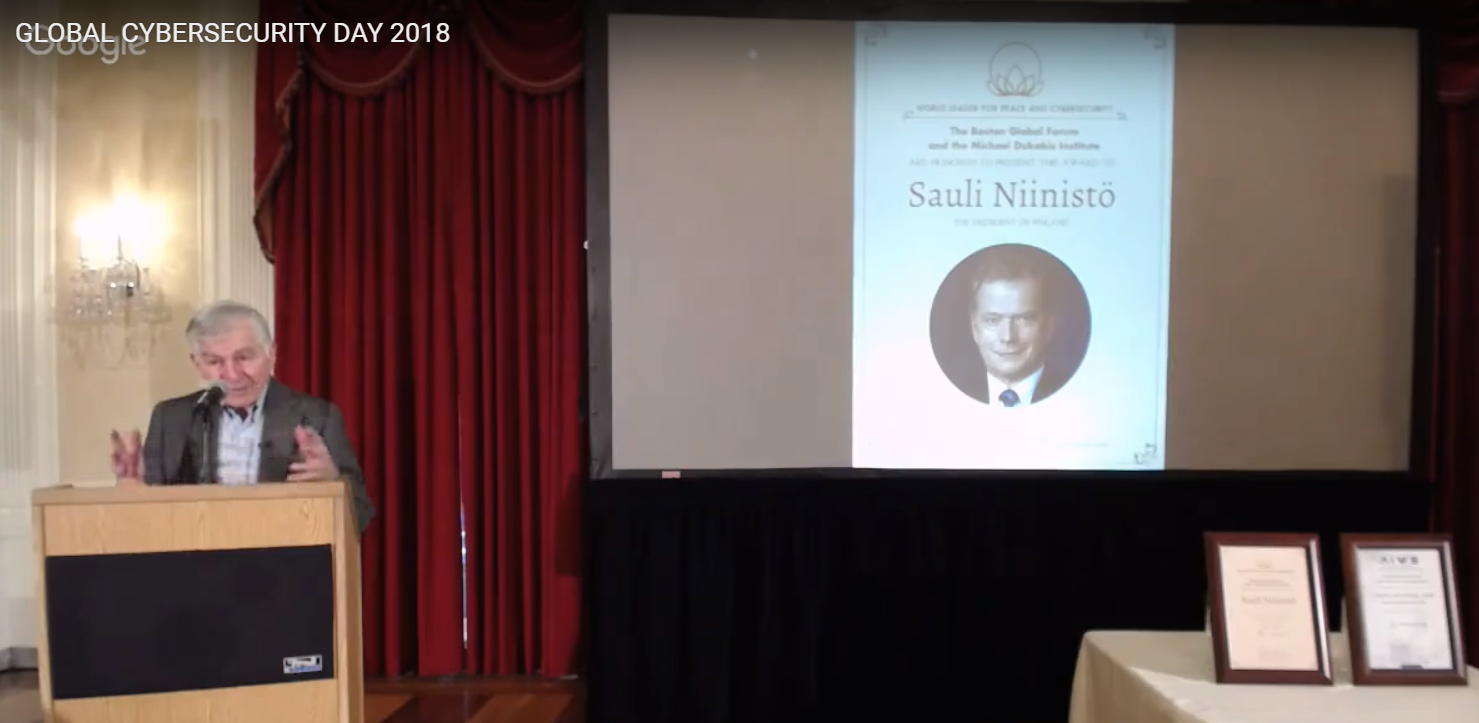
President Sauli Niinistö – President of the Republic of Finland received the World Leader for Peace and Cybersecurity Award from the Boston Global Forum (BGF) and the Michael Dukakis Institute for Leadership and Innovation (MDI). He was honored during Global Cybersecurity Day, which is observed on December 12 each year.
The goal of Global Cybersecurity Day is to inspire the shared responsibility of the world’s citizens to protect the Internet’s safety and transparency. This year’s conference revolved around the theme “AI solutions solve disinformation“. During the discussion, experts explored the current state of cybersecurity and the threat posed by disinformation, anonymous sources and fake news as well as the role AI can play as an effective defense mechanism against these threats to truth and the principles of democracy.
Former Massachusetts Governor Michael Dukakis, Chairman and Co-founder of BGF & MDI, moderated this year’s event.
President Niinistö was presented with the World Leader for Peace and Cybersecurity Award for his leadership role in establishing Finland as a vital member of the world community and his support of The European Centre of Excellence for Countering Hybrid Threats. In this role, he has fostered the understanding of, and solutions to the numerous threats we face from political forces, economic instability, military intervention, civil unrest, climate change, and unsafe Internet practices.
In a video message presented at the Global Cybersecurity Day Symposium, President Niinistö expressed his honor to receive this award and emphasized the importance of cooperation between nations to tackle the issues related to ongoing cyberthreats. “To increase national cybersecurity, all nations need to do their upmost to increase awareness among their citizens in all sectors of society. In cyberspace, we need to strengthen our cooperation between nations and rules over international borders,” said President Niinistö.
He said that he hopes the establishment of an intergovernmental think tank— The European Centre of Excellence for Countering Hybrid Threats—will make our society more secure. In conclusion he also highlighted the role of women in the era of rapid technological development. “Unlocking their full potential is crucial for our success as an international community. We should educate and advocate more young women to become active in this field. It will make us better prepared to profit from the immense opportunity that the digital era affords us.”
To guarantee the interoperability among different frameworks and approaches of governments, given the conditions of uncertainty and complexity in the AI ecosystem, Boston Global Forum – Michael Dukakis Institute for Leadership and Innovation (BGF-MDI) published AIWS Report on AI Ethics and proposed the model for Government AIWS Ethics and Practices Index. Also, BGF-MDI cooperated with AI World to form a strategic alliance host of the AI World Government Conference & Expo, on June 24 to 26, 2019, Washington, D.C.
Artificial Intelligence in the Age of Disinformation and Fake News
♦ ♦ ♦ ♦ ♦
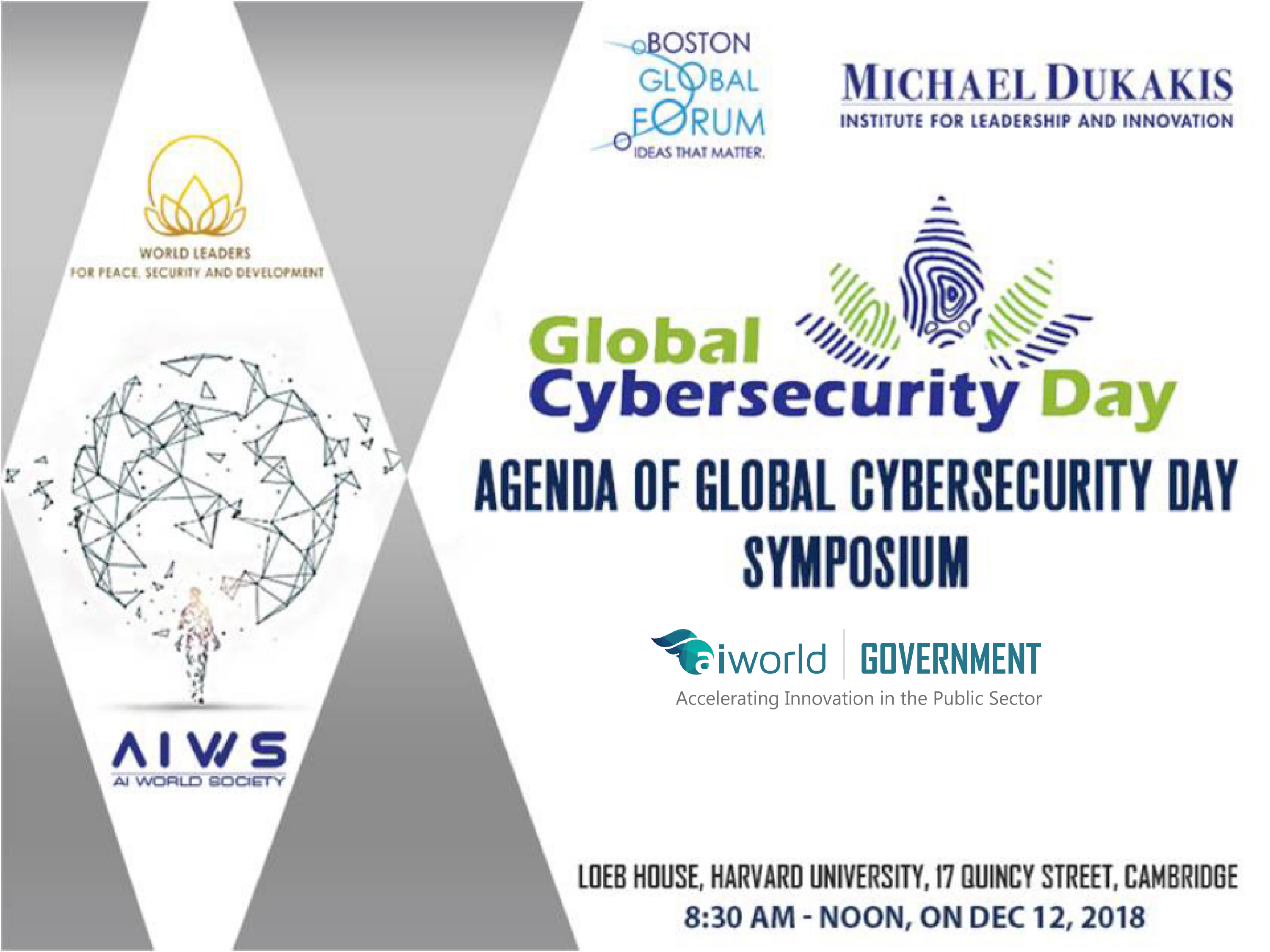
TIME: 8:30 am – Noon, Wednesday, December 12, 2018
VENUE: Loeb House, Harvard University – 17 Quincy Street, Cambridge, MA 02138
MODERATOR: Governor Michael Dukakis, Chairman of Boston Global Forum (BGF) and Michael Dukakis Institute (MDI), former Governor of Massachusetts
AGENDA:
Introduction by Professor Thomas Patterson, Harvard
Opening Remarks by Governor Michael Dukakis, Chairman of BGF and MDI
Global Cybersecurity Day 2018
Announce Recipient and Present Awards for 2018: World Leader for Peace and Cybersecurity – President Sauli Niinistö, President of the Republic of Finland
Remarks of Governor Michael Dukakis
Keynote address of President Sauli Niinistö
Speech of Minister Taro Kono, Ministry of Foreign Affairs of Japan
Conference Theme: AI solutions solve disinformation
The AIWS Distinguished Lecture, Rt. Hon. Liam Byrne MP, the Member of Parliament for Birmingham, Hodge Hill, Shadow Digital Minister, chair of the All-Party Parliamentary Group on Inclusive Growth
PresentationCam Hickey, Information Disorder Lab, Shorenstein Center for Media, Politics and Public Policy, Kennedy School of Government, Harvard University
PresentationProfessor Pradeep K. Atrey, Co-Director, Albany Lab for Privacy and Security, University at Albany, State University of New York
Presentation Professor Thomas Creely, U.S. Naval War College
Discussion moderated by Governor Michael Dukakis
Introduction about AI World Government Conference 2019 by Eliot Weinman, GM & Founder of AI World, Executive Editor of AI Trends
The play “Blue daisies on the forest swamp” of Luu Quang Vu – a genius forecast of the emergence of AI citizens
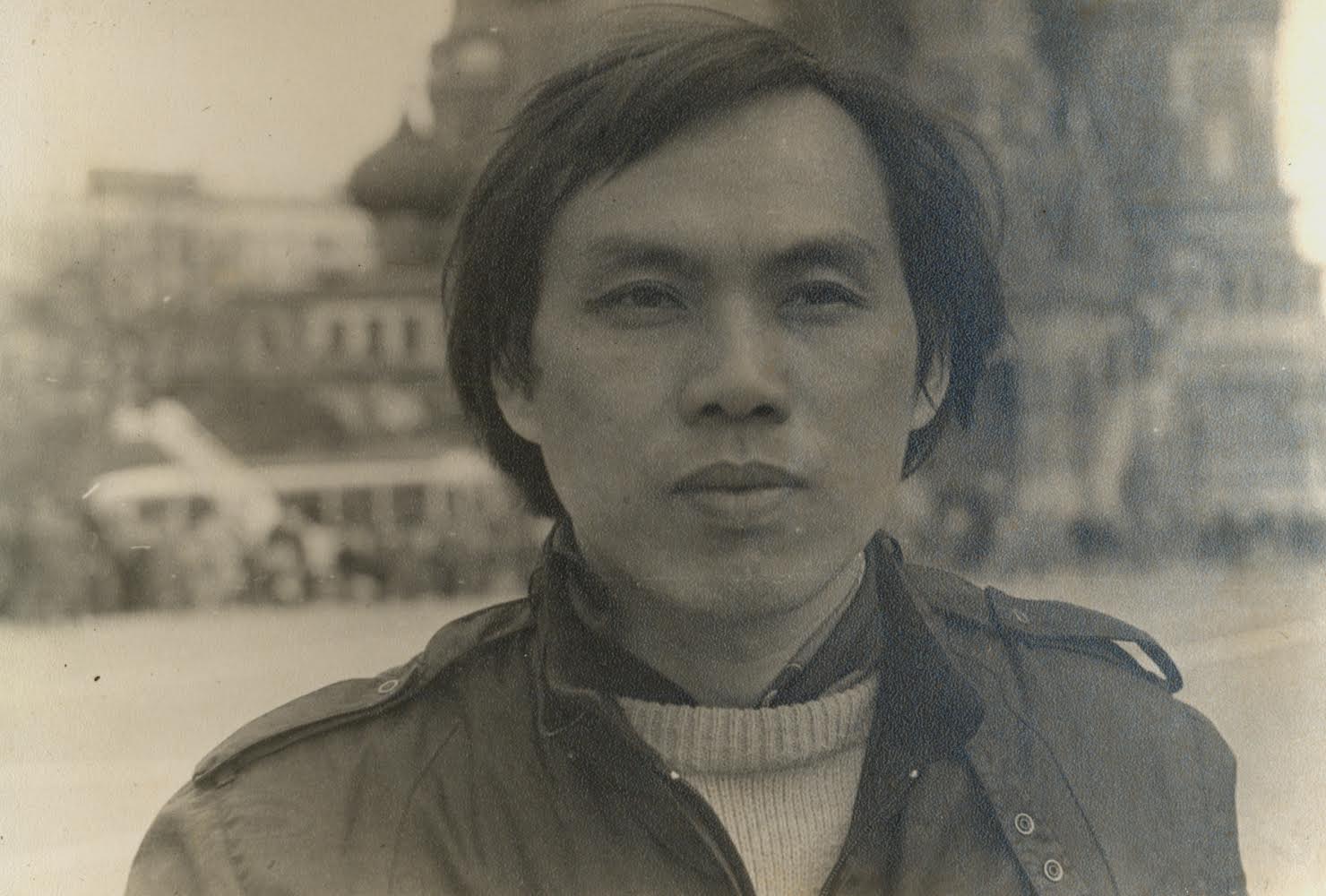
Luu Quang Vu (1948-1988) is a prolific and remarkable writer of modern Vietnamese literature, having produced a large number of works including poetry, theatrical plays, short stories and theater criticism essays. He was posthumously awarded the Ho Chi Minh Award – the most prestigious award for artists who made exceptional contributions to Vietnam arts and literature.
The playwright, poet and writer Luu Quang Vu
Photo: Luu Khanh Tho
His legacy includes about 200 poems, over 50 plays, and several short stories and theater criticism essays. His poetry, loved by many, is very lyrical and emotional, embedded with his thoughts and visions. His plays depict both urging contemporary topics and prolonged philosophical ideas of humanity, many of which have been praised as theatrical classics of the modern Vietnam theater. His plays had an immense impact on the contemporary Vietnamese, helping promote the government’s “Renovation” (Doi Moi) economic reforms in the late 1980s, which brought Vietnam closer to the open world.
Introduction of Luu Quang Vu
Source: The Vietnam Tuoi Tre Theater
Among his plays, Blue daisies on the forest swamp is one of the most outstanding. The original script was completed in 1983 and first premiered in Hai Phong in 1986, directed by director Nguyen Dinh Nghi and performed by the Hai Phong theatrical troupe. Recently, the play has been remade by director Sy Tien and the Tuoi Tre Theater’s theatrical troupe. This remake was awarded the Golden Medal in the Vietnam Professional Theater Festival in April 2018.
Blue daisies on the forest swamp was written more than 40 years ago. Even though AI technology has not been popular at that time, the play has predicted the emergence of robots – the AI citizens who are more perfect than humans, and moral and legal issues relating to robots. It also foresaw the problems caused by those who use science and technology for their selfish purposes. It raised a question: How would artificial intelligence and robots bring happiness to humanity?
Blue daisies on the forest swamp’s trailer
Source: The Vietnam Tuoi Tre Theater
The play was about a love triangle story between three classmates. “Who find the blue daisies blooming in the forest swamp will get the happiness they wish for” – their hometown myth has been with the three main characters: Lien, Hoang, and Van since their childhood. They attended the same class at a little high school in a greenly beautiful valley. They used to compete with each other to cross the tangled grassland on the local forest swamp and find the blue daisies with their hope for lifelong happiness. When they grew up, they all found the jobs that they wanted. The kind Lien became a teacher, the daydreaming Van become a painter and the creative Hoang became a talented engineer with world-changing inventions. The day that Hoang came to confess his love to Lien was also the day that she and Van were about to give him their wedding invitation. Unaccepting of the abrupt truth, Hoang has invented two robots with identical appearance to Lien and Van but possessed the most idealistic and decent traits. The Lien robot is kind, girly, honest and sensitive with sparkling soul, living with just love and childhood dreams, tunneling between the past and the present. The Van robot is a talented painter with his sole passion for painting, believing in the right things, freedom, fairness and integrity. Hoang programmed Lien to only love him and Van to be his loyal, generous and tolerant friend. The Lien and Van robots were Hoang’s dream of happiness. However, out of Hoang’s expectations, there have been several problems caused by the robots when they got a chance to interact with the real world. Being created with many decent traits and the desired to love passionately, the Lien robot dreamed of having a lover with both perfect soul and appearance. During her time with Hoang, she soon realized his selfishness, narrow-mindedness, jealousness, dishonesty, and his habits of flattering his bosses but abusing his subordinates. All these traits, together with … his grinding teeth while he slept, completely wiped out her love for Hoang. Because of her honesty, she told Hoang her thoughts of him. Hoang became confused and disappointed, while Lien was trying to escape from him. She looked for Van and found out he was trapped in Hoang’s basement, just painting and dreaming day in day out. After they escaped together, in order to find them, Hoang reported to the administration that the Lien and Van robots could threaten the society and a special committee was set up to chase them down. They faced several problems with the normal world and their identical appearance with the real Lien and Van caused many misunderstandings; their interaction with the society; the circumstances when they met the real Lien and Van; the moment of breakdown and realization when Hoang followed the robots back to their childhood valley, while they were finding the blue daisies, and witnessed their drowning into the forest swamp. After all that happened, Lien and Van understood the meaning of their love and realized that happiness came from ordinary things in life and their close ones, who they must treasure. Hoang also realized that dreams are just dreams, but dreams will ever last if people could maintain their childlike spirit and, most importantly, do not “let dreams go”, “let childhood memories vanish” and let themselves drown in the swamp of bad intentions and selfishness.
The play has shown a pioneering vision, which is ahead of its time and contains numerous human values. The message embedded in Blue daisies on the forest swamp is: “Whether this is the right time to replace humans by robots? What should we do as humans to avoid become just as robots? Robot will be smarter and even more perfect than humans, then the question is how to live as one should and change our behaviors so that kindness and benevolence would be ever preserved in our society?”.
The fictional vision by Luu Quang Vu has become close to reality after 40 years. The issues raised in his play are all urgent issues observed by countries and technology companies in the race of development and investment for artificial intelligence. “How to develop and utilize AI to make a better world with happiness, decency and compassion, as envisioned by the AI World Society?” is the question that we should ask ourselves – the citizens of a green planet named Earth.
Blue daisies on the forest swamp (full Play)
Source: The Vietnam Tuoi Tre Theater
AI World Society (AIWS) Cultural Value
The AI Age will bring with it an AI Age Culture.
With this in mind, the mission of AI World Society is to bring out the best and minimize the worst traits for humanity.
The AIWS strives to foster positive cultural values of the AI Age:
Humanity, tolerance, sincerity, integrity and honesty.
Create a life in which people can live honestly with others and themselves.
Arouse emotions of the heart, in each person, thereby, encouraging a good spiritual life, noble and beautiful soul, and human love, away from the cruelty and narrow-mindedness hidden among us.
Arouse individual responsibility so that we may develop a world in which power and money is not used to subjugate other nations and individuals.
Those with good and noble intentions, such as intellectuals, creators and volunteers who contribute their time, effort, and dedication to society will always have a good material life.
There will be equal opportunities for access to information and knowledge for every citizen, and equal opportunities to dedicate, contribute and maximize the contributions of each citizen.
The human evaluation scales are creative intelligence, humanity, dedication, and contribution to society.
Respect all life on the earth, especially AI citizens as good friends and powerful assistants, considering AI as a part of the life, intelligence and soul of humanity.
Respect and honor the highest values of human beings: creation, creativity, tectonics, invention, noble hearts and a willingness to live wholeheartedly for the people. For the community the values are charity and benevolence as well as dedicating intelligence, time, effort, and wealth, to contribute to a prosperous, loving and civilized society.
Appreciate the creativity of AI citizens in all areas, in accordance with AIWS principles, charters and ethical standards.
Encourage and respect policies, laws, conventions, solutions, initiatives, and cultural and artistic works that can turn the values of the AIWS into a reality where the majority of citizens and governments accept the AIWS 7-Layer Model Standards.
On December 4 in Boston, Boston Global Forum – Michael Dukakis Institute for Leadership and Innovation (BGF-MDI) announced forming a Strategic Alliance Host of the AI World Government Conference & Expo with AI World. The event will take place on June 24 to 26, 2019 in Washington, D.C.
After the cooperation in the AI World Conference & Expo took place in early December, on December 4, the announcementof further partnership with BGF-MDI was made by Eliot Weinman, GM and Founder of AI World, and Executive Editor of AI Trends.
“We are pleased to continue our collaboration with the Michael Dukakis Institute for Leadership and Innovation and their Boston Global Forum in the jointly-organized conference with the same topic – AI World Government taking place on June 24, 2019,” said Weinman.
Nguyen Anh Tuan, CEO of BGF and Director of MDI, “We have several activities already underway at AI World 2018 and will continue our strategic alliance for all AI World 2019 events. We will present an AI-Government model at AI World Government.”
AI World Government Conference & Expo is developed to inform policy makers, and government’s staffs of the potential application of AI technologies. Introducing the government application of AI in its early adoption and benefits for instance:
Provide better and enhanced services to its constituents
Increase productivity and reduce costs;
Accelerate the overall digital transformation efforts underway throughout government agencies;
On December 12, 2018, the Global Cybersecurity Day 2018 will take place at Loeb House, Harvard University under the moderation of Governor Michael Dukakis, Chairman of Boston Global Forum (BGF) and Michael Dukakis Institute (MDI).
Since the internet boom over the last decade, we have witnessed a significant change in our daily lives as well as how businesses have changed. This has been proved to be greatly beneficial, however, it poses threat to our privacy and safety.
The Global Cybersecurity Day was created to inspire the shared responsibility of the world’s citizens to protect the Internet’s safety and transparency. During the discussion, experts will explore the current state of cybersecurity and the threat posed by disinformation, anonymous sources and fake news as well as the role AI can play as an effective defense mechanism against these threats to truth and the principles of democracy.
The upcoming Global Cybersecurity Day is going to be held at Loeb House, Harvard University, 8:30 am – 12:00 pm, December 12, 2018. The moderator is Governor Michael Dukakis, Chairman of BGF and MDI.
Governor Michael Dukakis will announce the recipient of World Leader for Peace and Cybersecurity Award 2018.
The Minister of Foreign Affair of Japan Taro Kono will give a speech on cybersecurity and disinformation.
The keynote speaker, the AI World Society Distinguished Lecturer is Liam Byrne, Member of Parliament, and Shadow Digital Minister of the United Kingdom. The Agenda of Global Cybersecurity Day follow.