Vehicle’s communication made available thanks to 5G connectivity and new technology

Vehicle’s communication made available thanks to 5G connectivity and new technology

C-V2X, a vehicle’s communicator between cars, can help reduce accidents and enhance autonomous driving.

The latest invention reported by MIT Technology Review, is capable of informing self-driving vehicles about obstacles and connecting them to their surroundings.

C-V2X is a peer to peer wireless technology developed by Ericsson, Huawei, Nokia and Qualcomm. The cars that had C-V2X installed sent and received wireless signals about 10 times per second, displaying information and warnings about pedestrians, storms and accidents on their windshields or dashboards.

A demo that took place in Colorado on August 14 showed that the technology was capable of communicating route information between cars, booths, signs, and other infrastructure. This could be a breakthrough innovation for automakers, especially as telecom operators are launching next generation wireless network known as 5G, which will give C-V2x much more bandwidth than current mobile networks and help speed up the vehicle’s data exchange progress.

“When we get to 5G, you’ll be able to know when a vehicle far ahead of you intends to change lanes or starts to brake even if it’s beyond your line of sight,” said Duggal, Qualcomm’s Vice President of Product Management. “There could even be special lanes where autonomous vehicles are allowed to travel really fast because they’re able to share information about incoming and outgoing traffic at great speed.”

Following the first layer of the AIWS 7-Layer Model—the set of ethical standards for AI developed by MDI—AI should not be able to put at risk the health and safety of humans. Therefore, we should always keep in mind the risk of malfunction in self-driving cars, and users’ safety needs to be guaranteed by developers.

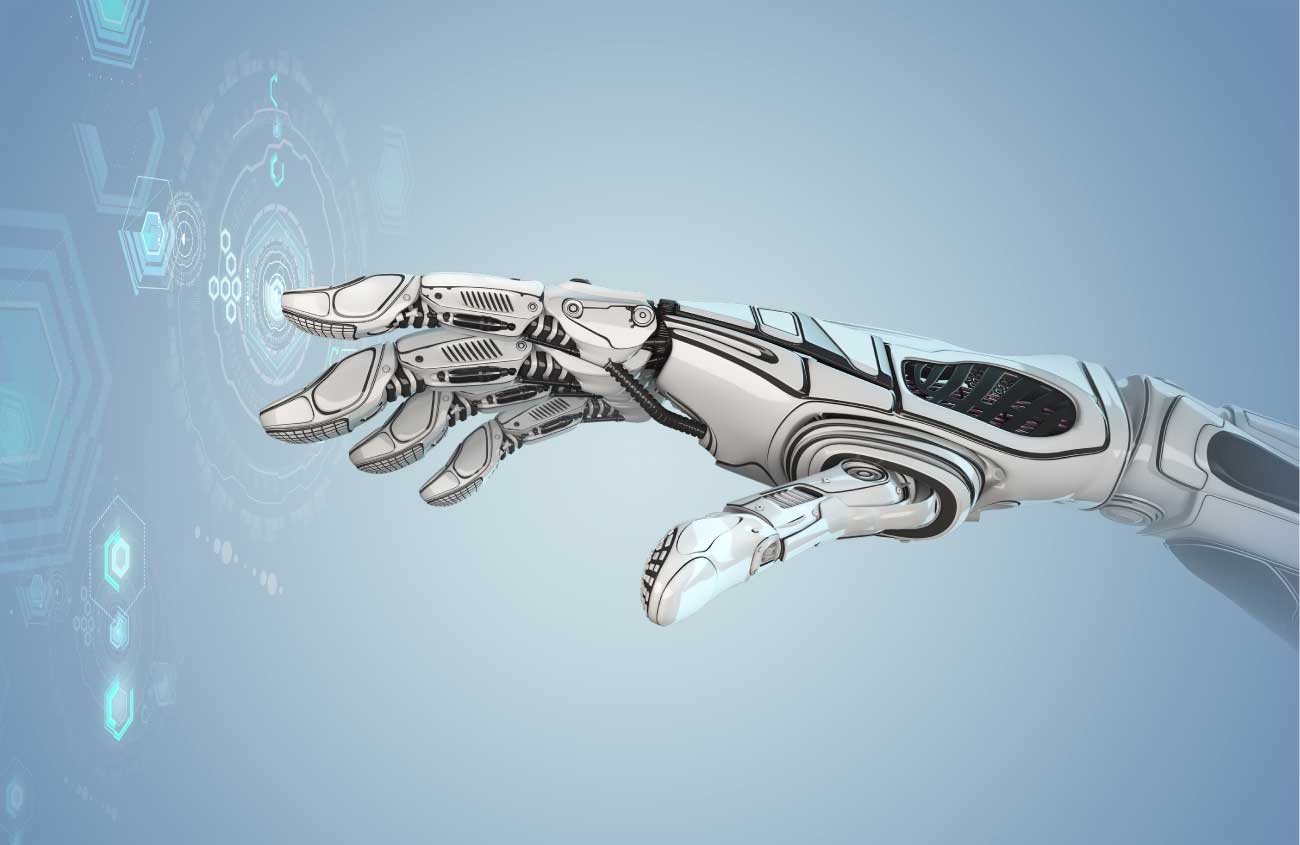
How will robots dominate the world in the future?

How will robots dominate the world in the future?

As development proceeds, robots or emsone way or anotherwill make great changes to human society.

While people and policy makes are worry about job displacement as a result of technological advancement, a new report argues that the jobs displacement rate will likely remain constant in the near future. At the same time, decades and centuries down the road, robots may slowly gain control over humans.

Any divisions made by human such as territories, cities, regions will likely not change going forward, as robots will simply fit in the existing environment. On the contrary, there would be huge changes in the society of robots. The structure of a future robot society depends on how machines evolve over the ages from where they are today. Future robots might possibly be much similar to the models that human have been building recently. All the same, future society could be full of completely different kinds of robots that do not exist at the moment. For instance, with robotic types called brain emulations, the will be different trends in future social structure.

A brain emulation, as known as uploads or ems, is made by taking a particular human brain, scanning to record cell features and connections, and then building a computer model that processes signals according to those features and connections. The three basic technologies required to build ems (computing, scanning, cell modelling) have been developed for centuries and are ready to be applied. Ems can learn, have friends, lovers, bosses and colleagues just like human.

There are two possible scenarios for a future robot society: one consists of robots similar to those today, while the other is filled with brain emulations. One key questions imposed by experts is “How might one try to influence such a robot future?”

The aforementioned case introduced some possible ways to control the future of robot society. One can accumulate resources and entrust them to appropriate organizations in order to gain power to promote large-scale political institutions. Another way is to influence the future via our choices today of structures in computer-intensive parts of society.

The situation in the latter case differs from that of the former, because each emulation is produced from a particular human brain. This allows humans to expect great influence over the individual ems. Moreover, because ems are copies of humans, they will be better fit in the preexisting social structure and characteristics created by human. However, a future in which traditional robots exist instead of ems is more desirable as it would potentially involve less conflict than an em-based society, and will possibly cause enormous changes to prior human arrangements in society.

There are a lot of benefits as well as risks involved in AI. It is difficult to anticipate at this moment how AI development can unfold, but we can lower foreseeable risks. By considering and developing ethical frameworks and standards such as the AIWS Initiative of MDI, we lower the chance of robots gaining control of humans.

Estonian President Toomas Hendrik Ilves: It takes political will to develop a digital society

Estonian President Toomas Hendrik Ilves: It takes political will to develop a digital society

On July 19, at the Digital Innovation Forum 2018 in Taipei, Toomas Hendrik Ilvesformer President of Estonia gave a speech, sharing his experience in digitization.

During his presidency in Estonia, President Toomas Hendrik Ilves, honored as a World Leader in Cybersecurity by BGF in 2017, made his nation one of the most advanced digitalized societies, particularly when it comes to internet freedom and cybersecurity. Over the years, Estonians have gained internet access, improving computer literacy remarkably. During this time, data integrity and privacy were also kept secured.

He emphasized the role of political will in making digitalization feasible—meaning digitalization requires government’s cooperation when it comes to policy, facilitation, and promotion of technology. “A lot of countries do not have the political will to take the same steps,” said President Ilves.

So as to ensure people’s privacy, the country established a digital signature law. It also uses end-to-end encryption and two-factor authorization systems, which can only be decrypted by the recipient of a message.

Another measure to manage cybersecurity in Estonia was the X Road—“a distributed data exchange layer that enable e-services databases to link up and operate”, according to the Estonian President.

As technology is rapidly advancing, it is important to ensure this kind of privacy and security for user’s around the world. For developers, it is essential that they follow a certain set of moral codes as well. The AIWS 7-Layer Model, developed by MDI, is an example of these kinds of ethical standards.

Global Governance for Information Integrity Roundtable

Global Governance for Information Integrity Roundtable

On September 27 in Riga, Latvia, the Ministry of Foreign Affairs of the Republic of Latvia and the World Leadership Alliance-Club de Madrid (WLA-CdM) will hold the Global Governance for Information Integrity Roundtable. Mr. Nguyen Anh Tuan, CEO of BGF and Director of MDI, will attend the panel discussion of this Roundtable, with the consultation of the Latvian Association of Political Science and the NATO Strategic Communications Center of Excellence.

A discussion between global political leaders and international experts is needed to address the issue of fake news in the information space. In the era of thriving communication, social media has had a huge influence on politics. It brought about many opportunities as well as challenges concerning transparency and accountability of political information.

The Roundtable will focus on the first pathway to global action: protecting the integrity of political information through global governance. It will seek to address questions such as:

  • What aspects of new information technologies and social media are most threatening for democratic processes?
  • Should information integrity be protected by law? If so, what should be the priorities and boundaries of information integrity regulation?
  • What lessons can be learned from early experiences with information integrity regulation?
  • What aspects of information integrity regulation can best be achieved through international cooperation? What are the obstacles and opportunities for international cooperation on information integrity?

Agenda:

9:00 – 9:30          Registration

9:30 – 11:00         Opening Session (public) – Information Integrity and the Future of Democracy

11:00 – 11:30        Coffee

11:30 – 13:00       Session I (closed door) – National Regulation for Information Integrity – Teachings from Early Legislation Initiatives

13:00 – 14:00      Buffet lunch

14:00 – 15:30       Session II (closed door) – Opportunities and Obstacles for International Cooperation to Protect Information Integrity

15:30 – 16:00       Closing Session (closed door) – Conclusions

Advancements in developing conversational humanoid robots

Advancements in developing conversational humanoid robots

ERICA, CommU, and Ibuki are some of the new advances brought by Prof. Hiroshi Ishiguro and his team, within the project ERATO ISHIGURO, in developing a humanoid robot with the ability to make human-like conversation.

According to a press release from Japan Science and Technology Agency, Prof. Hiroshi Ishiguro – Member of AIWS Standards and Practice Committee, along with his team, have recently developed a humanoid robot with the ability to take part in human-like conversation. As part of the work, Prof. Hiroshi Ishiguro and his team have developed a child-like android named “ibuki”, with the goal of developing a conversational robot that is also  capable of walking alongside humans by using equipped wheels.

As part of the ERATO ISHIGURO project, a multimodal recognition system was built, including a camera and microphone array. Then, a conversation control system was developed that can control the speech, motion, gaze, and emotion of the robot. This attempts to set a technological foundation to facilitate the interaction of the robot with the human. Though it’s only been tested over a relatively short period, the android “ERICA” has shown abilities to have natural conversations with humans and increase the perceived existence of the robot by the human.

Moreover, a more comprehensive system was developed for the robot which has resulted in a more human-like sense of conversation. It consists of novel technologies, such as the implementation of natural and various types of nodding or asking in return with analyzing the linguistical focus terms of the interaction sentence.

Additionally, a multi-robot conversation control system has been developed with a group of conversational social robots named “CommU”. This system controls the timing of multiple conversational behaviors, which make it possible for the robots to perform turn-taking interactions, such as passing the conversation or playing specific roles during the conversation.

These improvements are expected to be applied during further stages of the development of social conversational robots, which aim to support life as well as human learning.