by Editor BGF | Jan 11, 2026 | News
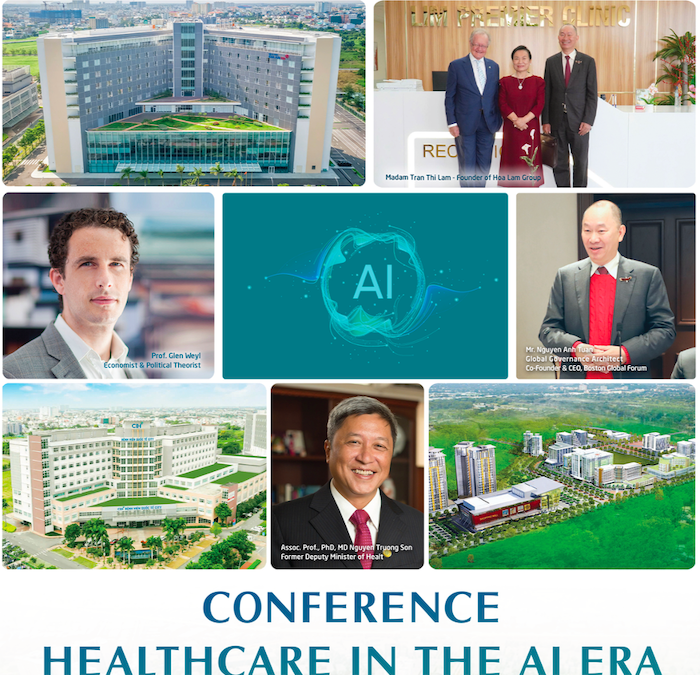
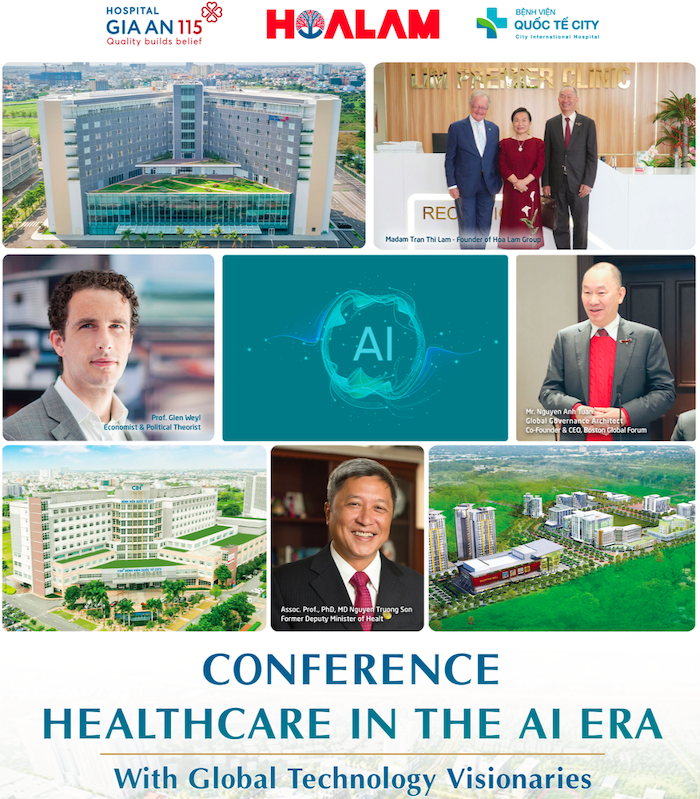
Nguyen Anh Tuan, Global Governance Architect; Co-Founder, Co-Chair, and CEO of the Boston Global Forum (BGF) will deliver a featured presentation at the conference “Healthcare in the AI Age,” hosted by Madam Tran Thi Lam, Founder of Hoa Lam Group, at Hoa Lam Gia An 115 in Ho Chi Minh City on January 14, 2026.
The program is expected to convene leaders and representatives from Vietnam’s health sector, distinguished international and Vietnamese healthcare experts, and members of the BGF–AIWS Family, including Glen Weyl and Harvard Professor Alisha Holland.
In his keynote, Nguyen Anh Tuan will introduce the AIWS Healthcare Model—a human-centered framework that redefines healthcare in the AI Age “not as a system that reacts to illness,” but as a civilizational approach that helps people live healthier, more peaceful, more dignified, and more meaningful lives, integrating physical, mental, emotional, spiritual, and social well-being 24/7 across the lifespan.
He will highlight the model’s paradigm shift from episodic, hospital-centered, efficiency-first care toward continuous 24/7, whole-human, dignity-first, human-led AI.
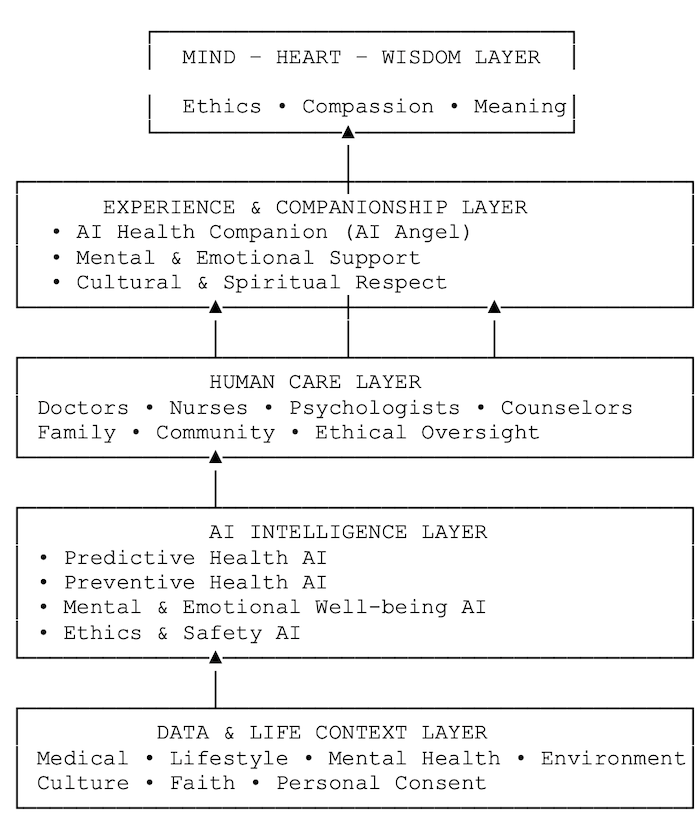
The presentation will also outline the proposed AIWS Healthcare Architecture—spanning a Data & Life Context layer, an AI Intelligence layer (predictive, preventive, mental & emotional well-being, personalized care, and ethics & safety), a Human Care & Governance layer (including clinicians, psychologists, spiritual counselors, ethicists, and family/community support networks), and an Experience & Companionship layer designed around a kind, human-facing health companion.
A central element is the AIWS Healthcare Companion (“AI Angel for Health”), designed to monitor health continuously, detect early warning signals, reduce stress and anxiety, support emotional balance, respect faith and sacred values, and escalate to human care when needed—“a good, kind, and ethical companion—not a controller.”
The conference will also discuss governance safeguards to prevent the dark side of AI in healthcare—rejecting over-commercialization, dehumanization, data exploitation, and algorithmic decisions without human responsibility—anchored by the guiding question: does this deployment make life healthier, kinder, and more meaningful?
This event continues the momentum of Vietnam’s post-London implementation dialogue and advances the AIWS commitment to a healthcare future where AI accelerates care without sacrificing human dignity, compassion, and trust.
Please see full here: https://bostonglobalforum.org/publication/aiws-healthcare-whitepaper/
by Editor BGF | Jan 11, 2026 | News
As part of America at 250 – A Beacon for the AI Age, we propose America Civic Voice (ACV)—a national civic writing and listening network designed to protect free expression with responsibility and transform citizens’ lived experience into policy-relevant signals. As a civic companion to AIWS Government 24/7, ACV provides a constructive channel for testimony, community reports, solution sketches, and evidence—then synthesizes that input into explainable briefs, early warnings, and priority maps for leaders and institutions. ACV is built with constitutional safeguards, transparent standards, and an appeals process to prevent doxxing, incitement, manipulation, and dehumanization. It restores trust by closing the loop: “We heard you → Here’s what changed.” Integrated with large-scale deliberation approaches associated with MIT Professor Alex “Sandy” Pentland (BGF Board Member), ACV strengthens public reasoning—surfacing common ground, clarifying tradeoffs, and accelerating meaningful governance outcomes—so that America’s 250th anniversary becomes a launchpad for democratic renewal in the AI Age.
Please see full here: https://bostonglobalforum.org/publication/america-civic-voice-acv/

by Editor BGF | Jan 11, 2026 | Shinzo Abe Initiative for Peace and Security, News
When a Japanese prime minister dissolves the House of Representatives, history is made—because the act is not only procedural, but philosophical. It is a choice to “reset” political legitimacy by asking the public for a renewed mandate, often under intense pressure and uncertainty. Past leaders have framed dissolution as a test of confidence and direction—turning parliamentary mechanics into a national referendum on leadership and strategy.
For the Shinzo Abe legacy, this moment carries special weight. Abe’s dissolutions—most famously in 2014—were used to seek public judgment on major national course corrections, including the economic program known as “Abenomics.” His approach established a modern template: decisive moves, high stakes, and an appeal to voters to legitimize a strategic agenda.
Now, as Japan enters the Sanae Takaichi era, the same instrument can become either a democratic accelerant—or a destabilizing gamble. The political environment surrounding her rise has already underscored how coalition arithmetic and public trust can quickly become defining constraints.
For BGF’s Shinzo Abe Initiative, the key question is not only whether dissolution is “for better or worse,” but whether it advances Abe’s deeper vision: openness, rule-based governance, and democratic credibility under geopolitical stress. In the AI Age, legitimacy must be earned faster—but also more transparently, more ethically, and with stronger civic trust.
https://japannews.yomiuri.co.jp/politics/politics-government/20260110-303272/
by Editor BGF | Jan 11, 2026 | World Leader for Peace and Security, News, World Leaders in AIWS Award Updates
LOS ANGELES – January 6, 2026 by Nick Patsaouras
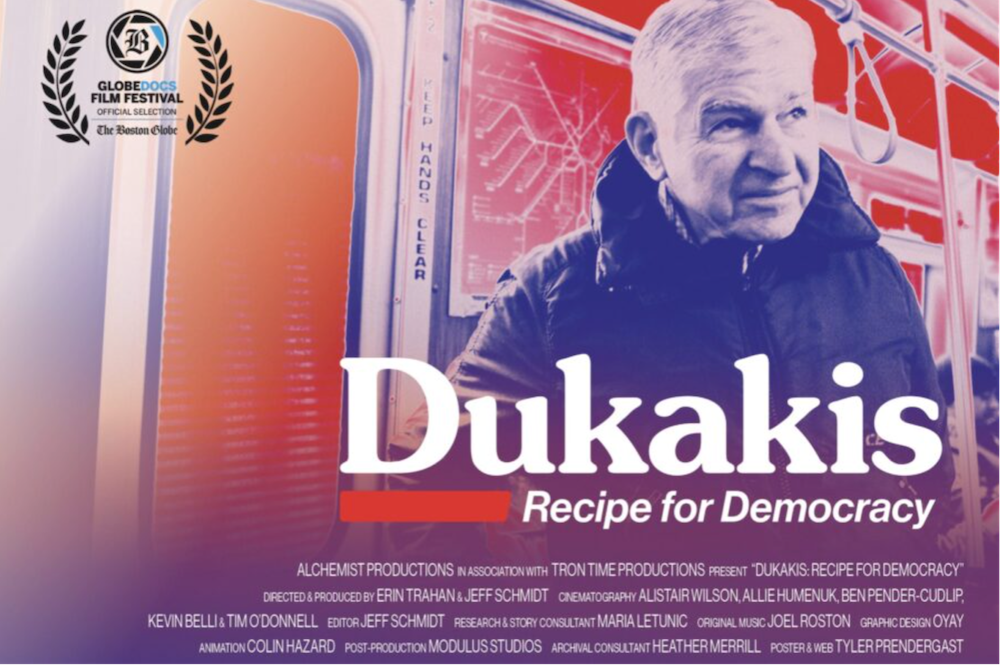
The UCLA premiere of “Dukakis: Recipe for Democracy,” a short documentary directed by Erin Trahan and Jeff Schmidt, offers film audiences a profound opportunity to reflect on a familiar figure in public life—Governor Michael Dukakis. The film presents him not as a campaign artifact of the past, but as a vibrant, continuing presence in our global civic fabric.
A Legacy in Action
The screening at UCLA is particularly fitting. Universities are places where ideas are tested over time, and where the value of a leader’s experience is weighed not by electoral outcomes alone, but by the habits of thought and action a life leaves behind.
Today, that legacy is more active than ever. As the Co-founder and Chairman of the Boston Global Forum (BGF), Governor Dukakis has transitioned from state leadership to global stewardship, guiding the development of the AI World Society (AIWS) and a New Social Contract for the AI Age.
Democracy as a Practice
The documentary captures Dukakis in his later years: teaching, walking his neighborhood, and making soup. The central metaphor—democracy as something that must be tended, prepared patiently, and shared—works because it is understated. It reminds us that democracy is not a spectacle, but a practice sustained by participation and care.
Governor Dukakis applies this same “patient tending” to the future of technology. As the Co-author of the landmark initiative and book, “America at 250: A Beacon for the AI Age,” he bridges the fundamental values of the American Revolution with the complexities of the 21st century. His work emphasizes that for AI to flourish, it must be anchored in the democratic principles of transparency, accountability, and human rights.
Consistency Over Calculation
For the Greek-American audience, and for a broader public concerned with the character of civic life, Michael Dukakis stands as an example of a life lived with consistency rather than calculation. He has remained “legible”—transparent and accessible—to supporters, critics, and students alike.
Whether he is teaching a class at UCLA or Northeastern, or chairing a global forum on AI ethics in Boston, his message remains the same: public service is fundamental to our life as a community.
Honoring the Future
In observing Dukakis, we honor something larger: the idea that democracy, like any enduring human project, is sustained by those willing to care for it over time. Through his leadership at the Boston Global Forum and his vision for America at 250, Governor Dukakis continues to prove that the “recipe” for democracy is an evolving one—one that now requires the integration of humanity’s quintessence with the power of Artificial Intelligence.
Ask yourself: what does each one of us have to offer to this changing theater of politics and technology? In Michael Dukakis, we find a steady, guiding light.
https://humanities.ucla.edu/event/screening-of-award-winning-short-documentary-dukakis-recipe-for-democracy-directed-by-erin-trahan-and-jeff-schmidt/
by Editor BGF | Jan 11, 2026 | News
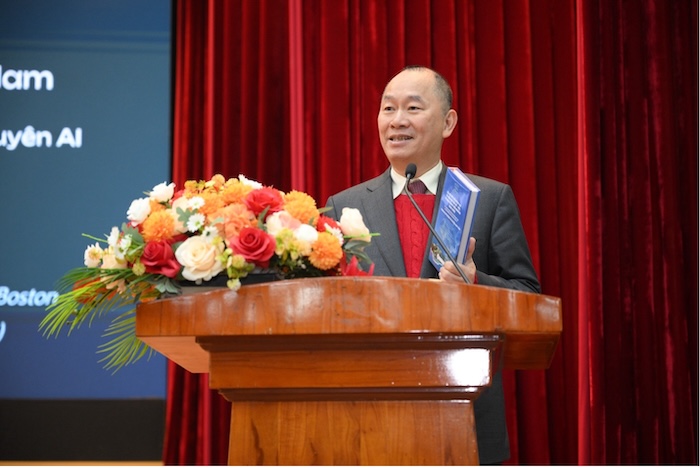
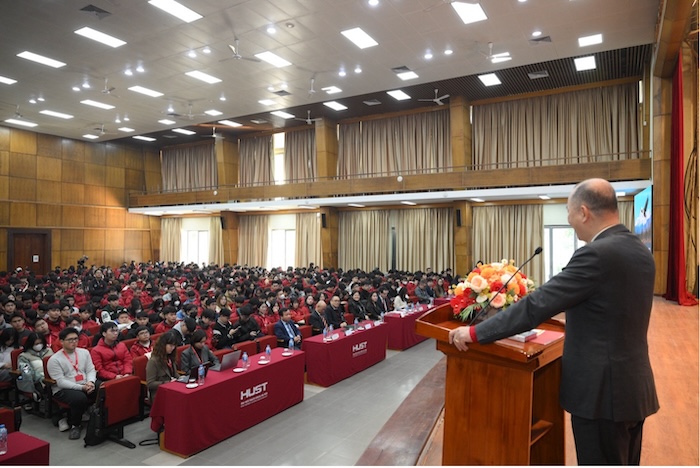
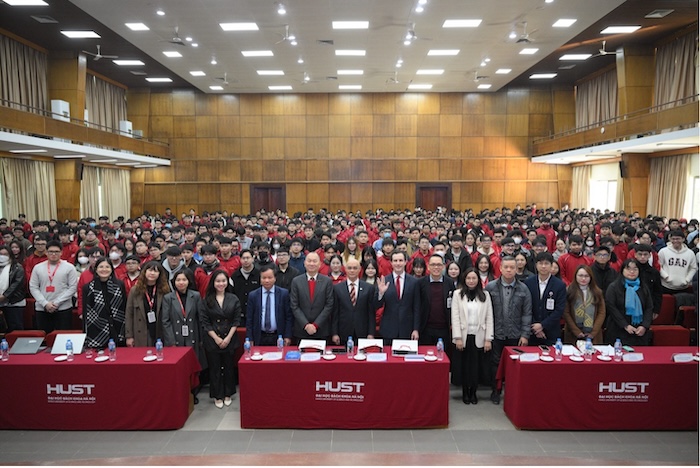
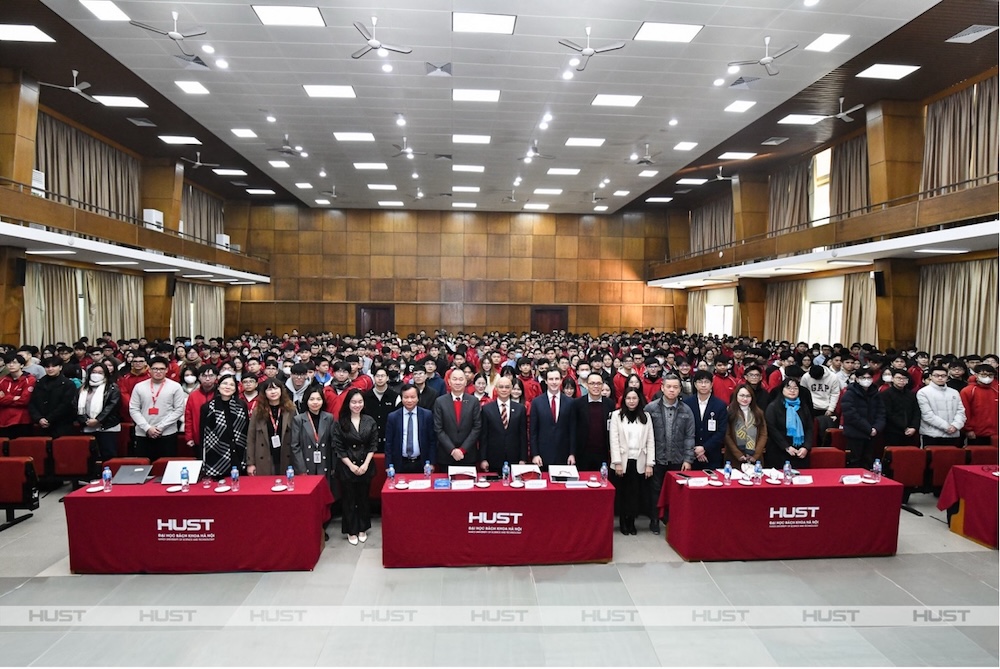
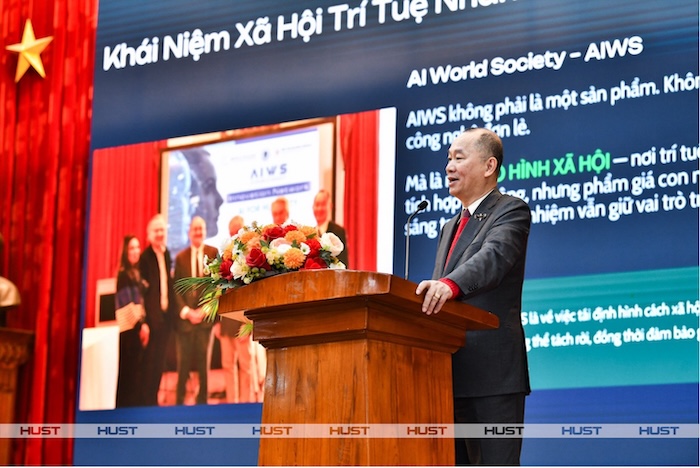
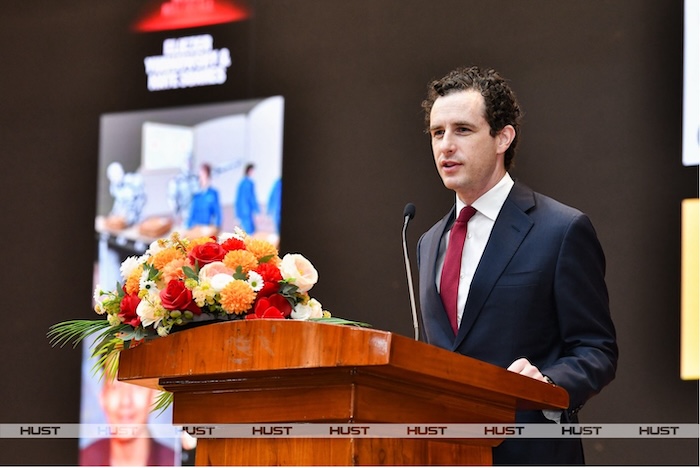
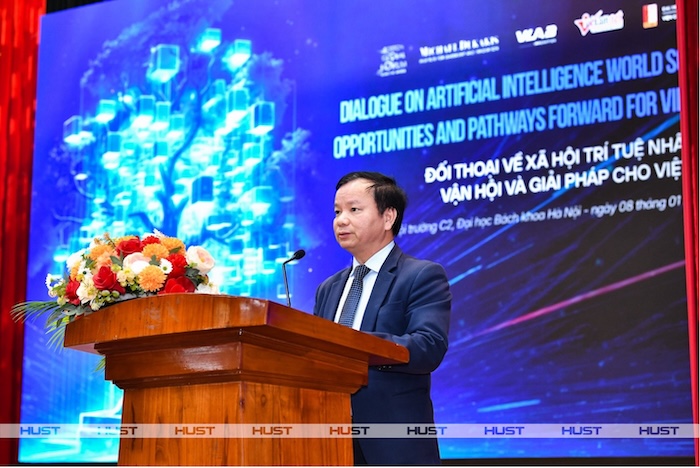
On the morning of January 8, 2026, at the Grand Hall of Hanoi University of Science and Technology (HUST), the university collaborated with VLAB Innovation and VietNamNet Newspaper to organize the seminar “Dialogue on AI World Society – Opportunities and Solutions for Vietnam.”
The event aimed to exchange and clarify core societal issues in the era of Artificial Intelligence (AI), ranging from development opportunities and innovation to challenges in governance, ethics, and social impact.
The seminar brought together numerous domestic and international experts, including: Mr. Nguyen Anh Tuan – CEO of the Boston Global Forum (BGF); Dr. Glen Weyl – Founder of the Plurality Institute and Ph.D. in Economics from Princeton University; Mr. Nguyen Song Nam – CEO of VLAB Innovation; along with representatives from various organizations and students interested in the field of AI.
In his opening remarks, Professor Vu Van Yem – Vice President of Hanoi University of Science and Technology (HUST) – affirmed that the seminar is deeply topical and strategic, addressing a core question: As AI becomes increasingly ubiquitous, how can we ensure this technology promotes human dignity, accountability, and collective prosperity instead of undermining those values?
From the perspective of a leading technical and technological university, the Vice President of HUST emphasized that the university’s responsibility extends beyond training human resources; it also includes contributing to the system of standards, solutions, and AI development orientations based on scientific evidence.
According to Prof. Vu Van Yem, HUST is currently implementing three strategic focuses to adapt to the AI era.
Mr. Nguyen Anh Tuan – CEO of the Boston Global Forum – delivered a presentation titled “AI World Society and Opportunities for Vietnam.”
Mr. Tuan noted that HUST’s approach to AI aligns with the direction of the “AI World Society” — a concept featured in the book “AI World Society: 30-Year U.S.-Vietnam Partnership, from Nha Trang to Boston (1995-2025),” co-authored by Harvard Professor Thomas E. Patterson and himself.
He also shared a personal story about his journey with technology, expressing his belief that Vietnam should not merely follow and learn but must aim for innovation and create products with a global impact. According to Mr. Nguyen Anh Tuan, Vietnam has an opportunity to realize new ideas for an AI social model when higher education institutions, prominently HUST, pioneer the transformation of vision into practice.
Please read the full article regarding this event on the Hanoi University of Science and Technology website at the following link:
https://hust.edu.vn/vi/news/khoa-hoc-cong-nghe-dmst/co-hoi-phat-trien-mo-hinh-xa-hoi-tri-tue-nhan-tao-cho-viet-nam-655757.html
by Editor BGF | Jan 11, 2026 | News, Shaping Futures
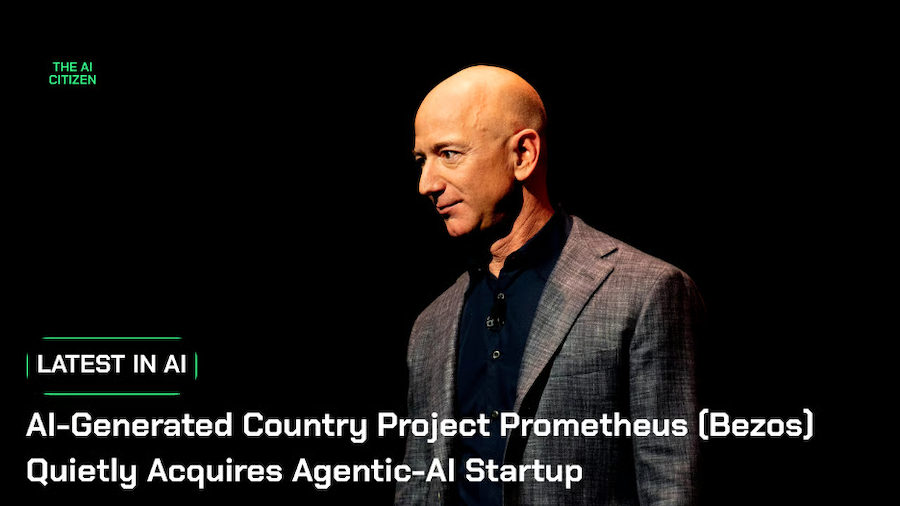
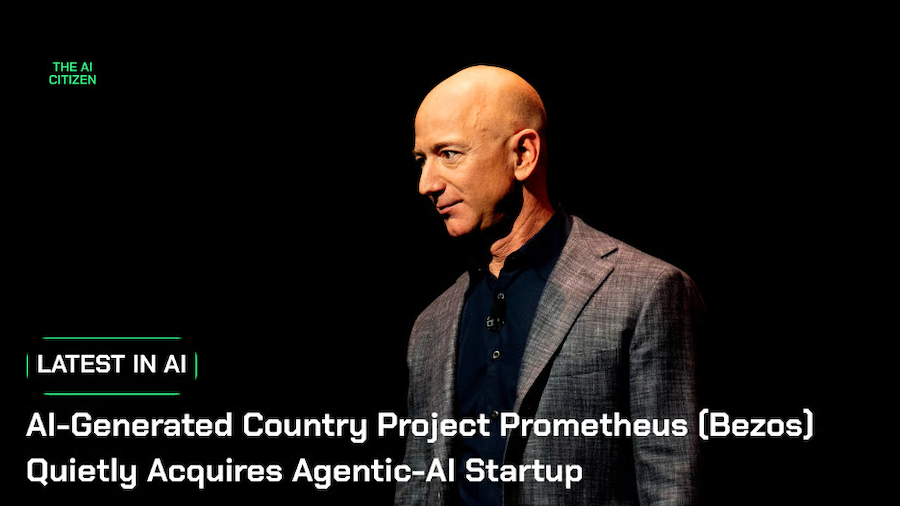
General Agents has introduced Ace, a real-time “computer pilot” designed to operate across everyday software interfaces the way a human would—seeing the screen, navigating menus, and executing multi-step tasks directly through the user interface rather than relying only on APIs. This approach signals a major shift from “chat-based assistance” to autonomous action on the digital desktop—where speed, reliability, and safety become decisive. (SiliconANGLE)
In reporting on the agentic-computing race, WIRED highlighted Ace’s standout advantage: extremely low latency. Harsha Abegunasekara, CEO of a competing startup, credited General Agents with “cracking” speed—calling Ace “light speed” and noting rivals had not matched it despite months of work. (WIRED)
For BGF–AIWS, Ace illustrates both promise and urgency. “Action AI” can dramatically accelerate productivity—reducing friction in administration, operations, and service delivery. But as agents gain the power to do, not just suggest, governance must evolve: audit logs, per missioning, abuse prevention, transparency, and human responsibility must be designed in from day one.
This is where AIWS principles matter: an AIWS Angel should not merely act fast—it should act ethically, explainable, and in service of human dignity. Ace is a glimpse of the near future; AIWS is the blueprint for ensuring that future remains trustworthy.
https://www.wired.com/story/jeff-bezos-new-ai-company-acquired-agentic-computing-startup/
by Editor BGF | Jan 11, 2026 | Global Alliance for Digital Governance
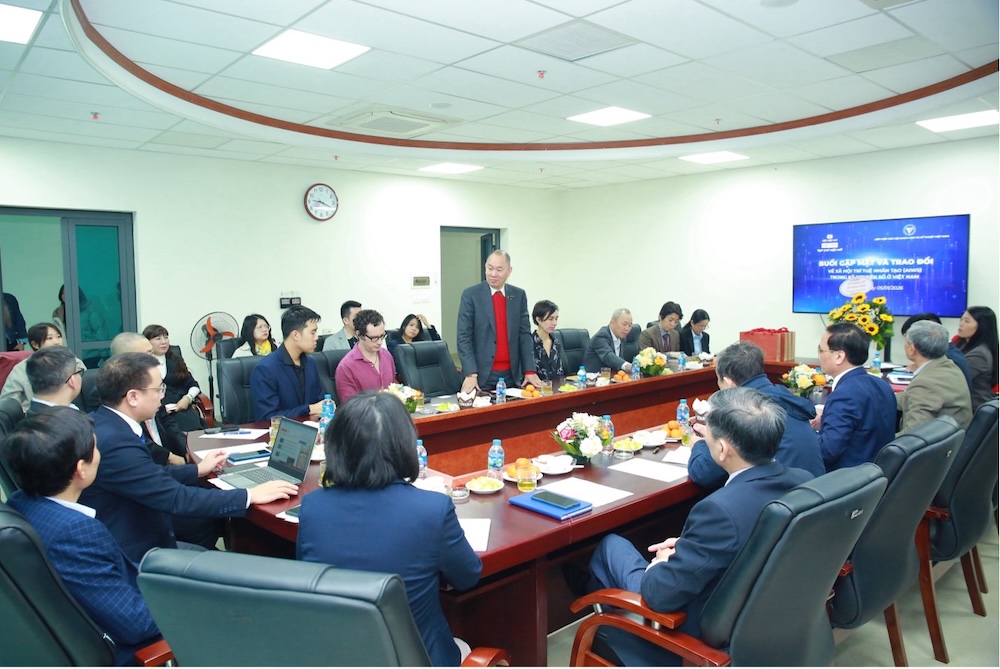
HANOI – January 5, 2026 – At the headquarters of the Vietnam Union of Science and Technology Associations (VUSTA), Professor Pham Ngoc Linh, Standing Vice President of VUSTA, hosted a high-level working session with the leadership of the Boston Global Forum (BGF) on the theme: “AI World Society (AIWS) and Opportunities for Vietnam.”
The visiting delegation was led by Mr. E. (Eric) Glen Weyl, Founder and Research Lead for Special Projects at Microsoft Research, and Mr. Nguyen Anh Tuan, Co-Founder and Co-Chairman of the Boston Global Forum (BGF).
The meeting focused on the latest advancements in the AI era and strategic pathways for Vietnam to leverage modern governance models for breakthrough development. During the session, Mr. Nguyen Anh Tuan and Mr. Glen Weyl introduced four pivotal strategic initiatives:
- AIWS Government 24/7: A model for continuous, uninterrupted governance built on intelligence and ethics, designed to optimize administrative efficiency and serve citizens and businesses anytime, anywhere.
- AIWS-DASI Digital Asset Standards: The “Digital Asset Standard Initiative” (DASI), which provides frameworks to identify and protect transparent digital asset values, ensuring integrity in the new economy.
- AI World Society and Plurality in the Digital Age: A vision for a human-centric society where AI technology is harnessed to uphold human dignity, diversity, and collective prosperity.
- Humanity’s Quintessence Project (Tinhhoa.ai): A digital sanctuary for the world’s most significant intellectual achievements. This project is a strategic collaboration between BGF and Tri Thuc Publishing House (under VUSTA), operating under the slogan: “Humanity’s Quintessence for the AI Age.”
A major highlight of the session was a presentation by Mr. Glen Weyl on the concept of “Plurality” and the eponymous book he co-authored with Audrey Tang. The presentation offered profound perspectives on collaborative synergy and how technology can empower diverse communities.
Representing VUSTA and Vietnamese partners were the Leaders of VUSTA; Ms. Bui Thi Thu Hang, Director of Tri Thuc Publishing House; and members of the publishing house’s Global Innovation Board, including Ambassador Vu Quang Minh (Former Deputy Minister of Foreign Affairs), Mr. Nguyen Minh Tu (Chairman of SVTech), and prominent leaders from the technology sector.
In his concluding remarks, GS.TS. Pham Ngoc Linh highly commended the visionary solutions presented. He emphasized that collaboration between domestic scientific organizations and world-leading scholars like Glen Weyl, alongside prestigious institutions like the Boston Global Forum, offers Vietnam a significant opportunity to master AI technology in a human-centric and sustainable manner.
The event concluded with a shared commitment to the upcoming Vietnam Science and Technology Forum in the AI Era and the official launch of Tinhhoa.ai, aiming to disseminate global wisdom to the Vietnamese intellectual community and the public.
by Editor BGF | Jan 10, 2026 | Papers & Reports, Publications
A National Civic Writing & Listening Network for the AI Age
For: America at 250 – A Beacon for the AI Age (2026)
Proposed by: Nguyen Anh Tuan, Global Governance Architect; Co-Founder, Co-Chair & CEO, Boston Global Forum (BGF); Creator of AIWS
What ACV Is
America Civic Voice (ACV) is a national civic writing and listening network that protects free expression with responsibility—turning citizens’ lived experience into constructive, actionable input for democratic governance in the AI Age.
Why It Matters Now
America’s democracy is overloaded by polarization and noise, while real needs too often go unheard. ACV restores productive civic voice and converts it into clear, ethical signals for modern governance—aligned with AIWS Government 24/7.
Core Outcomes
- Protect rights + responsibility: free expression with clear integrity safeguards
• Rebuild trust: “We heard you → Here’s what changed” feedback loops
• Increase speed + quality of governance: faster issue detection, clearer priorities, better decisions
• Reduce polarization: elevate common ground and practical solutions across communities
ACV System (4 Parts)
1) Civic Writing Platform (Web/Mobile)
Prompted civic writing for stories, problems, proposals, and evidence—not slogans.
Supported formats: short testimony, community reports, solution sketches, and “what worked” case notes.
2) Civic Listening & Synthesis (AI-assisted; human-governed)
AI clusters input into themes, tradeoffs, and urgent alerts, producing weekly and monthly briefs, with human editorial review and governance oversight.
Outputs are explainable and accompanied by review notes and uncertainty flags.
3) Responsibility & Trust Layer
Clear civic integrity standards:
• No doxxing, no incitement, no dehumanization, no coordinated manipulation
• Transparent summaries + audit notes + bias checks + appeals mechanism
• Optional identity verification (with privacy-preserving design)
4) Government Interface (AIWS Government 24/7 Link)
Feeds citizen signals into:
• 24/7 Citizen Service Portal (case routing, tracking, and response)
• Transparency & Trust Dashboard (performance, integrity, outcomes)
Governance & Safeguards
- Nonpartisan Civic Trust Board (civil rights leaders, academia, journalism, local leaders, youth, veterans, and faith voices)
• Constitutional alignment and public accountability
• Independent reviews and published standards
Flagship Use Cases
- Service failures (healthcare access, housing, infrastructure, public safety)
• Community reconciliation dialogues (shared prompts; visible common ground)
• “Signal vs. noise” civic priority maps (local/state/national)
• Citizen solutions pipeline (highlight ideas; connect to partners)
Integration pathway (Pentland / deliberation.io): ACV can integrate with deliberation.io and related large-scale dialogue methods advanced by MIT Professor Alex “Sandy” Pentland (BGF Board Member) and collaborators, enabling structured civic deliberation at scale—finding common ground, surfacing tradeoffs, and translating citizen input into policy-relevant signals (deliberation reports and tradeoff memos). This strengthens ACV’s Dialogue & Civic Participation Layer, complementing civic writing with facilitated deliberation sessions and measurable governance follow-through.
Metrics
- Participation diversity + retention
• Constructive content ratio and integrity outcomes (appeals, removals, transparency score)
• Time-to-insight + time-to-action (issue → acknowledged → resolved)
• Trust indicators (public satisfaction, repeat engagement)
• Civic impact (services improved, conflicts reduced, solutions adopted)
America at 250 Legacy Statement
At America’s 250th anniversary, ACV renews the founding promise: a democracy that listens to its people. By combining freedom with responsibility—and AI with ethics—ACV becomes a cornerstone of AIWS Government 24/7 and a model for democratic renewal in the AI Age.
by Editor BGF | Jan 11, 2026 | Papers & Reports, Publications
Human-Centered, Continuous, and Humane Healthcare in the AI Age
Issued by: AI World Society (AIWS)
Author: Nguyen Anh Tuan
Global Governance Architect
Co-Founder, Co-Chair & CEO, Boston Global Forum
Creator of the AI World Society (AIWS)
Date: January 11, 2026
EXECUTIVE SUMMARY
The AI World Society (AIWS) Healthcare Model proposes a transformational shift in how societies define, govern, and deliver healthcare in the Age of Artificial Intelligence.
AIWS Healthcare moves beyond a narrow medical framework focused on disease treatment and introduces a civilizational model of care—one that integrates physical health, mental well-being, emotional resilience, spiritual grounding, cultural dignity, and social trust into a single, continuous system supported by AI.
This whitepaper establishes:
- A new definition of healthcare for the AI Age
- A human-centered AI healthcare architecture
- Governance, ethical, and trust standards
- Practical pathways for national and institutional deployment
CHAPTER I — WHY HEALTHCARE MUST BE REDEFINED
For centuries, healthcare has been reactive:
- Treat illness after it appears
- Operate in fragmented episodes
- Focus almost exclusively on physical symptoms
In the AI Age, such a model is insufficient.
AI enables:
- Early detection
- Continuous monitoring
- Personalized care
- Preventive intervention
But without ethical leadership, AI risks turning healthcare into:
- A data-extraction industry
- A commercialized algorithmic system
- A cold, dehumanized service
AIWS Healthcare exists to prevent that future.
CHAPTER II — THE CORE PHILOSOPHY OF AIWS HEALTHCARE
AIWS Healthcare is founded on one guiding principle:
Technology must elevate human dignity, not redefine humanity.
Five Foundational Commitments
- Human Supremacy
- AI advises; humans decide.
- Responsibility always remains human.
- Whole-Human Care
- Body, mind, emotion, spirit, and community are inseparable.
- Continuity (24/7)
- Care is lifelong, proactive, and uninterrupted.
- Ethics by Design
- Privacy, consent, transparency, and accountability are embedded.
- Compassion as a System Value
- Empathy is engineered into healthcare workflows.
CHAPTER III — THE AIWS HEALTHCARE MODEL
From Old Model → New Model
| Traditional Healthcare |
AIWS Healthcare |
| Hospital-centered |
Human-centered |
| Reactive |
Predictive & preventive |
| Episodic |
Continuous 24/7 |
| Efficiency-first |
Dignity-first |
| Physical care only |
Whole-person care |
| AI as automation |
AI as ethical companion |
CHAPTER IV — AIWS HEALTHCARE ARCHITECTURE
Visual Architecture Diagram
CHAPTER V — THE AIWS HEALTHCARE COMPANION (AI ANGEL)
The AIWS Health Companion is not a chatbot.
It is a trusted, ethical digital companion that:
- Detects early physical and mental risks
- Reduces stress and decision fatigue
- Encourages rest, balance, creativity, and connection
- Supports emotional resilience
- Respects faith, belief, and cultural identity
- Knows when to escalate to human professionals
AI is positioned as a kind assistant, not a clinical authority.
CHAPTER VI — MENTAL, EMOTIONAL & SPIRITUAL HEALTH
AIWS Healthcare explicitly integrates:
- Mental health
- Emotional balance
- Spiritual meaning
- Cultural respect
AI may:
- Identify burnout or depression signals
- Suggest art, music, meditation
- Encourage social and family connection
- Protect sacred values and spaces
A healthy society is not only efficient—it is humane.
CHAPTER VII — GOVERNANCE, TRUST & SAFETY
AIWS Healthcare requires:
- Ethical review councils
- Continuous auditing
- Explainable AI
- Human override mechanisms
- Transparent data governance
Aligned with:
- AIWS Trust Score
- AIWS Ethical Framework
- AIWS Digital Asset Standards (DASI) where applicable
CHAPTER VIII — ADAPTATION FOR VIETNAM
Vietnam AIWS Healthcare Priorities
- Universal access
- Community-based care
- Cultural and spiritual sensitivity
- Mental health integration
- AI-assisted preventive medicine
- Cost-effective scalability
Flagship Pilots
- Hoa Lam Gia An 115 as a regional AIWS Healthcare Hub
- AI Health Companions for citizens
- Ethical AI medical governance frameworks
- Integration with AIWS Government 24/7
Vietnam can co-create, not merely adopt, AI healthcare models.
CHAPTER IX — ADAPTATION FOR “AMERICA AT 250 – A BEACON FOR THE AI AGE”
For the United States, AIWS Healthcare supports:
- Faster, smarter, and fairer healthcare delivery
- Reduced administrative burden through AI
- Mental health resilience for a polarized society
- AI-assisted preventive care at national scale
- Restoration of public trust in institutions
Healthcare becomes a core pillar of democratic renewal.
CHAPTER X — THE ULTIMATE TEST
AIWS Healthcare asks one decisive question:
Does this system make people healthier, calmer, more compassionate, and more dignified?
If yes → adopt.
If not → redesign.
CONCLUSION
AIWS Healthcare is not a technology project.
It is a moral architecture for the AI Age.
In choosing this path, societies choose:
- Care over control
- Compassion over cold efficiency
- Humanity over unchecked automation