by Admin | May 2, 2016 | World Leaders in AIWS Award Updates
( May 2nd, 2016) The decision by the Bank of Japan to put off more economic stimulus for now means that market watchers are turning their attention to Prime Minister Shinzo Abe to see if he will propose a supplementary spending package to accelerate economic growth.
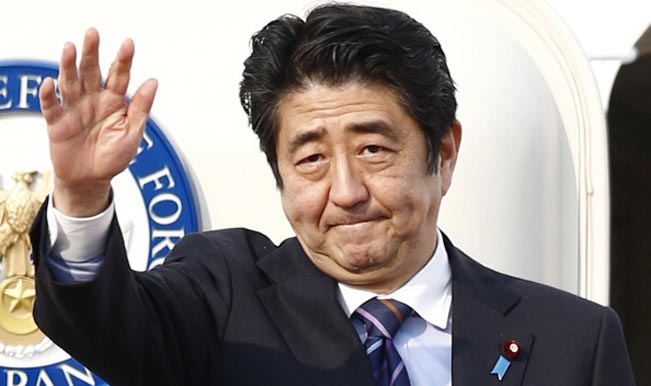
The Boston Global Forum has named Mr. Abe a “World Leader for Peace, Security and Development.’’
Bloomberg News has noted: “Abe has already said he’ll create a supplementary budget to address the economic damage caused by deadly earthquakes in Kumamoto earlier this month. The central bank said on Thursday it would supply 300 billion yen of funds to banks affected by the quakes.’’
by Admin | May 1, 2016 | World Leaders in AIWS Award Updates
(May 2nd, 2016) Japanese Prime Minister Shinzo Abe will visit Italy, France, Belgium, Germany, Britain and Russia this week for talks with their leaders.
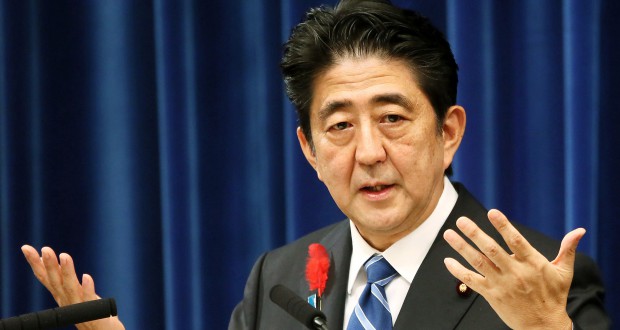
Mr. Abe will exchange views on the world economy and other major issues to be discussed at a G7 Summit that Japan will host on May 26-27. Italy, France, Germany, Canada, the United States, Japan and Britain are the G7 members. For a while there was a G8, which included Russia, but that nation was excluded after its invasion and occupation of Ukraine’s Crimea peninsula.
In Russia, Abe will talk with President Vladimir Putin on bilateral relations, including a territorial dispute over four Russian-held islets off Hokkaido, and other international issues.
The G-7 Ise-Shima Summit will take place May 26 to 27 in Mie Prefecture, central Japan.
by Admin | Feb 29, 2016 | World Leaders in AIWS Award Updates
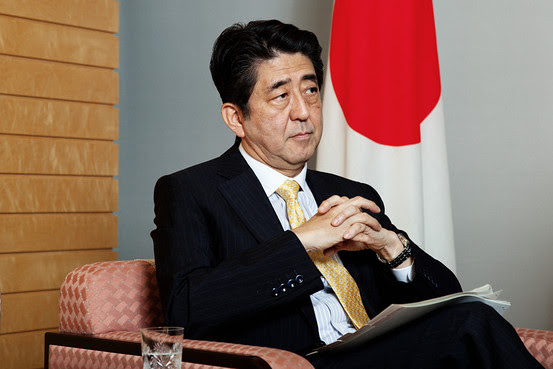
(29th Feb 2016) Mr. Abe said the tax decision must be based on expert analysis to determine “whether the global economy is really contracting.
Japanese Prime Minister Shinzo Abe’s recent warning about the possibility of a severe global economic contraction after theMay 26-27 G7 Summit, in Japan, has spurred speculation about delaying a tax increase and about the timing of the next parliamentary lower-house elections.
Mr. Abe said the tax decision must be based on expert analysis to determine “whether the global economy is really contracting.”
The economic outlook looks increasingly uncertain ahead of the upper-house election this summer.
See more
by Admin | Feb 15, 2016 | World Leaders in AIWS Award Updates
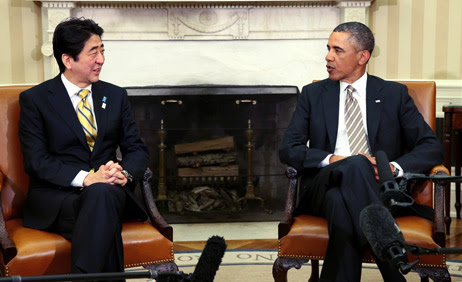
(15th Feb 2016) U.S. President Barack Obama and Japanese Prime Minister Shinzo Abe have discussed by phone North Korea’s menacing. Feb. 6launch of a ballistic missile and called for a strong international response to what the White House called a “destabilizing provocation.’’
U.S. President Barack Obama and Japanese Prime Minister Shinzo Abe
U.S. President Barack Obama and Japanese Prime Minister Shinzo Abe have discussed by phone North Korea’s menacing. Feb. 6launch of a ballistic missile and called for a strong international response to what the White House called a “destabilizing provocation.’’ But perhaps more importantly, Mr. Obama emphasized America’s “ironclad’’ commitment to Japanese security and promised to take all necessary steps to defend Japan and its other allies in the region.
The launch distressed many around the world in part because it showed North Korea’s increasing technological capability, including in cyber-related matters.
The U.S., South Korea and Japan have been urgently discussing tougher sanctions on the North Korean police state – a topic bound to come up at the G7 Summit in May. Japan and the U.S., of course, are both members of the G7.
See more
by Admin | Mar 12, 2016 | World Leaders in AIWS Award Updates
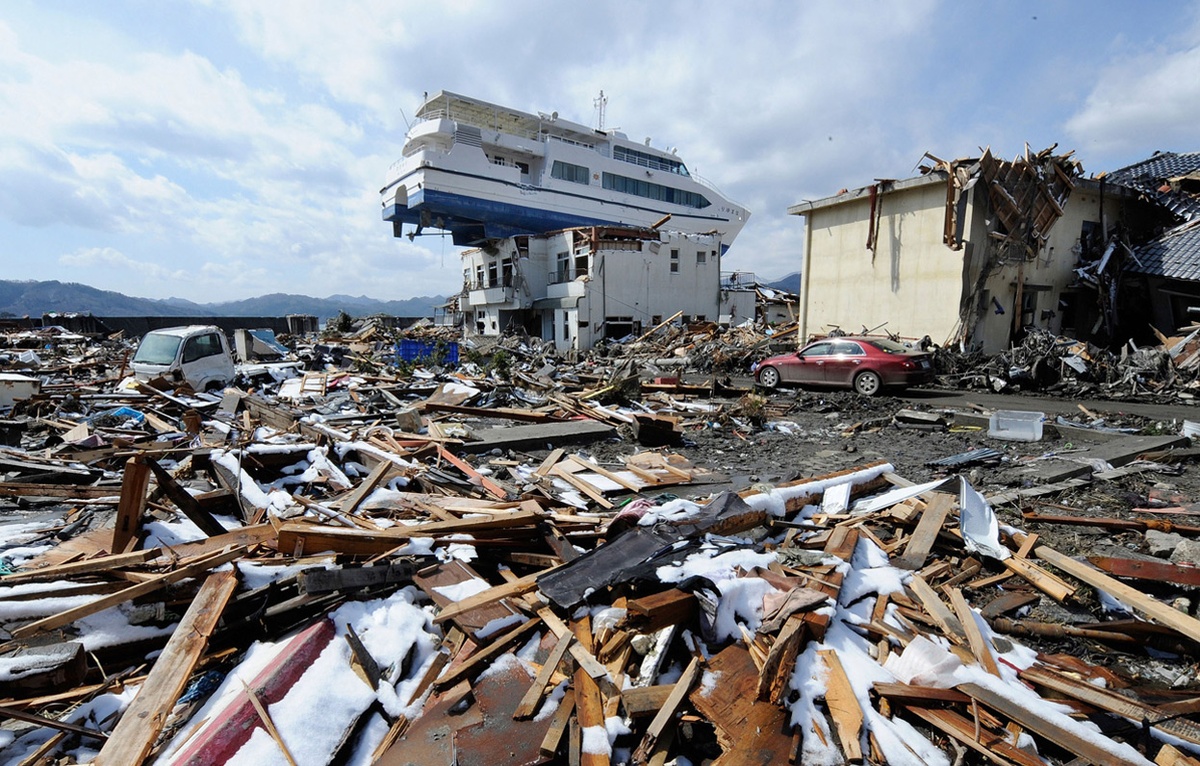
(March 14th, 2016) Japanese Prime Minister Shinzo Abe, who will be the main host of this year’s G7 Summit, on May 26-27, last week marked the fifth anniversary of the huge earthquake and tsunami that struck the north coast of Honshu on March 11, 2011.
He said:
“Already, five years have passed since the Great East Japan Earthquake, which claimed many precious lives and completely changed the lives of so many more people.
“When I think of the despair of those who lost beloved members of their families and friends in the disaster, I am overwhelmed even now with deep sorrow. It is with my deepest sympathy that I reiterate my sincerest condolences. I would also like to extend my heartfelt sympathies to all those who have been affected by the disaster.
“Many people are still leading uncomfortable lives in the affected areas. There are many who cannot return to their beloved homes because of the accident at the nuclear power plant.
“Every time I visit the affected areas, I fully sense that ‘the disaster is continuing.’ And yet, step by step, the reconstruction is making steady progress. Revitalization of the livelihoods of the residents is similarly gathering pace and becoming fully fledged alongside the construction of new housing.
“By being aware of the circumstances of each and every one of the affected individuals, we commit ourselves to such tasks as providing care for their minds and bodies, forming new local communities and supporting industrial development of the affected areas, so that reconstruction leads to the attractive revitalization of the region.
“Consequently, with the determination to never allow the valuable lessons learned from the disaster to erode, we will ceaselessly review disaster-prevention measures by constantly integrating the latest wisdom and knowledge. Once again, I would like to make a firm pledge here that the government will exert its unified efforts to build a strong and resilient nation that is resistant to disasters.’’