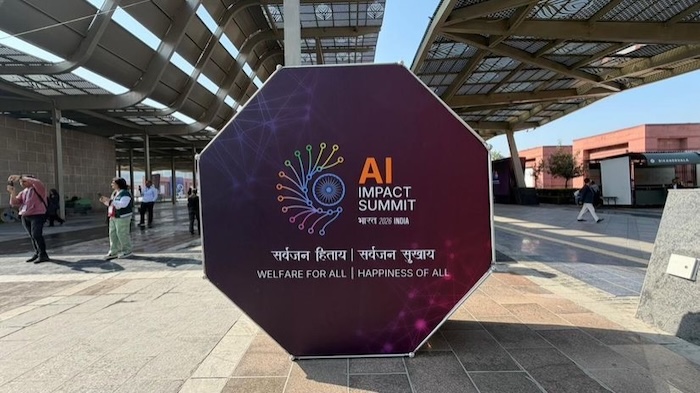
The AI Impact Summit India 2026 marked a visible turning point in the global AI conversation: the world is moving beyond celebrating capability toward demanding measurable impact—in health, education, productivity, public services, and human security. As AI becomes embedded in the operating systems of society, the decisive question is no longer “How powerful is the model?” but “Can institutions and citizens trust the outcomes—and correct them when they fail?”
India’s convening role at this summit is especially significant. It reflects the emergence of a new center of gravity for the AI era: large democracies that must deliver innovation at scale while protecting inclusion, rights, and social stability. The Summit’s message is clear: AI’s legitimacy will be earned not through promises, but through governance that works in real life.
BGF Announcement: AIWS Impact Components in Boston and Nha Trang
Against this backdrop, the Boston Global Forum (BGF) announced two “AIWS Impact” components, designed to be demonstrated, piloted, and scaled through Boston and Nha Trang as living laboratories of democratic innovation:
- AIWS Trust Rating
- AIWS Trust Infrastructure
Together, they operationalize a simple principle for the AI age: trust must be measurable, comparable, and enforceable—so that AI markets can grow without sacrificing safety, rights, or democratic legitimacy.
AIWS Trust Rating
Concept
AIWS Trust Rating is a public, evidence-based rating system that answers the first question citizens, regulators, and institutions now ask:
“Can we trust this AI system in real conditions, for this specific use?”
It shifts evaluation from marketing claims and benchmark scores to accountability performance. Like safety ratings in transportation or reliability standards in critical infrastructure, AIWS Trust Rating provides a shared language that makes risk legible and governance actionable.
Principles
- Evidence over claims: ratings depend on documented testing, audits, monitoring results, and incident history.
- Use-case specificity: trust is rated by domain (health, education, finance, public services), not by hype.
- Continuous updating: ratings evolve as models change, data drifts, or new risks emerge.
- Comparability across borders: a common scale supports procurement, investment, and cooperation.
- Human rights by design: privacy, fairness, transparency, and accountability are treated as baseline requirements.
What it measures (core dimensions)
Safety and robustness; transparency and documentation; fairness and bias controls; privacy and data governance; auditability and traceability; human oversight; incident response readiness; and redress capacity.
The purpose is not to slow innovation. The purpose is to make trustworthy innovation faster—by giving institutions a credible way to choose systems that meet the standards of democratic society.
AIWS Trust Infrastructure
Concept
If AIWS Trust Rating makes trust visible, AIWS Trust Infrastructure makes trust operational. It is a full-stack framework that turns AI governance from aspirational ethics into day-to-day institutional practice—across vendors, sectors, and jurisdictions.
AIWS Trust Infrastructure treats trust as a form of public-interest infrastructure: built into the lifecycle of AI from design to deployment, from monitoring to incident response, from remedy to learning. In the AI age, trust cannot be an afterthought; it must be engineered.
Principles
- Trust as infrastructure: embedded like safety engineering in aviation and medicine.
- End-to-end accountability: design → deployment → monitoring → incident response → remedy.
- Audit-ready by default: logs, documentation, and evaluation artifacts are continuously produced and preserved.
- Interoperable governance: supports cross-institution adoption and trusted AI markets.
- Redress is mandatory: when harm occurs, systems must enable correction, compensation pathways, and prevention of recurrence.
Core components (the infrastructure layer)
- Standards and governance controls: clear roles, thresholds, approvals, and risk responsibilities.
- Evaluation and monitoring: pre-deployment testing plus continuous real-world monitoring.
- Traceability: model/data lineage, versioning, audit logs, and decision records.
- Incident reporting and response: classification, escalation, rollback/patch protocols.
- Remedy playbooks: standard corrective actions and accountability steps.
- Institutional enforcement mechanisms, including the AIWS Tribunal as a credible pathway for mediation/arbitration and public-interest accountability opinions.