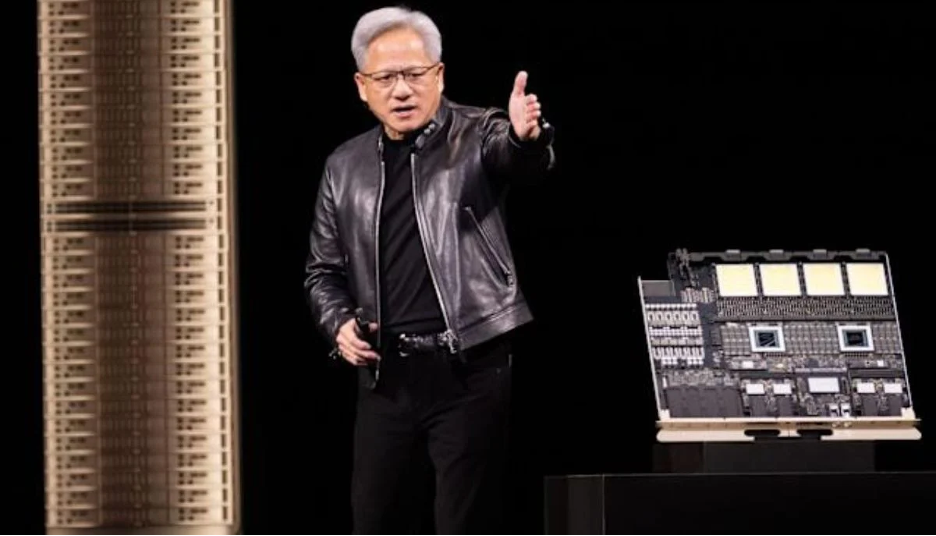
Jensen Huang’s GTC 2026 message was clear: AI is moving from digital action to physical action, and inference chips are becoming the engines of that shift.
At NVIDIA GTC 2026, Jensen Huang signaled a major transition in the AI era. NVIDIA’s own recap emphasized breakthroughs in agentic AI, inference, and physical AI, while Reuters described the recent progression of the field from chatbots, to reasoning systems, to autonomous agents. The next frontier is increasingly clear: robots. (NVIDIA)
The reason is simple. Robots need more than intelligence in theory. They need to perceive, reason, and act in real time in the physical world. That is why Huang declared that “the inference inflection has arrived.” The center of gravity is shifting from training giant models to running them efficiently, continuously, and with low latency. (AP News)
This shift is already becoming real in industry. NVIDIA announced new physical AI tools at GTC, including Cosmos 3, aimed at accelerating generalized robot intelligence. Reuters also reported that Skild AI and NVIDIA are deploying a general-purpose robotic “brain” on Foxconn assembly lines in Houston — an early commercial use of generalized physical AI. (NVIDIA Newsroom)
The larger lesson is that the next AI race will not be won by models alone. It will be won by those who can combine inference, robotics, data, simulation, and real-world deployment. After AI agents, the next great wave is not only smarter software. It is AI that can act in the world.
As AI moves into robots and physical systems, the central question becomes trust. Can these systems be relied upon, audited, governed, and aligned with human values? That is why the next era will need not only better chips and models, but also AIWS Trust Architecture and AIWS Trust Order — to ensure that physical AI serves human dignity, democracy, safety, and progress.