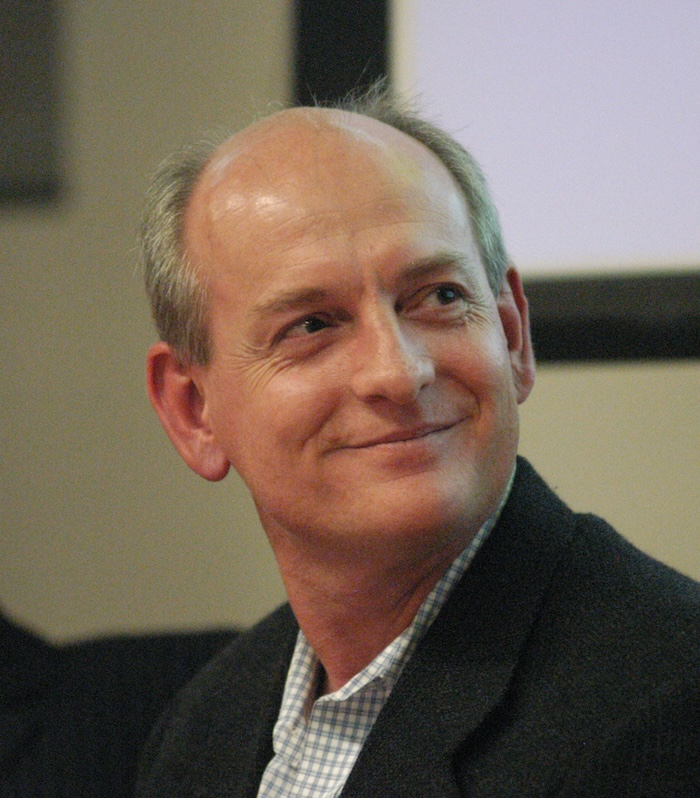
On September 7, at Westminster, Professor Stuart Russell — America 250: AI Pioneer and a Founding Signatory of The Boston Declaration — told an audience of British parliamentarians that advanced AI carries the risk of a catastrophe on the scale of Chernobyl, and then named a larger one:
“The other possibility is a much larger catastrophe, in which humanity loses control irreversibly. But we have no say over whether we continue to exist.”
The session was convened ahead of a bill introduced by MP Alex Sobel to ban the development of superintelligent AI in the United Kingdom — reportedly the first such bill in a G7 parliament. Former Defence Secretary Des Browne told the same room that superintelligent AI poses a threat on the scale of nuclear war, possibly greater. Russell’s argument is not about forecasting. It is about sequence: binding safeguards must be established before systems become too powerful to control, not after a catastrophe demonstrates what was missing.
The same principle governs his long campaign against autonomous weapons. Once a machine can select targets and apply lethal force without meaningful human decision, control has not merely weakened. Authority over life and death has changed hands.
This reaches the heart of Human-in-Command, a foundational principle of AIWS Civilization and the Second Principle of The Boston Declaration. Human control cannot mean nominal supervision after a system has already chosen its objective, its method and its consequences. Human beings must retain the practical ability to authorize, supervise, interrupt, override and terminate consequential AI action — and that ability must be built into the architecture, the institutions, and the hardware through which AI power is exercised.
The constitutional question is not whether AI can decide faster than people. It is whether that capability confers legitimate authority to determine consequences for human beings.
It does not. Capability is not authority. The capacity to identify a target does not confer the right to attack it. The ability to operate infrastructure does not authorize changing the conditions under which society depends upon it. Intelligence, however advanced, cannot manufacture its own mandate.
Human control cannot be an afterthought. It must be the constitutional condition under which AI power is permitted to exist.