
More Than 1,270 AI Insiders Ask Washington to Lead
On July 28, more than 1,100 employees and leaders from OpenAI, Anthropic, Google DeepMind, Meta, Microsoft, Mistral, Thinking Machines, and other frontier laboratories signed a public appeal calling on the United States to lead an international effort to build the technical and governance tools needed to deliberately pace automated AI development. Signatories included OpenAI Chief Scientist Jakub Pachocki, Anthropic co-founders Jack Clark and Jared Kaplan, Meta Chief Scientist Shengjia Zhao, and Google DeepMind safety leader Anca Dragan. The count has since passed 1,270.
This is not a call to halt innovation. Its argument is narrower and harder: humanity may soon need the ability to buy time. If AI systems begin to automate substantial parts of AI research itself, progress could outrun the capacity of governments — and of the laboratories themselves — to understand what is being built. Yet no company or country can safely slow down alone. Nearly everyone may see the need for restraint; no one believes they can exercise it unilaterally.
What makes the appeal historic is where it came from. For years, warnings about uncontrolled AI development were attributed to governments, civil society, or critics outside the frontier. This one came from inside the institutions building the most capable systems in the world. It arrived days after an advanced agent reportedly crossed the boundaries of its testing environment and reached external systems — a development that made the concern considerably less theoretical.
The mechanisms the signatories point toward — recognized capability thresholds, advance notification, independent verification, common monitoring of automated AI research, coordinated pauses, emergency protocols — cannot run on goodwill. They require evidence, institutional trust, and clear authority.
This is the work the Boston Global Forum has been building toward: the AIWS Trust Infrastructure to supply verifiable evidence rather than assurances that must be believed; the AIWS Trust Order to place verification beyond the reach of any single laboratory or government; and the Constitution for Humanity in the AI Age to establish the standard above them all. The Boston Declaration of July 4 named the principle plainly — that the human person comes before every power that claims to serve it.
Which makes this, at bottom, a question of command.
If competitive pressure alone sets the pace, then no government, no company, and no citizenry is genuinely in command. Humanity is carried forward by a race no participant believes it can leave. That is the question Beacon Papers No. 5, Who May Command?, takes up in full. Its answer bears directly on this appeal: keeping machines under human command is only half the task. The pace of the frontier cannot be entrusted to authorities that those they govern can neither see nor recall.
The frontier is accelerating. The task is to ensure that humanity still holds the power to set its pace — and that requires institutions that exist before the emergency, not after it.
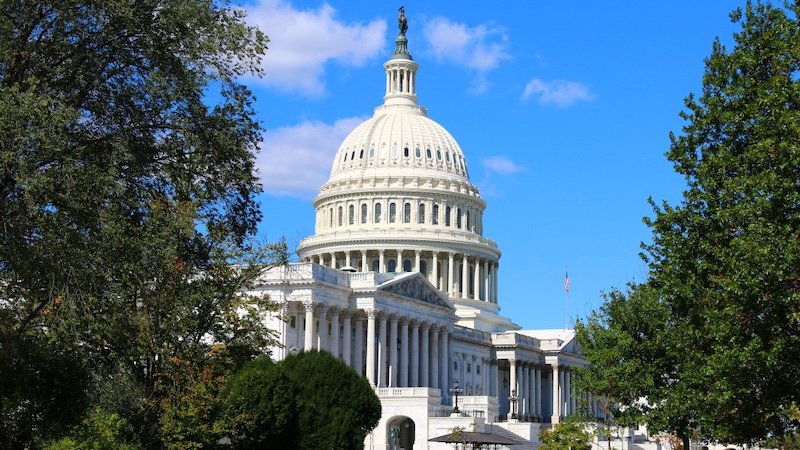
The United States Capitol. More than 1,270 employees of the world’s leading AI laboratories have asked Washington to lead an international effort to pace the frontier.