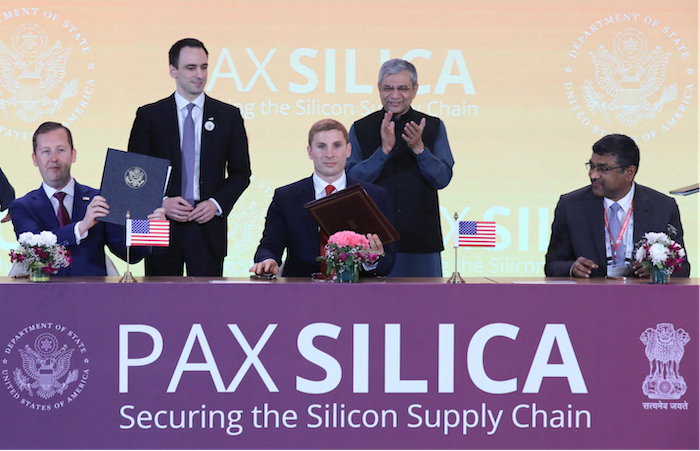
On February 19, 2026, at the India AI Impact Summit 2026 in New Delhi, Michael Kratsios, Director of the White House Office of Science and Technology Policy, delivered a landmark address outlining a transformative U.S. strategy for the “AI Age.” His remarks signaled a decisive shift in American AI diplomacy—moving away from “safety-first” paralysis toward a paradigm of AI Sovereignty and Economic Opportunity.
1. Rejection of Global Governance
In his most direct statement to date, Kratsios declared, “We totally reject global governance of AI.” He argued that centralized, bureaucratic control at the international level (such as UN-led initiatives) risks stifling innovation and becoming a tool for “tyrannical control.” Instead, he advocated for local, use-case-specific regulation that empowers nations to chart their own destinies.
2. Defining “Real AI Sovereignty”
Kratsios introduced a pragmatic definition of AI Sovereignty for the modern era:
- Strategic Autonomy, Not Isolation: He noted that complete technological self-containment is unrealistic due to the complexity of the AI stack.
- Leveraging the Best: Real sovereignty means owning and using “best-in-class” technology—specifically the American AI stack—to benefit one’s own people while maintaining national control over data and policy.
3. Shift from “Fear” to “Hope”
Criticizing international forums for maintaining an “atmosphere of fear” regarding speculative risks, Kratsios urged a transition from “AI Safety” to “AI Impact.” He emphasized that AI should be viewed as a foundation for abundance, warning against letting it become “abandoned and unrealized,” much like the missed potential of nuclear power in previous decades.
4. The American AI Exports Program
To catalyze global adoption, Kratsios highlighted the American AI Exports Program, a whole-of-government initiative including:
- National Champions Initiative: Integrating partner nations’ leading companies into the American technology ecosystem.
- S. Tech Corps: A new “Peace Corps-style” model deploying volunteer technical experts to provide last-mile support for AI in public services.
- Global Financing: New funding via the World Bank, EXIM Bank, and the DFC to help developing nations overcome infrastructure costs.
5. The Pax Silica Declaration
A major summit milestone was the signing of the Pax Silica Declaration and a bilateral “AI Opportunity Partnership” between the U.S. and India. This agreement pledges a global approach to AI that is “unapologetically friendly to entrepreneurship” and focuses on securing the physical silicon stack.