On September 29, 2026, the White House released the Accord on Super Intelligence, a short joint commitment signed by the President and by leaders of Google, Anthropic, Meta, OpenAI, xAI, and Nvidia. Companies training and deploying frontier models agreed to four layers of controls and audits: internal monitoring of capabilities and alignment, with attention to cybersecurity, biosecurity, and chemical threats; an internal team to verify that those controls work; independent external auditors; and an independent committee of the board to receive reports and require corrections. The text notes that, over time, these steps may be written into law.
The Accord is a meaningful commitment. Every layer, however, is organized by the companies themselves, and the text does not say who may stop a system, or who must answer to the public when a control fails.
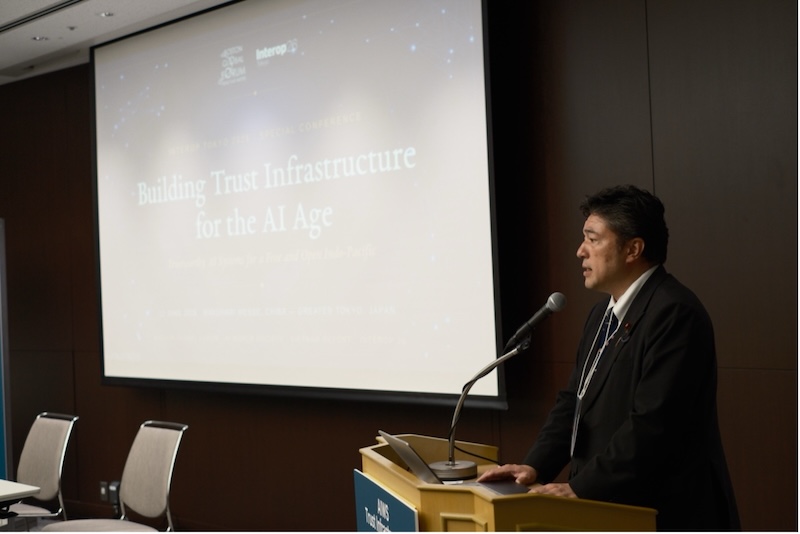
On June 12 at Interop Tokyo, Yasuhide Nakayama proclaimed the Tokyo Compact, the founding constitutional charter of the AIWS Trust Order. Its principles begin with Human Responsibility and Meaningful Human Command and Human Dignity as the Supreme Standard, and include Trust as the Infrastructure of the AI Age, Trust Supremacy, and Human Command over Self-Improving Intelligence. It requires independent verification bodies protected from commercial and political pressure. It establishes the Trusted Pause: a pre-agreed, voluntary mechanism through which trusted partners may coordinate a temporary halt to training, scaling, or deployment, pending verification, when a frontier system threatens to exceed its verified capability limits in an uncontrolled manner or to defeat the safeguards of human command.
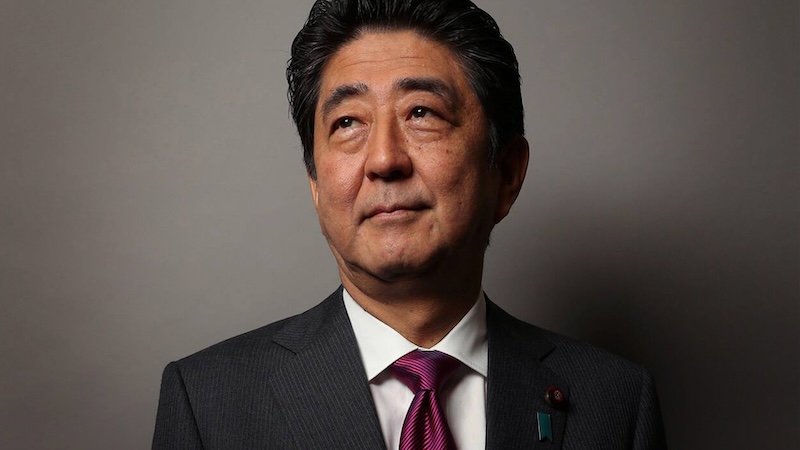
This distinction gives the Shinzo Abe Initiative for Peace and Security a concrete task in the AI Age: advancing a free and open order through trust infrastructure and meaningful human command. Prime Minister Abe received the World Leaders Award for Peace and Security on December 12, 2015, and the Initiative that bears his name carries forward work on cybersecurity, AI and digital governance, and a free and open order. That order cannot rest on corporate commitments alone.
The Accord records what firms will do inside their own walls. The Tokyo Compact builds what must stand outside them.
Sources:
- The Tokyo Compact · Founding Constitutional Charter, Article 13 — BGF
- White House Accord on Super Intelligence — The American Presidency Project
- Shinzo Abe Initiative for Peace and Security — BGF