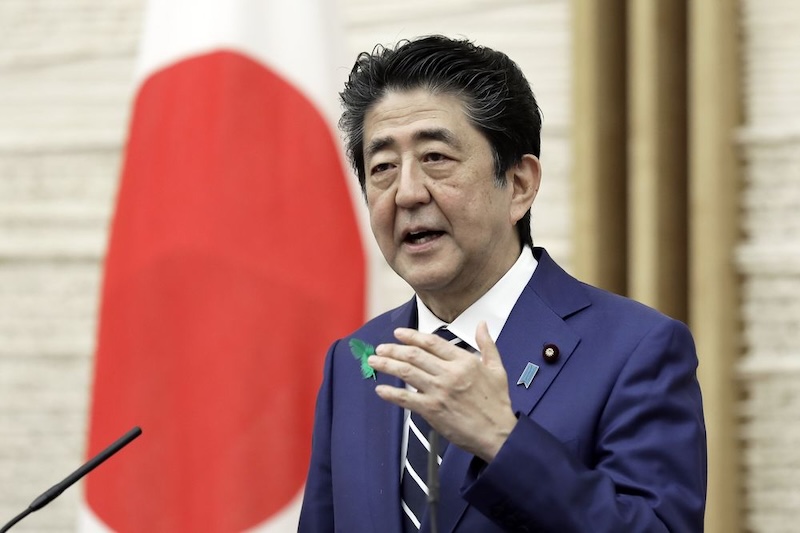
On July 30, the Center for Strategic and International Studies convened a discussion on the next steps for the United States–Japan alliance, focused on deterrence, cybersecurity, and Indo-Pacific partnerships. The strategic environment it described can no longer be read through ships, aircraft, and bases alone. It now runs through semiconductors, satellites, data infrastructure, autonomous systems, and access to advanced computing.
That shift puts pressure on a word at the center of Shinzo Abe’s vision: open. Freedom of navigation was always something the world could see. A vessel either passes or it does not, and the obstruction is visible to every party. Coercion in the AI Age leaves no wake. A compromised supply chain, a manipulated information environment, a poisoned software dependency, a dependency quietly created and later exploited — none of these announce themselves.
An open order that cannot be verified is not an open order. It is a declaration.
Abe’s insight therefore does not need replacing; it needs a capability it never required. Freedom of navigation was self-evidencing. Freedom in the digital and computational domains must be demonstrated — through independent inspection of the systems on which security depends, through provenance in supply chains, and through standards that no single government or company defines alone. This is the work the Tokyo Compact and the AIWS Trust Order began in Tokyo in June, and it is the natural next expansion of a Free and Open Indo-Pacific: from sea lanes to the infrastructure of trust.
There is a further question the alliance has not yet answered. As both partners field autonomous systems for surveillance, logistics, and defense, the decisive issue is not whose technology is superior but whether either partner can inspect, explain, interrupt, and halt what the other deploys. An alliance operating systems that neither side can stop has not transferred command to its adversary. It has transferred command to the machine. Legitimate human command over consequential military action — over escalation, over lethal force — is not a constraint upon allied strength. It is the condition on which allied strength remains lawful.
Abe did not seek strength for domination. He sought strength sufficient to preserve freedom, prevent coercion, and sustain a lawful order. A Trusted Indo-Pacific Architecture — joining the United States and Japan with Australia, India, South Korea, European partners, and responsible nations across Southeast Asia and the Pacific — would carry that principle into the new domains: secure, interoperable, verifiable, and answerable to human authority.
Peace requires more than the absence of war. It requires an order strong enough to resist coercion and principled enough to preserve freedom — now extending from the seas and skies to data, computation, and the infrastructure of trust.