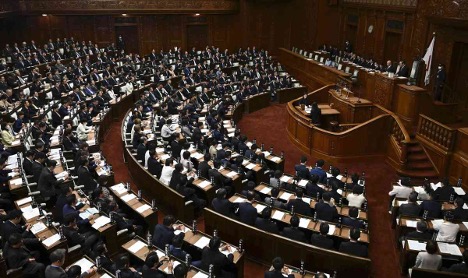
When a Japanese prime minister dissolves the House of Representatives, history is made—because the act is not only procedural, but philosophical. It is a choice to “reset” political legitimacy by asking the public for a renewed mandate, often under intense pressure and uncertainty. Past leaders have framed dissolution as a test of confidence and direction—turning parliamentary mechanics into a national referendum on leadership and strategy.
For the Shinzo Abe legacy, this moment carries special weight. Abe’s dissolutions—most famously in 2014—were used to seek public judgment on major national course corrections, including the economic program known as “Abenomics.” His approach established a modern template: decisive moves, high stakes, and an appeal to voters to legitimize a strategic agenda.
Now, as Japan enters the Sanae Takaichi era, the same instrument can become either a democratic accelerant—or a destabilizing gamble. The political environment surrounding her rise has already underscored how coalition arithmetic and public trust can quickly become defining constraints.
For BGF’s Shinzo Abe Initiative, the key question is not only whether dissolution is “for better or worse,” but whether it advances Abe’s deeper vision: openness, rule-based governance, and democratic credibility under geopolitical stress. In the AI Age, legitimacy must be earned faster—but also more transparently, more ethically, and with stronger civic trust.
https://japannews.yomiuri.co.jp/politics/politics-government/20260110-303272/