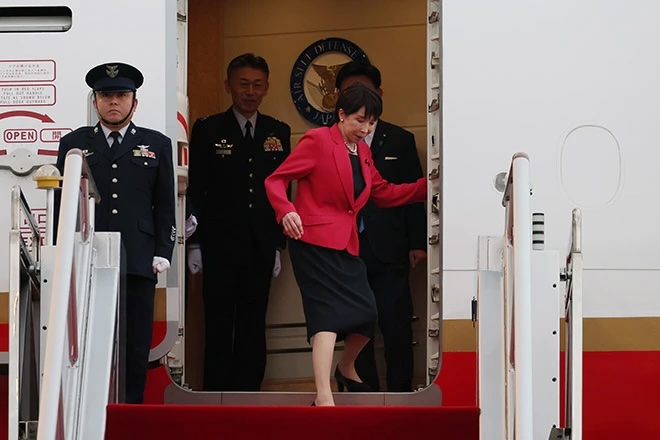
When Japanese Prime Minister Sanae Takaichi arrived in Shenzhen for APEC on November 18, footage broadcast by TV Asahi showed a marked drop between her aircraft’s door and the platform of the boarding stairs.
Yasuhide Nakayama, former State Minister for Foreign Affairs and former State Minister of Defense of Japan, and a DIET member, said he was not only worried but strongly angered. Had the Prime Minister slipped, he warned, the consequences would have been unthinkable. He called on China to explain how the stairs were positioned and what safety checks were carried out.
Chief Cabinet Secretary Minoru Kihara rejected the suggestion of a diplomatic snub, saying that “the host economy extended the customary courtesies to her.” Takaichi disembarked safely.
For the Shinzo Abe Initiative for Peace and Security, this episode underscores a fundamental standard: diplomatic disagreement does not diminish a host country’s responsibility to protect visiting leaders. Peace depends on governments upholding basic duties even when relations are strained. A clear explanation, and measures to prevent recurrence, would help restore confidence. Respect for human dignity must remain visible in the smallest acts of diplomacy.
A guest’s safety must never depend on the host’s political approval.