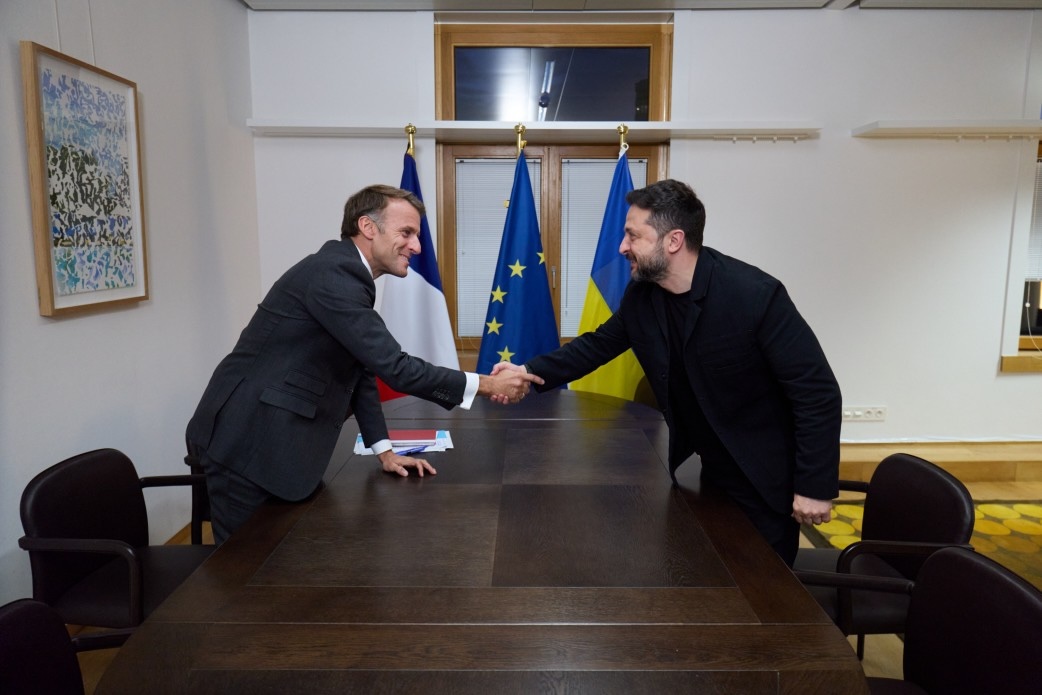
Peace requires the ability to protect people while diplomacy seeks a durable settlement. That responsibility was central to the October 15 meeting between French President Emmanuel Macron and Ukrainian President Volodymyr Zelenskyy in Brussels, on the sidelines of the European Council.
Following their talks, Macron reaffirmed France’s support for Ukraine and called for providing the means to defend its population and civilian infrastructure, including help through a winter in which strikes on Ukraine’s energy system threaten millions of families with the loss of heat and electricity. Zelenskyy said France is helping as much as it can to find ways to respond to Russian escalation. He announced new packages to strengthen Ukraine’s combat aviation this month, and thanked France for delivering all the weapons-production licenses it had promised.
For the Boston Global Forum, the meeting brings together two leaders whose responsibilities for peace have been recognized through its World Leader for Peace and Security Award. Macron received the honor in 2024; Zelenskyy and the Ukrainian people were honored in 2022.
That recognition carries a continuing expectation: leadership must translate commitments into protection for people, respect for sovereignty, and credible prospects for a lasting peace.
The Brussels meeting illustrates the work that must follow public declarations of solidarity. Diplomatic engagement and practical support need to reinforce one another. A population exposed to attack needs protection today, alongside a future in which it can rebuild and determine its own course.
BGF’s perspective remains grounded in human dignity: peace must allow people to live without domination and possess the means to build a worthwhile future. International leadership is tested by its ability to make those conditions possible.