As nations begin to argue over who may be trusted with the most powerful AI ever built, the deeper question is the one the AIWS Trust Order set out to answer earlier this year: how to build a trusted order for the Age of Artificial Intelligence.
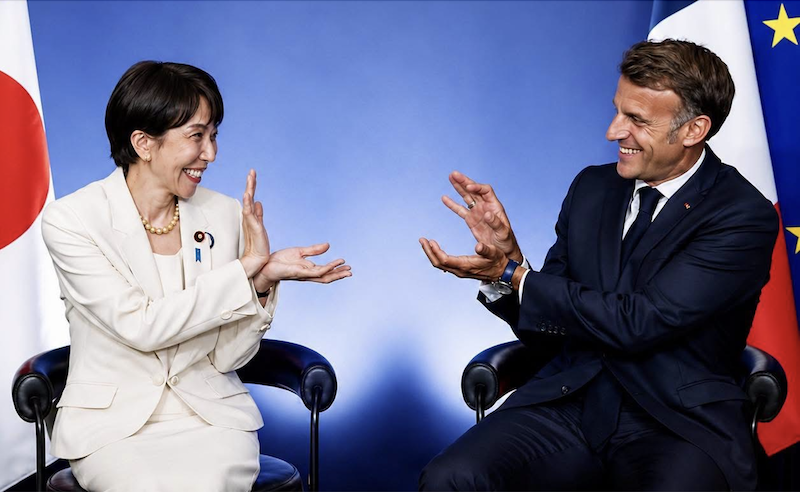
At the 2026 G7 Summit in Évian-les-Bains, France, world leaders turned to a question that would have seemed abstract only a year ago: who can be trusted with the most powerful artificial intelligence ever built.
On the summit’s sidelines, representatives discussed a “trusted partners” framework — a mechanism that would allow a vetted circle of allied nations and approved companies to access and deploy the most advanced AI models under a secure governance arrangement.
The context matters.
This discussion did not arise in the abstract.
Days earlier, in mid-June, the United States imposed sweeping restrictions that suspended foreign access to its most advanced AI models on national-security grounds.
The “trusted partners” idea emerged as a way for close allies to regain access — a debate, still unresolved, over how frontier capability should flow across borders.
Yet whatever its origins, the episode reveals something larger.
As artificial intelligence approaches unprecedented levels of capability, the world is converging on a single recognition: the defining challenge of the AI Age is not intelligence alone, but trust.
This is precisely the challenge that the Boston Global Forum (BGF) and the AI World Society / AI Wisdom Society (AIWS) identified earlier this year — and sought not merely to name, but to answer.
A Framework Built Before the Crisis
On March 15, 2026, BGF–AIWS released the AIWS Trust Architecture White Paper, introducing AIWS Trust Infrastructure and the AIWS Trust Order as foundational frameworks for governing advanced AI systems and safeguarding humanity in the Age of Artificial Intelligence.
On May 1, 2026, the Boston Global Forum convened the America at 250: A Beacon for the AI Age conference at Harvard University, bringing together AI pioneers, policymakers, scientists, scholars, and civic leaders to advance the architecture of trust and to announce key initiatives for AIWS Trust Infrastructure and AIWS Information Trust Infrastructure.
And on June 12, 2026, at Interop Tokyo 2026, with leading international experts, policymakers, and technology leaders, BGF–AIWS proclaimed the Tokyo Compact and formally launched the AIWS Trust Order — a global vision founded on Trust, Human Dignity, Human Command, Responsibility, Democracy, Freedom, and Wisdom.
The Same Day, Two Directions
There is a striking coincidence in the calendar.
June 12 — the day the Tokyo Compact called for an open and trusted order for access to AI — was also the moment the United States moved to restrict it.
While Tokyo articulated a vision of trust as a bridge between nations, the new measures underscored how quickly access to frontier AI can fracture along political lines.
That tension is the strongest argument for the very work the AIWS Trust Order set out to do.
Without a shared architecture of trust, the most powerful technology in history risks being divided not by principle, but by geopolitics.
Two Visions of Trust
The G7’s trusted-partners discussion and the AIWS Trust Order are not the same thing — and the difference is the point.
The G7 debate is, at its core, about access: which nations and companies may use the most advanced models.
It is narrow, urgent, and defensive — a response to immediate questions of security and supply.
The AIWS Trust Order is broader.
It asks not only who may access advanced AI, but what standards, responsibilities, safeguards, and ethical foundations must govern AI so that it serves humanity.
It seeks an ecosystem in which governments, technology companies, institutions, and citizens participate within a common architecture of trust — supported by Trust Infrastructure, Trust Standards, Trust Ratings, Information Trust mechanisms, and the enduring principles of human dignity and human oversight.
The emergence of the trusted-partners debate suggests that the international community is now arriving at the very questions the AIWS Trust Architecture sought to address earlier in 2026: how to build a trusted order for the Age of Artificial Intelligence.
“As AI continues to transform civilization, the builders of intelligence must also become the builders of trust.”
The Defining Mission
Seen together, the AIWS Trust Architecture White Paper, the America at 250 conference at Harvard, the Tokyo Compact, and the launch of the AIWS Trust Order represent early contributions to one of the most important governance challenges of our time — the creation of a Trust Order for the AI Age.
The future of humanity will depend not only on how powerful AI becomes, but on whether we can establish the trust frameworks, institutions, standards, and wisdom necessary to guide that power toward peace, freedom, democracy, human dignity, and the common good.
The rise of trust is no longer a theoretical discussion.
It is becoming the defining mission of the AI Age.
Please download the full article here: https://bostonglobalforum.org/wp-content/uploads/BGF_AIWS_Perspective_Rise_of_Trust.pdf