Japan’s New Indo-Pacific Vision and the Call for AIWS Trust Infrastructure
Japan’s updated vision for a Free and Open Indo-Pacific (FOIP) shows that the legacy of Prime Minister Shinzo Abe is entering a new phase: the AI and data age.
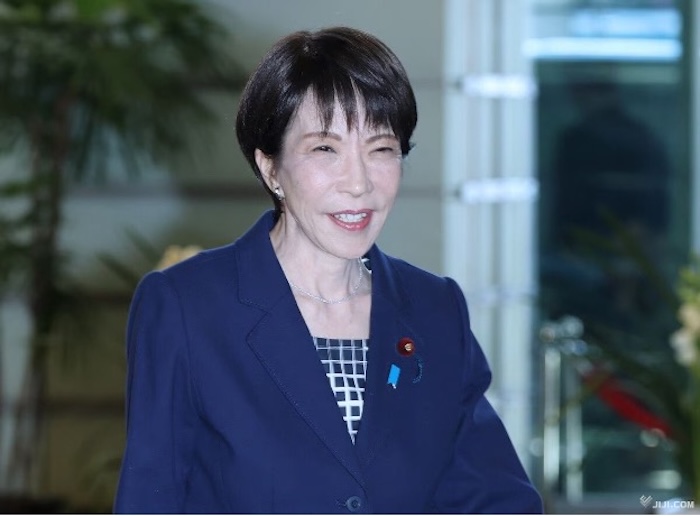
In her foreign policy speech in Hanoi on May 2, 2026, Prime Minister Sanae Takaichi emphasized Japan’s updated FOIP, including the need to build economic infrastructure for the age of AI and data, strengthen supply chain resilience, co-create growth opportunities through public-private collaboration, and enhance security cooperation for regional peace and stability.
This is a natural evolution of Shinzo Abe’s Indo-Pacific vision. FOIP is no longer only about maritime freedom, the rule of law, and regional connectivity. In the AI Age, freedom and openness must also be protected in data, digital infrastructure, AI systems, supply chains, and the civic information space.
Recent Japanese diplomacy reinforces this direction. Japan and Australia have emphasized the need for a safe, secure, and trustworthy AI and digital ecosystem in the Indo-Pacific. Japan and India have advanced strategic dialogue on AI cooperation, while the EU–Japan Digital Partnership continues to deepen cooperation on trusted digital infrastructure, secure connectivity, and interoperable standards.
For the Shinzo Abe Initiative, this moment is highly significant. It shows that Abe’s FOIP can become a strategic foundation for AIWS Trust Infrastructure, AIWS Trusted Order, and Japan Lumina — linking geopolitical resilience with human dignity, cultural wisdom, trust, and responsible innovation.
In the AI Age, the Indo-Pacific must be free and open not only in seas and trade routes, but also in AI, data, information, infrastructure, and values. Japan is well positioned to help lead this transformation — carrying forward Shinzo Abe’s vision into a new era of trusted and human-centered AI.