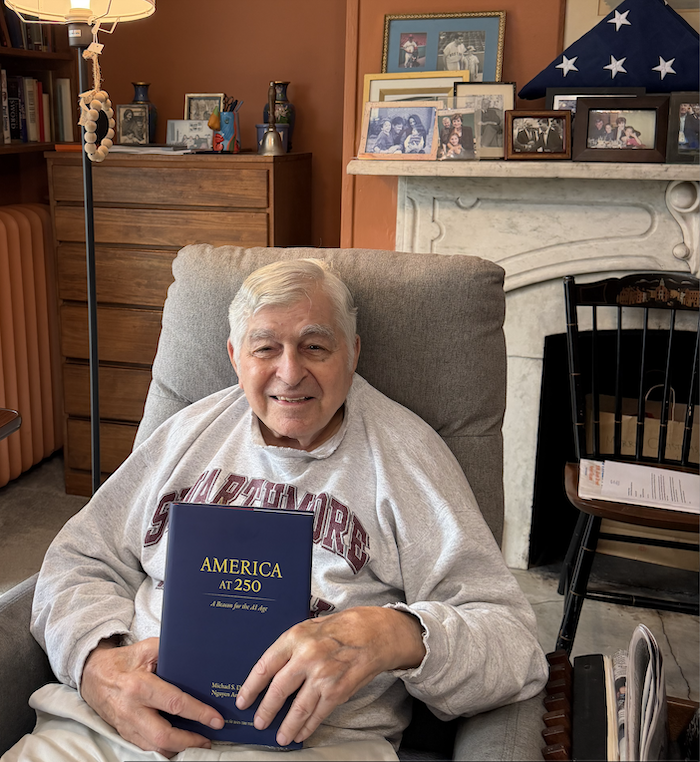
The chapter on AIWS Education is one of the most distinctive and forward-looking parts of America at 250: A Beacon for the AI Age, because it does not discuss education merely as a policy sector. Instead, it redefines education as a vital foundation for democracy and for human development in the Age of AI.
The first special feature of this chapter is that it looks beyond the traditional model of schools, classrooms, age brackets, and examinations. AIWS Education is presented as an ecosystem of joyful lifelong learning — learning that is joyful, lifelong, human-centered, and available 24/7 throughout the whole of life. This is a profoundly new way of thinking: in the Age of AI, education is no longer a stage of preparation for life, but an inseparable part of life itself.
The second special feature is that the chapter connects education with human dignity, joy in living, mental well-being, culture, creativity, and community. It does not treat education merely as an instrument for producing workforce skills, but as a pathway for helping human beings develop in a whole and balanced way, preserve their identity, strengthen their capacity for judgment, and live responsibly in a world increasingly shaped by AI.
The third distinctive contribution is the introduction of AIWS Angel as a new figure and a new architecture for education in the AI Age. AIWS Angel is not imagined as a machine that replaces the teacher, but as a humanistic AI Agent that accompanies each learner, supports personalized learning, nurtures inspiration, expands knowledge, and helps every individual grow according to their own rhythm, circumstances, and aspirations. This is one of the chapter’s most original contributions: bringing AI into education not to mechanize human beings, but to liberate human potential.
Another important point is that the chapter on AIWS Education does not stand alone. It is closely connected to the book’s broader vision of America at 250. If the United States is to remain a beacon for the AI Age, it cannot lead only in technology; it must also lead in preparing human beings for the new era. For that reason, AIWS Education is presented as a strategic answer: if democracy is to remain strong, if the economy is to remain creative, and if society is to remain trustworthy, then a new form of education appropriate to the AI Age must be built first.
In other words, what makes this chapter so special is that it does not merely propose educational reform; it proposes a new philosophy of education for AI civilization. It is education for humanity, for democracy, for the joy of learning, for creativity, and for the ability of every person to continue developing throughout life. That is what makes the chapter on AIWS Education one of the most humane, profound, and distinctive chapters in America at 250: A Beacon for the AI Age.