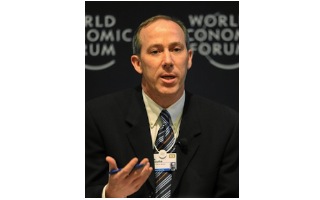
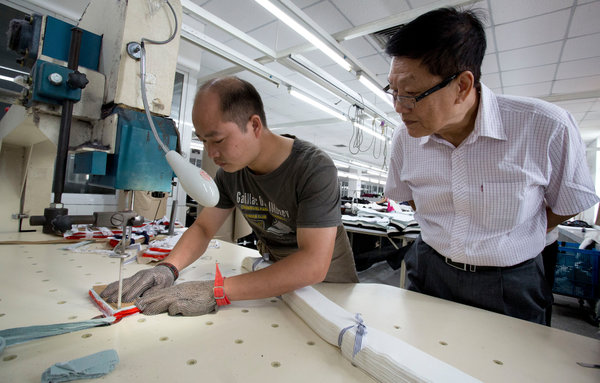
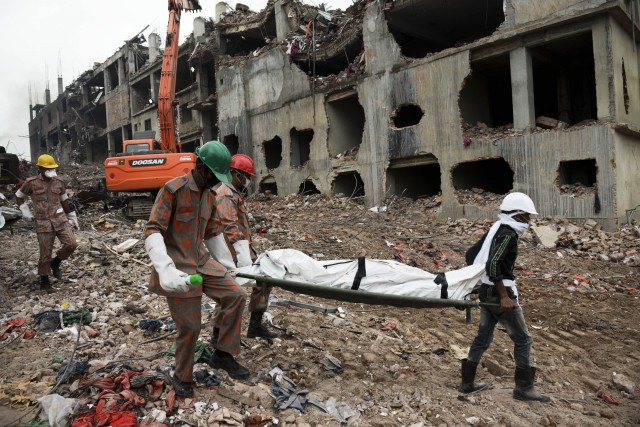
(BGF) – On February 19th, 2014 we launched a program to recognize the companies that promote worker safety and rights through the use of best practices. The program launch was introduced by Governor Michael Dukakis, three-term Governor of Massachusetts, 1988 Democratic Presidential nominee, and Chairman of the Boston Global Forum. In addition, the event featured contributions from Hedrick Smith, who is a Pulitzer Prize-winner and former reporter and editor at the New York Times, Arnold Zack, a world renowned arbitrator and Senior Research Associate at Harvard Law School’s Labor and Worklife Program, and Marcy Goldstein-Gelb, the Executive Director at MassCOSH. The video of their contributions is available here and, for your convenience, the transcript is provided below.
I. Event Introduction: Governor Michael Dukakis
Professor Patterson: Good morning and welcome to the Boston Global Forum on worker rights and safety. It’s part of our yearlong effort to promote discussion and awareness of worker issues in the aftermath of last year’s tragedy at Rana Plaza. I’m Tom Patterson, a co-founder of the Boston Global Forum and I’m on the faculty here at Harvard University’s Kennedy School of Government. I’ll moderate the program this morning and you’ll be able to hear from people who know a lot more about this issues than I do. We’re going to be talking about the issue generally and also to announce an initiative where we’re going to try to recognize companies that have exemplary records in this area. You’ll be hearing first from Governor Michael Dukakis, 1988 Democratic Presidential nominee, two-time Governor of Massachusetts. Mike is on the faculty at Northeastern University where he directs a center on urban and regional policy which bears his name and that of his wife Kitty. Mike, who is the envy of us who’ve been working through these northeastern snowstorms, also has a faculty position at UCLA, where he is today. Governor Dukakis is Boston Global Forum’s Chairman and a co-founder. Governor, good morning.
Gov. Dukakis: Tom, good morning. It’s good to be able to greet you from sunny California where the temperature will be 75 today. We were thinking of all of you in the northeast. Kitty and I will be back in April, about the time the magnolias will be blooming along Commonwealth Avenue in Boston, so we look forward to seeing you. I want to greet all of our participants, viewers, and listeners. Many of you were involved in our first online conference on the 18th of November and you know, as Professor Patterson has pointed out, that the Boston Global Forum is designed to bring people together around major issues affecting our international community. For reasons that I think should be obvious to everybody, especially as a result of the disasters in Bangladesh, we decided to pick international occupational safety and health standards as our first topic. That was the topic of the wonderful discussion we had online with hundreds of you on the 18th of November. For those of you who are interested, the transcript and the audio from the conference can still be found on our website. You will find that the conference features some really terrific people: Congressman Sander Levin; Senator Tom Harkin; Jeff Krilla, who is the President of the Alliance for Bangladesh Worker Safety; Liana Foxvog, who is the Director of Organizing Communications at the International Labor Rights Forum; and many others. Our conference received good coverage from the New York Times as well.
Now, we’re seeking to build on the success of that first conference by launching a new and exciting initiative to recognize companies who are leading the way through the use of best practices for worker safety and rights. A lot of these companies have gotten real criticism and justifiable criticism but there are companies out there who are doing their best to make a real difference and we want to honor them and recognize them. We’ll be nominating companies, brands, and retailers who we feel are leading the way in the use of best practices. Ultimately we hope that this will result in continued discussion about how brands and retailers can promote worker safety and rights, as well as provide guidance for companies who have not yet adopted these best practices. Bearing this in mind, we are very pleased to have contributions today from Arnold Zack, Marcy Goldstein-Gelb, and Hedrick Smith as part of our launch. We hope that you will continue to engage with us as we seek creative solutions for the issue of worker safety and rights. Thank you all so much for your participation and continued support. It’s just a delight to be part of this online forum today and to listen and learn and we hope act to make this world a better place and to make sure workers all over the world have the kind of protections that they need and they deserve. Tom, back to you.
Professor Patterson: Governor, allow me to ask you one quick question. What is the rough timeline on nominations and the opportunity to send us information about companies?
Gov. Dukakis: We’ll be working on this over the next several weeks. We encourage people to nominate companies and individuals who are doing the right thing and we will be brining those nominees to all of you and we hope not only honoring them but holding them up as examples of what we expect from all businesses.
Professor Patterson: Thank you, Governor Dukakis. We’re going to hear next from Arnold Zack, a long-time labor management mediator, a very distinguished career of public service both in the United States and abroad. Arnold teaches at the Harvard Law School where he is Senior Research Associate in the Labor and Worklife Program.
II. Arnold Zack
Zack: Hello. My name is Arnold Zack. I am a mediator and arbitrator of labor management disputes based in Boston. And I have for many years been teaching a course on designing dispute resolution at the Labor and Work Life program at Harvard Law School. I’m very much interested in the area of conflict resolution not merely as a neutral, but primarily because I believe that is a very effective machinery for solving problems of the work place in particular, but problems that through the work place affect the society. The Boston Global Forum is to be commended for looking into this field. And I’m particularly entranced and enthused about the idea of taking leaders of a global issue and testing its applicability for local actions. So think globally and act locally in the Boston, Massachusetts area. And I think we as citizens can have a greater impact than we can by merely giving speeches and writing papers and watching memos about what’s going on in the world.
Let me bring this directly to the issue I want to talk about. And that is what is so relevant for a mediator and arbitrator to talk about what has been going on in, say, Bangladesh and other factories around the world. We all know what has happened to the departure of jobs in the United States, particularly in manufacturing. And we particularly feel sensitive for those here in Massachusetts. I was born in the city of Lynn. And that’s where the shoe industry used to be. And then the shoe industry moved out to St. Louis then it moved overseas. And the current, it’s in a city in Guang Dong, where the fourteen factories produce some 5 billion pairs of shoes a year. That’s the majority of the world’s shoes, are made overseas. So what? We’ve lost jobs. That’s awful. We should bring them back—that’s imperative. But we have to look at what’s going on in the rest of the world and the conditions that are facing these workers who are doing these unskilled jobs. If their conditions can be improved, that is the immediate goal. In the long run, if these countries develop standards that provide workplace safety and provide workplace benefits to the workers, they in turn become almost less competitive. And that is one of the ways that the jobs can be returned to the United States—when the cost of going overseas; the cost of transportation; the tariffs and so on become so heavy that it behooves employers to start thinking about manufacturing in the United States again. So there’s a self-interest for the United States in this, as well as a humanitarian interest in making sure that things go well for workers in developing countries. It’s very hard to police. There are no international laws that deal with these. There is no guarantee that the national laws of these countries where these factories exist are there for the benefit for the workers or are enforced. In too many countries, there’s too much corruption by the [government officials] who are responsible for enforcing the laws. And the brands and the factories that are producing for the brands can turn there heads aside, saying, “It’s not our problem. We have codes of conduct.” And most companies do, saying, “These are the standards by which we expect factories, which produce for us, to treat their employees fairly and to provide decent workplace conditions—and in the case of Bangladesh, a safe environmental conditions and safe factories and building size. But it’s their responsibility—it’s the responsibility of the governments and a lot of these brands. And we will try to monitor these things, but we can’t effectively police the rest of the world. And when you think of companies, brands like Gap and Disney products, produced in more than 10 to 15 factories in over 50 countries around the world. The opportunity for monitoring that becomes very expensive. And the cost of doing so becomes prohibitive. And even if they try their best, they are still unscrupulous, and unfair, and greedy. Factory owners and factory subcontractors who see a fast buck by lowering their costs by taking it out of the hides of the workers by having them work long hours without overtime pay; to having them work in dormitories, or more likely barracks, to cut down their time away for personal needs and to get the most they can out of these workers. Often employing children. And employing people below at legal standards, even in the countries of which they operate.
Now I’ve been involved in this primarily because of my interest in helping to develop dispute settlement machinery, which I’ve done for a number of countries and international organizations. And I have wondered all along as what is the most effective ways of approaching all of this. At the outset, I was entranced by the idea of the brands and their codes of conduct as the way of spreading the good word. And these brands do try. And they are to be commended for that. But it is very difficult for them to police. To the extent that they hire monitors to police their factories or subcontracting factories. There’s never assurance that those monitors are going to give all the bad news to their bosses. There’re certain basic international standards. I started out by saying that there’s no international law, but there are international standards. The International Labor Organization has on its books about 250 what are called conventions that are agreed to by management worker groups and unions and all their member countries. And those are the international norms. They are the standards. They are the conventions. And among those are 8 international codes—conventions—which everyone agrees are the basic standards for fundamental fair play in the workplace. And they include: freedom of association; the right of collective bargaining; gender equity; protection against the employment of child workers; and the protection of slavery—uncompensated workers. Most countries have been signatories to those conventions. Or most countries at least give lip service to complying with them. But the factory owners are not always cooperative. And so they do what they can to enhance their profits—frequently violating these codes. And the monitors surveying what’s happening, they are confronted with double sets of books. And as we can well imagine, they may have some difficulty reporting back to brands, “You’re not doing a good job because Convention 87 and 98 say that you have to give your employees the right to freedom of association and the right to unionize.” And a lot of countries don’t want to do that in their overseas factories. Certainly the factory managers don’t want to do that. Certainly the governments, many of which are corrupt in these host countries don’t want to do that or seek to repress the unions because the unions have the basic building block of democracy as we can look back to Gdańsk and solidarity in Warsaw, which brought the fall of the Soviet Union. Trade unions are the building blocks of democracy. So a lot of companies, a lot of countries don’t want to see trade unions or worker organizations develop. And of course, the workers therefore lose a voice and lose any opportunity for representation to combat violations by their employers or violations by their countries, governments.
So what I think what’s happened in Bangladesh is an awful situation. What happened in terms of the factory destruction and in terms of the impact it’s had on the workers. I have been working in neighboring country Cambodia, where there has been for many years—the ILO has been doing the monitoring and ensuring fair workplace conditions. There is, after the Bangladesh disaster, an ILO effort to begin monitoring what is going on in Cambodia where the ILO does the monitoring and makes sure employees are treated fairly; where there is an arbitration counsel that deals with questions whether or not the employers are acting honestly. And whether or not there are violations of government statutes, and of international norms and collective bargaining agreements. Cambodia has been successful in that despite occasional strikes, which are indeed the mark of a democracy, and there is hope that it will spread to Bangladesh. But at present, it’s difficult to identify who are the good guys in management side in Bangladesh.
When the issue arose and the companies began to try to demonstrate some support of what was going on, the European countries largely created the Accord, in which they committed themselves to be bound by external determinants of what is fair treatment and compensation for the people and families who were lost because of those fires, and the deaths that ensued. Some companies followed the Alliance, which was less responsive in my estimation by saying, “We will set the cap. And we will determine—not any independent government agency—how much liability are members are willing to pay up. So that is the first step. At least the Accord has done well. I applaud the Boston Global Forum in trying to identify the local brands, the local employers, the local factories, the local stores that are selling or making the products of these brands of the companies that are doing well—that are doing good. And I think that the idea of taking an international issue and recognizing those locally, who are living up to standards of fair play and workplace fairness and not destroying the prospects of a fair society deserve some accommodation. And I think the Boston Global Forum is on the right track. Thank you very much.
III. Hedrick Smith
Smith: I didn’t know if you had a specific question, Tom, but the issue you and the Governor had raised and others about worker safety is critical, not just overseas, but in this country as well. It goes into the changing attitudes of, particularly American businesses. To me, one of the most striking things is you’re thinking about nominating companies for good behavior is that it is the European retailers, French, Bonmarché; Spanish company, El Corte Inglés, a couple of British retailers, Primark and Loblaw, that have stepped up and offered funds to help compensate the victims of some of these terrible industrial tragedies in Bangladesh. The American companies have been willing to put up some money to lend to Bangladesh companies if they’ll do something but they haven’t committed themselves in the same way. I don’t think there’s the same sense of responsibility. American companies, American CEOs, retailers don’t seem to want to accept the same kind of accountability and responsibility as some of the Europeans have. It seems to me that it may be critical to see why that’s the case, what’s happened, and if you’re thinking about generating the kinds of incentives and the kind of political, economic, and social context for dealing with this issues more constructively. Back to the long-term trend that we’ve had in this country for off-shoring production; it certainly began in a lot of the retail trade kind of products whether you’re talking about software, socks, or t-shirts or sweaters, or that kind of stuff, or electronic goods. At the same time that we had we had many American companies moving production overseas and buying more products overseas we had this strong trend in America towards deregulation. We did have OSHA set up under Nixon, the Office of Safety and Health Administration, to protect worker safety in this country, but there has been a lot of chaffing, a lot of resentment against that kind of regulation from American companies and when they get overseas they’re freer from that. So, there’s a sense that they don’t have to be as engaged in these issues as they are in America or as they used to be when we used to have what people called stakeholder capitalism operating in America. That is, business leaders who said that the success of the corporations depends on all the groups that have a stake in the success of the corporation and that includes not just owners, and shareholders, and managers but it includes the workers, it includes the suppliers, it includes the creditors, the customers. There was a sense that there was a network around the company and the CEO of the company had an obligation to balance the interests of all these different stakeholders in the company. We’ve moved since then, particularly in America, much less so in Europe and in Asia, toward this concept of shareholder capitalism where the CEO is responsible primarily to maximize return to shareholders and to avoid legal responsibility. I think that’s part of what we confront here when we’re dealing with issues like worker safety in Bangladesh and Vietnam and other countries in Asia, as well as in this country. A focus on the bottom-line rather than a focus on delivering good returns to shareholders while at the same time taking care of the other constituents that constitute the corporation. Finally, there is an attitude it seems to me that is very important and that is that American multinationals now think of themselves as global companies. They don’t think of themselves as national companies rooted here. We have all kinds of statements whether they come from the head of Intel, Craig Barrett at one point said that we could be successful at Intel without hiring another American; and John Chambers said that his company was trying to become a Chinese company; Alex Trotman at Ford says Ford is no longer an American company, it’s a global company. Well, of course, all of these big companies operate in a global environment but the sense that a corporation is a national citizen and operates from a national base tends to give the leadership that they have an obligation to behave well as a corporate citizen in that country. So, it seems to me where you see these European retailers, French, German, Spanish, English, whatever, behaving differently from the American retailers in terms of issues of worker safety abroad, they’re affected by this notion that they’re seen in their home countries as a corporate citizen and that they’re valued by their customers and they’re seen in the marketplace, not just as a company that makes money and delivers goods and services but as a corporate citizen. When that concept of citizenship is vibrant then the impact of consumers who say “wait a second, we don’t want to be buying retail goods made in Bangladesh by producers who essential have blood on their hands for 1,100 hundred workers who died in the collapse of a factory in Bangladesh”, it has an impact on the behavior of those corporate leaders. In America, that connection has gotten weaker over the last 20 or 30 years as we have moved from stakeholder to shareholder capitalism. I think those are all factors and if you’re starting to identify companies that have good records maybe we also need to look at the political, social, and economic market climate in which they’re operating and what the prevailing philosophy is in the various different parts of the capitalist world. Let me just toss those ideas into the hopper.
Professor Patterson: I think those are important ideas. As you were talking I was thinking about the European, American comparison. Of course, Europe has a very different tradition of the relationship between management and labor than is true in the United States, and a much deeper sense also of social democracy where there is a collective responsibility and a collective accountability and looking out for each other. That is a deeper tendency, I think, in the European democracies than here. Do you think the corporate responsibility movement, which is now more than a decade old, do you think that holds any promise as a means of bringing about social change in American corporations?
Smith: Well, it certainly is the one major ray of hope in that regard. The fact that corporations adopt the phrase “corporate responsibility” and the notion of social responsibility. I think the question is, when it rubs up against the bottom-line, exactly what are American corporate leaders prepared to do? It does at least, the notion of corporate social responsibility, provide some leverage for both worker groups and consumer groups to at least enter a dialogue and begin to put some pressure on American corporate leaders to exercise more responsibility, particularly in areas like we’re talking about today such as worker safety and particularly worker safety abroad. The danger for Americans is that we buy from the world we live a long ways away, even though we regard it as one global marketplace and we have a horrified reaction when we see a factory collapse and 1,100 people die in Bangladesh as a result. But that’s news for a day, 2 days, 3 weeks, 4 weeks, 6 weeks and then it tends to get forgotten and unless something like a concept of corporate responsibility becomes part of the ethic, and I think the ethic can start in the business schools. One of the places we need to go, it seems to me, is right where you all are sitting, the business schools up in the Boston area and the business schools certainly in southern California where Governor Dukakis is, are terribly important in terms of what they’re teaching people and whether or not there is some sense of ethical engagement or even some sense of stakeholder engagement. I don’t think that’s being taught very much. Almost every business school can now point to an ethics course but its usually an elective course and maybe you take a look at the enrollments there, they’re nowhere near as much as they are in finance or marketing or other aspects of corporate leadership. So, yes, that’s an opening. There’s got to be a lot more push, a lot more oomph behind it, and a lot more recognition on the part of the public as a whole that the movement to shareholder capitalism and the notion that the shareholder is the only party to which the CEO has any ultimate responsibility, yes they voluntarily do a few other things that make them better citizens, but they only have a responsibility to the shareholder, that’s a highly questionable proposition. It didn’t used to be the case in America, it’s not the case in Europe, and it’s not the case in Asia. We need to be having a debate about that if we’re going to have a discussion about worker safety around the world.
Professor Patterson: I think your point about the public is also an important one, the public both as citizens and consumers and where they fit into this equation. This business culture that we have in the United States goes deeper than the corporations. We saw it playing out last week in Tennessee in a labor vote on the Volkswagen plant when the UAW was trying to unionize that plant. Just the degree to which the different ways labor management is not strictly a labor and management issue, but it’s a larger issue for the society and all the other players that came into it. When you look at it that way, it’s hard to think about how you bring about change in the short-term, or even the medium-term, it looks much more like a long-term proposition.
Smith: Well, you’re talking about social attitudes, which is critical. When you have the leading politicians in Tennessee, the Governor, the Senator, and a number of other politicians actively campaigning against a union vote, which interestingly enough European management, Volkswagen being a German company, was not only accepting of a union vote, but in fact encouraging it. Even after the vote was taken, and there was this narrow defeat of unionization the manager at Volkswagen in Chattanooga said we still want to push ahead and have a German-style work concept. Here you have a concept of management on the part of the German managers that they want to have labor representation in order to deal with issues such as pay, hours, safety, hiring, firing, and that kind of stuff. Whereas, the political attitude is unions are in the way, worker representation is in the way, let management deal directly with the workers. Well, when the management dealt directly with the workers in Bangladesh it didn’t pay any attention to their safety whatsoever. What’s disturbing is that the American companies which were buying products from those Bangladesh factories, which technically had programs that were supposed to monitor the safety of the working conditions in the plants in Bangladesh, or China, or elsewhere in Asia, it turned out that when people looked at them very carefully they weren’t being very aggressively pursued, the oversight wasn’t being aggressively pursued, it got into the area of costs. So if you’ve got a management that is focused exclusively on the bottom-line, you’ve got a problem when safety is going to cost you something and nip into that bottom-line. And then when you get into the problem that you’ve just raised, if domestically the attitude is in many states, so called “right to work states” and Tennessee is one of them, that labor unions are bad and forcing workers into unions and holding union votes are a deterrent, as the Governor suggested, to further expansion of industry in the state, I don’t know how you get the public then concerned about worker safety in a place as distant as Bangladesh. If you’re not going to let the workers in your own state, encourage them to organize and represent themselves, I don’t know how you’re going to have worker interest in a distant country be in the forefront in the mind of consumers. We’ve gotten to the point here where there are only two yardsticks by which we measuring things. Consumers measure them by price: is the price the lowest possible price I can get? Executives and CEOs manage things by what’s the maximum profit I can get. Money is the yardstick. And we don’t just have the problem with Bangladesh. We’re coming up now to this whole issue of the Trans-Pacific Trade Partnership that the Obama Administration is negotiating. There are trade unions and others that are very concerned that issues of worker safety are not going to be built into those trade agreements. They look back at what happened with NAFTA, the North American Free Trade Agreement with Canada and Mexico, or the trade agreement with South Korea, or some of the Central American trade agreements and they say “look, government policy, not just public attitudes, but government policy is not pushing issues of worker safety and not forcing the same kind of safety conditions in those other countries as a part of our agreement as we insist at home. This is an imbalance, this is not a level playing field, this is going to work to the advantage of low-cost foreign suppliers, it’s going to cause American distributers, retailers, marketing-distribution companies to go overseas for production because their labor costs are lower and part because their worker safety protections are much more lax than ours are. And this is now written into policy. When we’re talking about this issue of worker safety, we’re talking about a whole shift in public attitudes and corporate and even political attitudes that has taken place over the last three decades and you’re talking about reversing that. That’s a big struggle. This is a major problem that the Boston Global Forum has taken on and I applaud the Forum for doing it. These are really important issues but they’re going to be tough and they’re going to take a long time to confront.
Professor Patterson: Well, there’s been very little transparency, as you know, around the Trans-Pacific Partnership negotiations, a very large possible trade agreement between the United States and other countries that share the pacific. At the same time, the Obama Administration has said they’re looking for a “21st Century trade agreement”, meaning one that’s really forward-looking, one that’s very progressive, one that might include much more substantial protections of workers than have some of the past trade agreements, and also environmental protections. I don’t think that we know exactly what that’s going to look like. [Inaudible] that it’s probably going to come out closer to the bottom than the more optimistic projections on the TPP would suggest.
Smith: Well, the risk here is that as long as the negotiations are handled in private and as long as the administration is pushing for fast-track approval in Congress, which essentially an up or down vote, it means that there is very little chance for outside parties, whether they are environmental groups, labor groups, consumer groups, or just plain other legislators who are concerned about various issues that affect industries in their particular area, there’s very little opportunity to both question it and challenge it when the substance of the trade agreement can be affected. It seems to me, once again, there’s sort of a lockout against these other concerns, against these other issues. If you were thinking about just today worker safety, then why not have the portions that deal with worker safety in the Trans-Pacific Trade Partnership negotiation made public so that people can say “is that a reasonable position? Is that a standard we want to live by?” This is a huge trade agreement. Most of the others have been bilateral, so they’ve affected trade with one other country and a couple have affected two or three countries. But this is a huge trade agreement between the United States and an entire region in the pacific, multiple countries. That’s got to be negotiated right. It’s going to become a precedent for lots of other agreements, perhaps the agreement we’re negotiating with the Europeans. Although, in the case of the Europeans, their worker protections are better than ours and more vigorously enforced. We’re not a country that has vigorously enforced labor working conditions. They’re written already into our laws. I mean, OSHA has been pretty effective, but when you look at the H1B visa problem, that is foreigners who are hired by companies to work in America, people from India, people from the Philippines, Russia, Ukraine, elsewhere there is supposed to be a standard that they can’t be hired unless it’s clear that there’s no American available with equivalent skills. Well, the enforcement of that law has been lax ever since it was passed in 1990. There have been multiple reports to Congress about that. Here, we’re not even talking about worker safety abroad, we’re talking about the protection of college-educated, knowledge economy, professional jobs in this economy and the worker protections. The protections there for the American employees have been lax, weak, weakly written into law, and weakly enforced. Again, I’m trying to get at this notion that, in my book I call it Who Stole the American Dream?, it’s not just economics, it’s the conditions under which people are working. It’s been deteriorating in this country over three decades. Jacking it up overseas is going to be tough if we can’t take care of the home front very well.
Professor Patterson: Thank you very much. Governor, do you have any comment or question for Rick?
Gov. Dukakis: Well, I wonder Rick, whether in view of what you said, and it’s really quite accurate, it is time at least to think seriously about some kind of international agreement which sets minimum standards and enforces them. As you point out, at this point it’s a mixed bag, our friends in Europe seem to be taking this more seriously in some ways, although some of the American companies are involved and I think want to do the right thing. As long as there is a place where you can do this on the cheap without these kinds of standards people are going to gravitate there and as in the case of environmental standards we need some kind of international framework within which all companies are expected to meet decent minimal standards when it comes to what’s going on in the workplace.
Smith: I couldn’t agree more, Governor. I think you’re absolutely right. There is a framework, the World Trade Organization, the WTO, is set up for trade agreements but worker safety standards are rarely brought up. There is a lot of concern for protection of copyright and patent, and protection of financial services, and the flow of capital. This is where the big political influence is, certainly in this country but also in other countries as well. Yeah, we do need some international standards or exactly what you said is going to happen. The same thing happens in the tax arena. It’s interesting, we finally have the G20 starting to talk about an international tax regime. It’ll probably take a decade to generate it, maybe more, so that you can’t have companies running around finding tax havens. Well, if they can address that kind of an issue on taxes then why not address a similar issue on either worker safety conditions or environmental concerns. If the G20 starts moving in that direction, it seems to me that it makes a lot of sense. As long as we’re split up nationally people are going to divide and conquer and beggar-thy-neighbor and find the cheapest, least demanding environment for producing their goods or at least getting the goods they want to sell.
Gov. Dukakis: In fairness to the Administration, apparently there are some provisions in this trans-Asia agreement that the president wants fast-tracked, which focus on both environmental and occupational safety and health standards. I don’t know the details but one of the arguments that the administration is making on this is that for the first time, really, these provisions are included in the agreement. It does seem to me that unless there is some kind of international framework, with enforcement, in which all companies and all countries, frankly, are expected to [inaudible] you’re going to have this continuing problem.
Smith: Well, I’d like to be optimistic about what the Administration has said about the labor and environmental portions of the negotiations, but this is not the first time that we’ve been told that by a sitting administration about a trade agreement that was being negotiated. Back at the time of NAFTA, there were concerns raised about some of these same issues and the Clinton Administration assured us that in fact labor standards and environmental standards were being considered. In the ultimate result, the standards were pretty weak, and it’s happened subsequent to that too. I hope you’re right. But the test, really, Governor, it seems to me, would be for them to come out and be public about it. Of course it’s difficult when you’re having multinational negotiations to reveal things at every stage of the game. That’s a formula for getting nowhere, and I can understand that. But, maybe there ought to be preliminary benchmarks where you have a preliminary draft. This happens with federal agencies all the time. We have a big dispute going on now in this country about the IRS issuing regulations on how to determine whether tax-exempt organizations are actually engaged in politics or not. They’ve drafted a bunch of rules, they put them out for public comment, and there are all kinds of comments from both the left and right, people are unhappy. But before they issue the rules, they go through that. Well, why can’t that be done in a trade negotiation? Once the rules are drafted you bring them out and you go back and you redraft them. It can’t go on forever, but at least it gives people a chance to measure just how serious the effort that’s being made and it gives people like the Boston Global Forum and the people who support these objectives to weigh-in and say “Yeah, that’s really good what you’re doing there. We like that” or “That’s not adequate and we need to let people know, and organize, and put some pressure on various governments to tighten up the standards and do better by the workforce.”
Professor Patterson: Rick, thank you very much. This has been very helpful and we can’t thank you enough for participating this morning in the Boston Global Forum. Next we’re going to hear from Marcy Goldstein-Gelb, the Executive Director of MassCOSH, which strives to promote worker safety, security, and health largely in this area of Massachusetts. MassCOSH works very closely with professionals, with unions, and with community groups in trying to seek these goals for workers. Marcy.
IV. Marcy Goldstein-Gelb
Goldstein-Gelb: Thank you, Tom, very much. Two weeks ago, Michael McDaniel went to work at the Natick Department of Public Works as he had for the past 26 years. He never returned home. He was struck by a vehicle and killed while making repairs to a water line. That same week, Brian Smith was cutting a tree down for a tree company when it fell on him, killing him. The week before, Victor Horano was crushed to death in a shucking machine while working at a fish processing plant in New Bedford. Nearly every single week in Massachusetts, a worker goes to work and doesn’t return home. 10 more die from occupational disease. And a thousand suffer serious injuries from their work. Behind those numbers are wives and husbands, children and parents who have lost a loved one and a breadwinner.
Each year family members come together from all around the world to commemorate Workers Memorial Day. In Massachusetts, we hold it on April 28th in Boston at the State House. And family members come to us and say, “Why did this happen? What can we do to make sure that no other family has to suffer as we have?” Well the first thing we need to do is stop calling these deaths freak accidents. A freak accident means that it has never happened before and it will never happen again. And we don’t need to look at what happened and why. It means we don’t have to figure out what can be done to prevent it in the future. And we know that when federal OSHA investigates, or the state investigates, there’re always safety measures that could be incorporated that would save lives.
The second thing we can do is to make sure that employers are doing everything possible to promote safe, healthy work places. The Boston Global Forum has initiated this effort to look at these best practices so that we can prevent injuries and deaths. So the question is, what are we looking for? Well I’ll begin by sharing a story of something that we see often at MassCOSH. We have what we call a Worker Center and are apart of an immigrant worker collaborative where very low-wage workers come to us because they’ve either suffered an injury or because of very dangerous conditions. And this gentleman Patrick has a story that’s so common that unfortunately we see all the time. He was working on roofs across Greater Boston repairing homes. And working at great heights although the employer failed to provide him with a harness or other safety measures that would protect him and his coworkers. A day laborer, desperate to ensure that he kept his job, he didn’t feel he was in a position to speak up and question whether or not the employer was complying with OSHA or other measures. And one day he fell from the second story and he severely injured his back and legs. Instead of the employer immediately taking him to the hospital. He brought him to his home and changed his clothes to make sure he wasn’t wearing his work clothes. He had his wife bring him to the hospital and claim he was in fact up in a tree, trying to save a cat.
This is a story of the opposite of what we need from employers. It should be no surprise to any of us that when workers work in tenuous employment such as day laborer or temporary work—when there are fewer job alternatives and they can’t simply leave or speak up easily about unsafe conditions. And those who are employed by companies who penalize workers for speaking up about safety, these are at greater risk of injury and death. As the Boston Global Forum scans the landscape of Massachusetts, recognizing employers who observe best practices for health and safety, at the heart must be a work environment that allows for maximum voice and job security. So workers can be a partner in promoting safety and health without fear of retribution. A union collective bargaining agreement ensures that security. Labor management, health and safety committees help ensure that that voice is at the table a culture that encourages the reporting of hazards and injuries. And management and workers that are knowledgeable and well trained about hazards and safety measures trained in the language that they speak. These are some of the components of a safe, healthy workplace. Many of these components are in OSHA’s proposed I2P2, or Injury Illness Prevention Program.
And one other peace of ensuring a safe, healthy workplace is having employers who are willing to speak up and support federal and state measures that promote health and safety. An employer that is truly supportive of health and safety knows that if you have strong standards and good enforcement, that that is going to deter other employers from violating laws. It’s going to actually in fact keep all employers on a level playing field. We’ve seen the case in Massachusetts.
Last year we worked together with employers, with temporary agencies to pass a Temporary Workers Right to Know law that strengthen protection for temporary workers. Prior to that we worked together with employers to pass protections because it was a floor-finishing product that was highly flammable and killing workers. And employers stepped up and said if all of us got rid of this chemical, all workers will be safe. And so we know that strong deterrence is a critical component of a health and safety workplace. We are also very pleased that Boston Global Forum has recognized that workers really play a critical role as well in ensuring a safe healthy workplace. And by speaking up, many of them put themselves at great risk of losing their jobs. And so we need to recognize that bravery by honoring them as well. And so we are very grateful for the efforts of the Boston Global Forum and look forward to working together to ensure that here in Massachusetts across the country and around the globe, workers can go to work and return home safe and healthy. Thank you very much.
(BGF)-Executive Office of Labor and Workforce Development of Massachusetts released last year a report on the Underground Economy and Employee Misclassification within the framework of the Joint Enforcement Task Force (JTF) on this issue. Accordingly, the JTF was formed to coordinate Massachusetts’ efforts to eliminate employer fraud and employee misclassification.
Apart from pointing out the activities done by individuals and businesses to “avoid one or more of their employer responsibilities related to wages, payroll taxes, insurance, licensing, safety, or other regulatory requirements”, the report also mentions initiatives and accomplishments of the JTF. We would like to introduce here some important points of the report. The original version can be found at http://www.mass.gov/lwd/eolwd/jtf/annual-report-2012.pdf
The Issue in Massachusetts
The “underground economy” is a term that refers to those individuals and businesses that utilize schemes to conceal or misrepresent their employee population to avoid one or more of their employer responsibilities related to wages, payroll taxes, insurance, licensing, safety, or other regulatory requirements. The underground economy also encompasses other activities such as tax evasion, payroll fraud, under-the-table work, and wage theft. These activities may include but are not limited to: paying wages in cash, skimming some or all of the cash takings, not paying overtime, paying sub-minimum wages, charging individuals for transportation or supplies essential to the work, underreporting employees, misclassifying employees as independent contractors, forcing employees to set up shell subcontractor entities, running a part of normal business activities “off-the-books,” not registering a business to avoid tax obligations or to avoid obtaining the necessary licenses and insurance policies. Some unscrupulous employers methodically operate this way as part of their business model; other employers may be unaware of legal complexities with regard to employment laws or feel the economic pressure or incentive to cut corners in their business operations. Whether violating the law knowingly or unknowingly, the lure of more profits, lower costs and less responsibility for workers drives these decisions more frequently. By reducing the amount of money expended for wages, insurance, payroll taxes, licenses, employee benefits, materials and transportation, safety equipment, and safety conditions, these employers can gain a competitive advantage over businesses that comply with business and tax laws and regulations. This results in unfair competition in the marketplace and forces law-abiding businesses to pay greater direct costs to stay in business and indirectly subsidize socialized benefits like health care, unemployment, workers’ compensation, and for those companies and individuals who do not play by the rules.
Individuals who perform work for businesses that do not comply with labor, licensing, and tax laws are negatively affected, often significantly. They are often paid sub-minimum wage, receive no overtime, are denied access to workers’ compensation benefits, Unemployment Insurance (UI) coverage, health care coverage and social security eligibility. Their working conditions may not meet safety requirements, often putting them in danger. Their value is diminished and their ability to economically sustain themselves and their families is put in peril. As a result, other employers and taxpayers are required to indirectly subsidize these liabilities, in the form of workers’ compensation or UI coverage through employer funded trust funds, health care through MassHealth, and other state and federal subsidies.
In addition to the direct negative economic impact to individual workers, these activities also compromise the legitimate business community and the Massachusetts economy. Legitimate businesses are put at an economic disadvantage when competing with other companies who are able to charge less for their work, construction, goods or services because they are not law abiding. Further, legitimate businesses subsidize those entities that do not follow the wage and hour laws, purchase workers’ compensation insurance, or contribute to the UI system, as their dollars are used to provide benefits when there are no employers of record to charge. Taxpayers are also unduly burdened as many workers who are misclassified, paid below minimum wage, or are without employer provided benefits often utilize existing social safety nets. Finally, the sheer number of workers who now fall into the underground economy puts stress on the social safety net and the underlying societal norms that we share.
Massachusetts communities are not immune to the underground economy. Consumers drive the demand for labor, goods, and services, and may unwittingly be contributing to the underground economy through their buying choices. Without realization, consumers may be purchasing goods or contracting for services with entities that are part of the underground economy. In order to increase awareness and to limit the availability of goods and services produced without regard to the wage and hour laws and/or as part of the underground economy, the US DOL has begun to restrict business’ ability to sell these goods through interstate commerce, through what is known as the “Hot Goods” provision under the Fair Labor Standards Act. Massachusetts has been supportive of the US DOL’s efforts and was a major partner in the US DOL’s successful efforts to address this issue in the Commonwealth. Collectively, the costs of the underground economy are high. Operating outside the law allows businesses to have an unfair advantage by illegitimately lowering costs, therefore undercutting their competitors. This takes business away from law-abiding companies and their employees who are trying to make an honest living. This race-to-the-bottom hurts the economy, legitimate businesses, and results in the erosion of the social fabric, economic stability, wage levels and working conditions in the Commonwealth.
JTF Results
The 2012 Annual Report is based on eighteen months of data, broken out between the periods of July 2011 through December 2011, and January 2012 through December 2012.1 During this combined period, member agencies recovered $21,393,652 in wage restitution, state taxes, unemployment contributions from employers, fines, and penalties as a result of referrals and cooperative oversight. Of this total, $5,949,873 was recovered from 07/1/11 – 12/31/11, and $15,443,779 was recovered from 01/01/12 – 12/31/12 (see page 5). Unless otherwise noted, all references to funds recovered represent monies that have been recovered through the cooperative efforts of the JTF and represent monies above and beyond what member agencies collect through their ordinary enforcement efforts.
In its fourth year, the JTF also received 237 complaints through the JTF referral phone line (1-877-96-LABOR), the online referral service (www.mass.gov/lwd/jtf), and complaints made directly to member agencies. The work of the JTF agencies resulted in over 24,000 compliance checks and investigations in the 18 month period, including 17,000 compliance checks in the 2012 calendar year alone.
2012 Accomplishments
During 2012, the JTF had several noteworthy accomplishments:
• The JTF uncovered $1.17 million in unreported wages by subcontractors on the Marriott Copley Place (Host Hotels) renovation project;
• The Department of Unemployment Assistance (DUA) found over 2,300 misclassified workers and $11 million in unreported wages in 3 audits over 5 months;
• The DUA recoveries more than doubled from 2011 to 2012;
• The Alcohol Beverages Control Commission (ABCC) licensing compliance checks reaped millions of recovered funds from applicants seeking liquor licenses;
• The JTF launched a research study on the underground economy and employee misclassification;
• Cross-agency training for partner investigative agencies was provided;
• An automated fraud detection technology system was implemented by the DUA to better compile possible audit targets;
• JTF initiated a more robust compliance check system among agencies.
2013 Goals and Initiatives
During 2013, the JTF looks forward to continued success by focusing on the following goals:
• Implement objectives to achieve the strategic goals set by EOLWD to increase transparency in government as part of Governor Deval Patrick’s MassResults Plan;
• Complete the JTF research study on employee misclassification and the underground economy in Massachusetts;
• Create education and outreach material for businesses and workers;
• Continue to provide and expand cross-agency training opportunities;
• Expand JTF partnerships outside the Executive Branch Agencies;
• Further advance technological capabilities for capturing and tracking referrals;
• Build upon existing channels of multi-state and federal cooperation and maximize future potential cooperation.
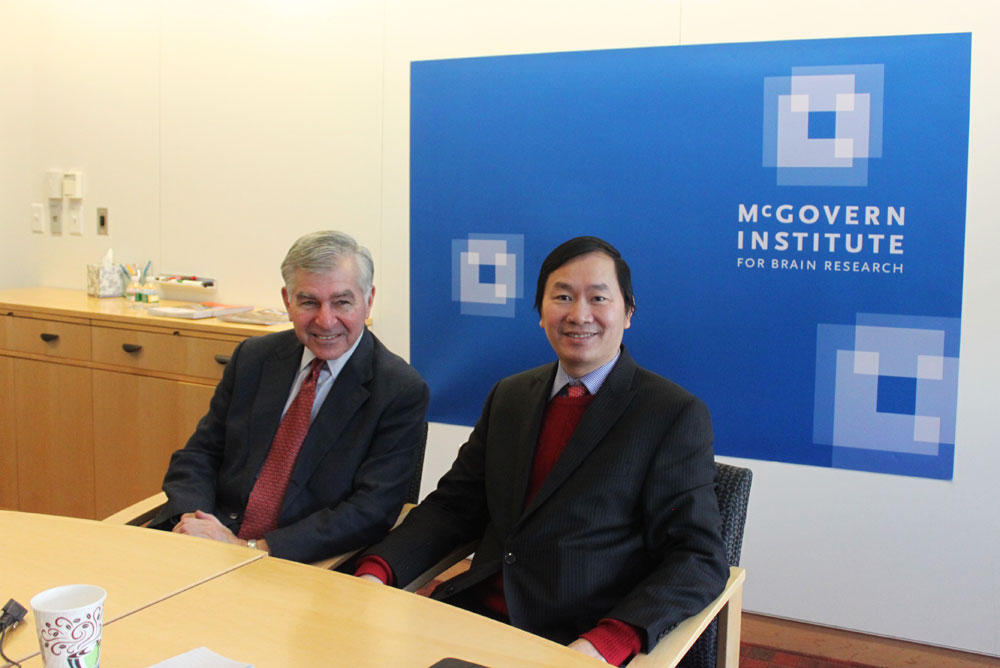
(BGF) – Mr. Michael Dukakis started BGF Distinguished Lecture Series on December 12 on the occasion of BGF’s first year anniversary. In this lecture, took place at the McGovern Institute for Brain Research at MIT, he placed emphasis on world peace and how international community can help solve global existing issues to make the world better.
Transcript:
Tuan Nguyen: Welcome. I’m Tuan Nguyen, editor-in-chief of Boston Global Forum. Today December 12th is the first anniversary of the Boston Global Forum. We’re delighted you have joined and sent congratulations to the Boston Global Forum and to Chairman Michael Dukakis to Boston Global Forum Distinguished Lecture today. The speaker of the Distinguished Lecture will be Governor Michael Dukakis, the Chairman of Boston Global Forum. Mike is a three-term governor of Massachusetts, was the Democratic Party’s 1988 presidential nominee, and is currently Distinguished Professor of Harvard University, and on the faculties of UCLA and Northeastern University. He also heads the Dukakis Center, located at Northeastern University. I present to you Governor Michael Dukakis.
Gov. Dukakis: Thank you, Tuan and thank you very, very much. It is a pleasure to have an opportunity to share some thoughts and ideas with you about the Boston Global Forum: what it is, what we hope it can achieve, and to invite so many of you through the remarkable medium of information technology to work with us as we build the Forum and try as best we can to make it a major force for a better and a more peaceful world. But let me tell you a little about it. Actually, it is Tuan who deserves most of the credit for creating this. He’s a remarkable person and one of founders of the internet in Vietnam, spends a lot of his time now in Boston, fellow at the Shorenstein Center at Harvard, and somebody who I met when we were on the Board of Directors together. And he began talking about his hopes and dreams for what he called and what is now the Boston Global Forum. So what is this idea that he developed and that I Chair and that increasingly is involving many, many of you, not only in the United States but across the globe. Well, we have enormous intellectual resources and I think many of you know here in Boston, great universities, great thinkers, people that have a tremendous amount of expertise in a wide variety of fields. In fact, today we’re at MIT in a very special center that does research into brain technology. And this is just one of dozens and dozens of such centers here in the Boston area. We have many people, obviously, who are deeply and actively involved in international relations and international issues, so we’ve got a wealth of resources here and obviously we want to tap into those resources. At the same time, we want to involve as many of you as possible, both here in the U.S. and across the globe, in working with us on important issues of great international significance. So our hope is that starting with a core group here in the Boston area led by Tuan, and Tom Patterson at the Shorenstein Center at the Kennedy School, John Quelch, who’s an extremely able and experienced professor at the Harvard Business School, and others we can begin to focus attention. And we want to do so by picking an important issue of international significance, one per year, and focusing intensively on that issue. We’ve just begun that and I’m going to explain to you in a minute just why we picked the issue that we have and what we hope we can do about it.
Now why are we doing this? Well, we’re doing it, in my opinion, against a backdrop of unprecedented international communication in a way that has never existed on this planet, largely thanks to information technology, a world which is getting smaller and smaller in the best sense in which we have the means now to work together, communicate together, reason together, negotiate together, and hopefully build a better and a more peaceful world. And even while conflict continues in many parts of the world, it is increasingly taking place within and not between countries. International institutions, the United Nations on down, are playing a greater and greater and a more important and a more effective role. Unilateral or even limited multilateral interventionism in the internal affairs of a country outside of the United Nations framework is not only not working, and we’ve seen this now repeatedly in the case of the U.S. intervention for example in Iraq and in many other places where countries have sought to intervene unsuccessfully, and it’s increasingly being discredited as a means for settling disputes between and among countries or even within a country, in some cases, where conditions are so bad that international norms are being violated and the international community believes that international action is warranted. While situations like the Iranian nuclear problem tend to get the most attention, action on an international scale has been having profound effects on conditions around the world. Just take international public health. Way back in my youth I had the good fortune to get a scholarship to study in Lima, Peru after my junior year in college. I lived with a Peruvian family and I had a wonderful experience. At that time, one out of every two Peruvian babies never lived to see its first birthday. The infant mortality rate was fifty percent. And in most developing countries of the world that was the norm. Today, infant mortality in Peru is about where it is internationally, dramatically lower than it was then. Why? Because international institutions, international experts, people from all over the world have come together, shared information, and have been able to dramatically reduce the level of disease and ultimately death, especially in children and young people across the globe. All of us know about climate change, about how important it is going to be to develop standards to deal with climate change and they cannot be done on an individual basis. This is something that must be done internationally, working through international institutions. International trade, dramatically bigger and more extensive, in which we hope that we can gain the benefit of free and fair trade and do so while at the same time making sure that the people who make these goods are protected. I’ll have more to say on that in a minute.
The International Criminal Court, my country unfortunately has still not embraced it, but the idea that there are crimes which are crimes against humanity and should be punished internationally, is a relatively new one historically and yet one hundred and twenty-five countries have joined the International Criminal Court and more I hope will. Many of us are strongly suggesting that this latest dispute involving nearly a half a dozen countries in Asia over who owns what island is nothing that ought to be producing the kind of conflict and anger that it is producing. We have something called the International Court of Justice, that’s the World Court, that’s been created to deal with these kinds of issues. I, for one, believe that we should be urging the countries in Asia to go to the International Court of Justice and ask that very important international body to go to work and resolve these differences. This is nothing that ought to create conflict or armed conflict or the kind of pretty angry discussions taking place today and we have an international institution called the World Court that has been created specifically to deal with these kinds of issues. And, in point of fact, as a result of these and other dramatic events that have been taking place all over the world, we are probably closer to a point in world history where war is being ruled out as a means for settling disputes between and among countries than we have at any time in the history of mankind. I, for one, and I just celebrated my eightieth birthday, think this is probably the most dramatic step that has taken place in my lifetime and I think all of us as citizens of our own countries, as well as citizens of the world, have a solemn obligation to continue to try to create a world in which these kinds of disputes can be settled through international institutions peacefully, without armed conflict, and in a way that makes us a better, a more prosperous, and of course a more peaceful world. So, that’s the backdrop within which we’ve created the Boston Global Forum and within which, with your strong participation and involvement, we hope we can play a very constructive role in moving the world forward.
What we’ve decided, as I said earlier, is that we’ll pick an issue and focus on that for a twelve month period. And our planning group here in Boston has decided that that issue this year will be the issue of occupational safety and health in the workplace all over the globe. Now, why have we picked that? First, because, as all of you know, it’s a very serious problem and secondly, because we’re all part of it. Those of us who buy these goods, those who make them, those who sell them, those who process them, those who market them; we’re all part of this problem. None of us can or should think that somehow we can escape responsibility for this. Secondly, as all of us know, tragically, especially but not exclusively in Bangladesh, we have had terrible and tragic results in some of those factories. I know of no one on this planet that thinks that that’s acceptable. Now, on the one hand, we don’t want to punish Bangladesh or other countries so much so that they are badly hurt economically. On the other hand, I personally, and I think an increasing number of people across the globe, think that that kind of conduct cannot be tolerated and we’re not, as consumers, prepared to buy goods and engage in an economy in which the people that are making these things that we buy and we need and that we want are not protected against the kind of thing that has caused now hundreds and hundreds of deaths, not just in Bangladesh, but elsewhere. There are, as I think many of you know, two major private sector initiatives that are underway which have been initiated by industry groups. Certainly all of us hope that they will be successful but, I must say, and this is my opinion not necessarily that of my colleagues, I find it very difficult to believe that we’re going to be able to deal with this problem effectively unless we internationalize it. And we have an example in Cambodia, where, faced with similar problems, working with the International Labor Organization we now have, in that country, internationally developed standards and inspection and enforcement. This seems to have gone a long way toward, on the one hand, protecting workers and at the same time ensuring that they will receive reasonably decent pay for the work that they do. So, that’s one model that I hope we’re going to take more than a quick look at, that we’re going to explore intensively to see whether or not, conceivably, it has international application. Certainly, we hope that the two agreements now that are being implemented in Bangladesh will be helpful. And my hat is off to the people that have worked hard to try to put those together, but I must say I’m a skeptic. If we want a world in which we not only can buy goods that are reasonably priced and of good quality and at the same time help a lot of people in many countries that are quite poor to develop better and more prosperous lives working in those industries, in my view, the case for internationalizing both the standards and enforcement is very strong. We shall see. In the meantime, obviously, I think all of us want to be very supportive of what is currently going on. But, it’s not just Bangladesh, it’s everywhere. Even here in the United States, although our occupational safety and health standards are much tougher, much more effectively enforced than they were certainly forty, or fifty, or a hundred years ago. Nobody can relax under these circumstances. Working people are entitled to a decent and safe workplace and I think all of us feel that no matter where we come from, who we are, and to what extent we are involved in the manufacturing process as well as the consuming process, and all of us are in one way or another.
So, what do we hope we can achieve through the Boston Global Forum, first, in focusing on this important issue and then going on in subsequent years to picking other issues of importance that this approach to problem solving, to discussion, to international collaboration and ultimately I hope to recommendations which have an impact, can achieve? Well, we’re going to encourage lots of consultation and that’s obviously already underway. We want to encourage as many of you as possible to participate in this process, to be part of our conferences, our lectures, the talks that people will be giving online and to come back to us with feedback, with questions, with suggestions, to make this a very collaborative kind of effort. We hope to have a series of online conferences, the first of which we’ve already held and I know some of you were very much a part of that, bringing together the best minds and experience from around the globe. We want to invite key issues and key figures who have been actively involved in these issues, to participate, to debate, and to share their ideas. And, of course, with the miracle of information technology, we can do that at minimal cost, inviting all of you to come to these conferences in a way that doesn’t require you to travel, to spend a lot of money, and yet to participate fully and actively in these discussions and in our development of recommendations for change. Our first conference, as many of you know, was on the eighteenth of November, it involved about one hundred and twenty participants including: members of the United States Congress, at least three assistant secretaries at the cabinet level here in the U.S., representatives of the International Labor Organization, of business organizations that have put these agreements together, legal aid lawyers from Bangladesh who participated actively and very constructively, academic and legal experts, and many others. It was fully covered by the press. I, for one, thought it was a wonderful discussion. It was about a two hour conference, a very good start, and we expect to have our second online conference on the subject of international occupational safety and health standards in February, and we hope that all of you will participate. So, that, in a few minutes, is a summary of what the Boston Global Forum is, what we hope to achieve, and how we hope we can involve many of you, and a growing number of you, in our discussions, in our deliberations, and ultimately in the preparation of recommendations which we can then take to decision makers all over the world. So, we’re delighted that you’re listening today and participating. I know lots of you have questions, and the second half of this lecture of mine is going involve an exchange between us, which I look forward to. Many of you have backgrounds in this field, have actively participated in it, have lots and lots of good ideas and we’re delighted to have you with us. Thanks for being a part of this. We look forward to having you attend and participate in our second online conference. Now, we’re going to go to questions and I’ll do the best I can to see if I can field them and exchange some ideas with you. Thanks very much.
Tuan Nguyen: We have a lot of questions. First of all, we would like to you so much for sending your questions and comments and congratulations to the Boston Global Forum and for Michael Dukakis. Special thank you to Steve Elkins, Farea Ali Múlimi, Rohit Wonchoo, Thomas Peterson, Lynette Yiadom-Boakye. They are five Global Thinkers 2013 named by Foreign Policy. So we congratulate and thank you. Now, Jonas will manage the questions together with you with Governor Michael Dukakis.
Jonas Brunschwig: Thank you Tuan. Thank you Governor for taking the time to do this with us and happy belated birthday. We’ve received questions from all over the world in a wide ranging area of topics, going from your work with the Boston Global Forum to the actual issue that we’re focusing on, and then ranging more into your broader career and the way you see the world today. So, we’ll divide them into those groups. So, to begin with the questions related to the Boston Global Forum, the question that goes to the source: what motivated you to Chair the Boston Global Forum?
Gov. Dukakis: Well, apart from the fact that a good friend asked me to do it. As I said in my talk, I’ve been on this planet now for eighty years. I was a child of the Great Depression during the ‘30s, was nine, ten, eleven, twelve during World War II, then it was Korea, then it was Vietnam and more recently, we’ve had other international conflicts. What is remarkable about my lifetime and what has happened here is, first, the creation of international institutions designed to try to resolve differences without armed conflict and, secondly, this remarkable information technology which now makes it possible for people all over the world to communicate in a way that was never possible before. And I’m an inveterate optimist. As I’ve often said you can’t be in politics if you’re a pessimist. If you don’t think that good people working together can make a difference, you’re in the wrong business. I am much encouraged, particularly recently, at what I’m beginning to see happen around the world. I was not a supporter of American intervention in Iraq or, for that matter, Afghanistan except in a very limited way, nor was I a supporter of intervention in Syria, international intervention or intervention of various kinds in Syria. I thought it was doomed to failure and I’m sorry to say that seems to be what has happened. But what is emerging out of all of this, and we Greeks have an old saying that “when things happen you’re supposed to learn from them”, is a growing awareness led, I’m proud to say, among others, by my former Lieutenant Governor who is now the United States Secretary of State John Kerry, that using these international institutions, sitting down together, exchanging information, even if we have ideological differences, is much more likely to lead to peaceful resolution of things than armed conflict, and Iran is a very good example of that. Now, Iran is not easy. I don’t know of too many people who don’t think that if the United States had not overthrown the democratically elected government of Iran in 1953 we wouldn’t be dealing with this kind of a problem, but we did. It was a terrible mistake at the time and here we are. But the fact that, thanks in part to the Iranian people in the election of a new president, and obviously their strong feelings that they want a more normal and a more peaceful situation, we’re making significant progress and I hope, and I expect, that it will continue. And that’s just one example. Now, how are we doing it? Through international institutions with international collaboration. I mentioned this current conflict over islands in Asia. Frankly, I think anything like armed conflict over who owns what are largely useless islands is simply unjustified. But, how do we resolve this? It seems to me, we’ve got to go to the international institution which is designed to do that, which happens to be the International Court of Justice. The more of this we can do the better. I talked about international public health, about climate change itself which has to be resolved internationally. There is no way any of us individually can solve this problem unless there are international standards internationally enforced. So, I see a world that, slowly but surely, is beginning to understand that we can resolve these differences peacefully, but we have to sit down together, we have to discuss them together. I hope that the Boston Global Forum can be a very constructive part of that process. That’s my hope, that’s our hope and our expectation, and we’re going to work hard, with the help of all of you out there, to try to make that kind of constructive addition to this emerging consensus, I hope, that we can solve these problems and we don’t have to do so by killing each other.
Jonas Brunschwig: How would you assess the Boston Global Forum’s first year?
Gov. Dukakis: Well, we’re just underway. I loved the conference in November. I’ve been part of a lot of conferences and part of the problem is just the logistics. How do you get people to a place, house them, feed them, and so on and so forth? Here we had an opportunity to have every bit as valuable a meeting with none of that, and what we discovered was that its much easier to get really very good people to participate if they can do it from their desks, their offices, or wherever they happen to be. I thought it was two absolutely fascinating hours. We not only got press coverage but I think involved people in this discussion, people who I had heard about but I had never met or seen in action. My hope is that we can build on that more and more with increasing numbers of folks who will work with us and do so through the miracle of the kind of information technology that now makes it possible for us to do that. So, I’m very pleased.
Jonas Brunschwig: Where do you see the Boston Global Forum in five years?
Gov. Dukakis: Well, we shall see. A lot of this depends on the quality of our work, depends on the numbers of people, I hope in the thousands, that will begin to participate with us, in our ability to provide this kind of international forum in a kind of unprecedented way. This isn’t Davos, but it can be every bit as constructive, if not more so, in a way which engages people everywhere and as I say, does so at minimal costs. So, I’m really quite excited. Of course, this issue of occupational safety and health standards is a test for us: can we engage people, can we involve them, and can we come up with a set of recommendations that’s going to be successful and helpful.
Jonas Brunschwig: Well, you’ve hinted at it a few times, about the conference, that so far we’ve been able to engage with key stakeholders from the business community, from the public sector, from civil society…
Gov. Dukakis: The advocacy community, lots of people who are part of this.
Jonas Brunschwig: How far up the food chain do you think we can bring this?
Gov. Dukakis: We can, I think, engage, as I say, literally thousands of people in these discussions. Obviously, it’s going to be our responsibility to make sure that we manage this process in a way that keeps people actively involved. As somebody who has attended literally hundreds and hundreds of conferences, I was kind of blown away by the ease with which we were able to get lots and lots of people who have been deeply and actively involved in this at our conference, online, and produce what I thought was a wonderful discussion, very interesting ideas, and I hope a start on the way toward a very successful forum process.
Jonas Brunschwig: Do you see our efforts take root within the Government for some concrete initiatives?
Gov. Dukakis: Well, we certainly had people at the conference who have important roles in government, not just in the United States, although we had some very good ones, but all over the world. So, the answer is yes. I see no reason why we can’t have presidents and prime ministers and cabinet ministers and so forth deeply and actively involved in this and I hope we can do that.
Jonas Brunschwig: I guess it doesn’t make sense not to ask you how optimistic you are about the outcome of this process.
Gov. Dukakis: Remember, I remember the world eighty years ago and I remember those terrible wars and some more recently, which seem to me were really quite unnecessary and not helpful in any way. When I think back then and I think now and I see what’s available to us in a way that makes it possible for all of us to sit down together, to reason together, to communicate together, I’m very optimistic. I’m very optimistic. I wish, frankly, I was starting my public career all over again, but I’ve got children and grandchildren who can pick that up along with lots and lots of students that I teach these days. I can tell you, we’re producing wonderful young people in this country and around the globe. They’re very idealistic, they feel strongly about the world that they’re going to be leading and I’m very excited. I’m very excited.
Jonas Brunschwig: We sat down last week with Professor Patterson at the Kennedy School and we talked about his book Informing the News and he brought up a fact that is fairly relevant to the issue of worker safety. He mentioned that issues like worker safety make headlines or make news only when a catastrophe like Rana Plaza happens and there are hardly any labor reporters in newsrooms nowadays. How do you think this could be changed to bring these issues, that are relevant, to people?
Gov. Dukakis: Well, its interesting. Even as the conventional media has covered these kinds of issues less and less, I remember when the New York Times had a full-time and very highly respected labor reporter who did nothing but report on these kinds of issues, even under those circumstances, the social media is kind of picking up on this and providing another kind of an alternative medium for us. But, obviously, it’s our responsibility here at the Boston Global Forum and elsewhere to make sure that the media covers things. I think we had five or six really excellent press people from some of the major newspaper media outlets in on our first conference and I hope we can expand that. So, to a very great extent, we’ve got a responsibility to make sure that they’re covering our conferences, they’re covering these various things that we’re doing. If we do meaningful work and we come up with meaningful kinds of recommendations for change, believe me, they will cover them. Sadly, of course, disasters tend to get more coverage. When I talked about these unbelievable gains in international public health, you don’t read about that very much. We don’t give ourselves credit for that kind of thing.
Jonas Brunschwig: You read a little bit when the MDGs are up in 2015.
Gov. Dukakis: That’s correct. But our job is to make sure that the press does cover these kinds of things.
Jonas Brunschwig: So, if we were able to bring this issue of occupational health and safety, to make it relevant to more average citizens, do you think that they’d be able, with the information, to then take it to the next level and be more conscious in their consumption? Because it seems like the sweatshops and the factories often produce for the cheaper brands, like Walmart and Gap for example, and they cater mostly to the lower income people in the developed countries who tend to be the ones that don’t really have a choice financially.
Gov. Dukakis: Well, they may not have a choice, but in some ways, because they are not affluent, because they are struggling to support themselves and their families, I have found that they are even more sensitive to these issues than people of wealth. And the cost of doing it right is really minimal. I remember, I teach at UCLA in Los Angeles in the wintertime, and I remember the AFL-CIO here in the United States decided to have their mid-winter meetings in Los Angeles. John Sweeney was the head of the AFL-CIO at the time. And, the major goal of the AFL-CIO at that time was organizing strawberry workers in California. We eat a lot of strawberries in the United States. I eat a lot strawberries, I like strawberries. Sweeney told me, and I have not reason to doubt him, that if the strawberry growers agreed to every single demand of labor in these contracts for strawberry pickers and workers, including good benefits, health care, increased wages, all this kind of thing and by the way these issues are back again as we see income inequality growing all over the world, including in affluent countries, he said to me that it would raise the price of a box of strawberries by six cents. I think I know the American people, and I’m sure the same is true elsewhere, well enough to know that they would be more than happy to pay one extra nickel to make sure that the people that are picking these strawberries are getting a decent wage, decent benefits, and protection from environmental issues out in the field in terms of pesticides and these kinds of things. What are we talking about? Five or six cents. I think that’s the sentiment generally. I think paying a nickel so that these folks can have a decent life. And we’re confronting that issue right now, in terms of raising minimum wages and those kinds of things. I think there would be very strong support. Of course, it means we’ve got to inform consumers as to what’s really going on out there and I think most people are appalled at what has happened, not just in Bangladesh, but in other countries. And, by the way, a hundred years ago we were going through exactly this same set of issues here in the United States. The famous Shirtwaist Fires in New York City and the garment shops there which were terrible and triggered an enormous reaction in the form standards here. So, we’ve seen this, we’ve been through it and I don’t think there’s any question consumers would respond positively.
Jonas Brunschwig: Do you think, overall, this might be a good sign even though these terrible things are happening, since they have happened before? It sort of seems like it could be on the path to greater development you have to pass different stages and this is just one of those stages.
Gov. Dukakis: Memories are short. We’ve gone a long way, for example in this country, toward dealing with serious occupational safety and health problems and a much tougher OSHA, as we call it, and enforcement and these kinds of things. But, now production has shifted to other parts of the world and they’re going exactly the same thing. Given our experience and the experience of other more advanced, industrialized countries there’s no reason under the sun why we shouldn’t seek to act, and act effectively, to deal with these problems.
Jonas Brunschwig: I guess we can move on to questions related to the world as you see it today, since we have a lot of questions that fall under that category. Someone suggested that we start with: what do you think is the most pressing issue that the United States is facing today?
Gov. Dukakis: Domestically, I think its income inequality. This is a very prosperous country. We’ve done well, we’ve gone through a very difficult and serious economic recession, which is largely our fault. We forgot some lessons. You’ve got to regulate financial institutions. You can’t let them do what they want to do without regulation. You’ve seen what’s happened. We can’t go back to what I call Herbert Hoover economics. Austerity will not get you out of a depression or a recession and I don’t know why we have to re-lean that lesson over and over again. But, I think gradually people are beginning to understand, both here and in Europe, that austerity doesn’t revive an economy. It just doesn’t and it wont and it’s a dumb strategy. So, making sure that all Americans have an opportunity to work, to work at a decent wage with good benefits, in my opinion, is something of the most important priority but of course that requires an excellent educational system, it requires environmental protection obviously, including collaboration with the world to do something about climate change, which is real, investing in our infrastructure which we are not doing anywhere near as effectively as we might, and quite frankly, significantly reducing military expenditures in a world which is no longer a Cold War world and really has to deal with international problems, including terrorism, in a way that is very different from the way we were dealing with and spending during the Cold War, which is now blessedly over. So those are our problems here.
Internationally, I think the United States, first, cannot be the world’s sheriff. We can’t be the world’s police chief. It’s clear we can’t do that, which means that we must be engaged in a collaborative process using international institutions to resolve these international disputes. And I want to see my country taking a leadership position in doing that, whether it happens to be in the South China Sea or in the Middle East or elsewhere. And I think we can do that.
Jonas Brunschwig: What do you think is the most pressing issue on a global scale?
Gov. Dukakis: World peace and how we not only create the conditions for world peace but then make it possible for people all over the globe to have the kinds of lives that we want for ourselves and our families. And I think we can do that.
Jonas Brunschwig: You’ve mentioned it a few times before, if you want to dive a little bit more into what your thoughts are on climate change and the role that the U.S. has taken up to today and the role you’d like the U.S. to take.
Gov. Dukakis: Climate change is real. I don’t think there’s any question about it. People say “Well, we’re not sure.” Look, if there’s a possibility of climate change, not a probability, which I think is clear, but a possibility, we’ve got to go to work on this. I mean, the future of the planet is being threatened here by our activities. There’s no question that we know how to dramatically reduce the amount of carbon that’s going into the atmosphere, the question is whether we have the will to do so and can we do so again in a way that is collaborative and involves the entire world. We’ve got a job to do, because we produce a lot of the stuff, but so does China, so do a lot of other places. This will not happen without international agreement, international standards, international enforcement and I want the United States of America to be leading that effort.
Jonas Brunschwig: Would you say that the biggest obstacle towards achieving these goals within the United States might be special interests?
Gov. Dukakis: Not so much special interests. We have a conservative community which is skeptical, isn’t quite sure that there’s a scientific basis to this. I respect their skepticism but I think the evidence is now overwhelming. This is not just a figment of somebody’s imagination that may happen fifty years from now, its happening right now. If my fellow countrymen don’t believe it they ought to go out to Glacier National Park, one of our great national parks. Ten years from now there won’t be any glaciers left. So, this is not a fairytale and I think we have to emphasize that. But, it’s our role as an important international leader that is most important here because we’ve got to use our prestige and our influence to move the international community as rapidly as possible toward international standards and enforcement. And I’m not sure the United States, I mean our Congress is still divided on this issue. So, our job, it seems to me, is to persuade people, liberals and conservatives, republicans and democrats alike that this is a real problem, that this is not a partisan issue, and that we have got to get going on it.
Jonas Brunschwig: You’ve mentioned that income inequality is what you see as the number one domestic issue that the U.S. needs to face. There are actually two researchers here at MIT, Erik Brynjolfsson and Andrew McAfee who run the Initiative on the Digital Economy, that have just recently published a book Race Against the Machine in which they argue that technological innovation is advancing at a faster pace than labor can keep up with causing many people to lose their jobs to technology which is sort of one of the many factors contributing to greater inequality. What suggestions do you have to tackle these issues?
Gov. Dukakis: I haven’t read the book, so I don’t want to be unfair, but I’ve been hearing this all my lifetime. That labor saving technology, devices, equipment, procedures inevitably will result in a world in which people wont have jobs and it’s never happened yet. Why? Because even as technology is dramatically reducing labor costs in some areas, its creating new economic opportunities in other areas. These days, we’re applying new technology to the manufacturing process. My hope and expectation is that the United States will get back into the manufacturing game by using these new technologies to bring manufacturing back to the United States because, in fact, we have these new technologies. But, I don’t see the slightest evidence that new technology permanently destroys people’s economic opportunity. Here again, I think history teaches that us that you have got to take advantage of these opportunities, you have got to use this new technology. I don’t think the fact that we still aren’t at full employment in the United States has much to do with the destruction of jobs as a result of new technology. It’s got to do with rather ill advised public policies, in my judgment. We should be investing heavily in this country’s infrastructure these days, and we’re not. It’s those kinds of things that will get us back to full employment, and we’re getting there. But, the idea that technology permanently destroys economic opportunity, I think, frankly, is belied by history.
Jonas Brunschwig: This question comes from a scholar at Harvard who would like to know what you think about city leadership, both on the national as well as the international level? Given that it seems that the world is going through a very intense urbanization phase, with many urban legal frameworks that are not adequately prepared for or funded to deal with externalities such as disasters caused by climate change, the use of resources, safety, or community building.
Gov. Dukakis: Well, I don’t think there’s any mystery about what it takes. It certainly requires resources. There are many countries that don’t have the resources that you’d like to have, but I think we know how to deal with urban problems. Here in the United States, clearly, cities are coming back in a very interesting way and in a much better and a much more exciting way. In other developing countries, as we know, we’ve got cities that are huge, cities that have a lot of poverty, but we know how to deal with these problems. Here again, I think, maybe this is a subject down the road for the Boston Global Forum. How do we deal with urbanization? How do we make sure that our cities are healthy and provide a good quality of life for their people? But, again, I don’t think there’s any mystery about what it takes, the question is are we prepared to do so.
Jonas Brunschwig: I want to go back, again, to something that came up with Professor Patterson’s talk. You’ve been advocating for collaboration on an international level quite heavily throughout your whole career and especially today. Professor Patterson mentioned, on the other side, that there is an increased polarization within politics in the United States, which makes it very, very hard for Congress to collaborate. This Congress is on track to go down as one of the worst, if not the worst, Congress in modern history. How do you see this issue being addressed?
Gov. Dukakis: Well, I have enormous respect for Tom, needless to say, but when people say to me “This is terrible” and “we’ve never seen it so bad” I say to them “Have you seen the movie Lincoln?” That was bad. That was a country that was tearing itself apart and that almost ceased to be a unified country. I lived through the McCarthy period: that was bad. I lived through the whole Vietnam conflict and what it was doing to the United States, tearing this country apart. Talk about a poisonous atmosphere, even within families, where people wouldn’t talk to each other because the kids were opposed to the war and the parents were supportive and so on. We go through these periods from time to time. And yet, we’re finally on the verge of a budget agreement, which seems to be quite reasonable and which I think is the result of three or four very tough years, which have brought us to a point where people are finally willing to sit down, be reasonable, and collaborate, even as the American economy is improving. So, we’ll move through this. We’ve had a big battle, I don’t understand why, over whether or not working Americans and their families should have decent, affordable health care. But that’s being resolved and it’s going to happen. Sometimes these are tough issues and sometimes they can be very confrontational, but I think we’re working our way through this. And, compared to some of the experiences I’ve had, and this is not something to not pay attention to, but this is a set of problems that are a lot easier to resolve, quite frankly, than some of the things I’ve seen in my lifetime. Here again, I’m not happy with what’s been happening but slowly but surely we’re getting there and I think that’s true of other countries as well.
Jonas Brunschwig: So, do you think the two party system is still the best way forward?
Gov. Dukakis: Well, it’s the one we have, it’s the one that, for some reason, seems to be the best way to move forward. By the way, this is very interesting as well: when I was a college student people were bemoaning the fact that the major political parties in the United States didn’t stand for anything because we had liberal Republicans and conservative Republicans and we had liberal Democrats and conservative Democrats. In fact, we had conservative Democrats, mostly in the South, who were also racist Democrats. People said “This is crazy”. You go into the voting booth and you don’t know whether to vote “D” or “R” because what do they stand for? What we need is a realignment of the parties. And there was a fellow Scott Schneider, I think he was at Wesleyan University, who was the principle advocate of so-called Scott Schneider thesis, it was time for the major parties in the United States to become ideologically more cohesive so that when voters went into the voting booth to vote they knew what they were getting: if you voted Democratic you get one thing, you voted Republican you get something else. Well, we’ve done that and now everyone is concerned about polarization. This is a country, on the whole, that’s pretty moderate and sooner or later people are going to be punished if they don’t do the job in a way that builds national consensus and I think we’re beginning to see that and I’m not surprised, but it has taken a while.
Jonas Brunschwig: Going down this economic road, how do you see the new economic movement advocating for employee stock ownership plans, co-operatives institutions, credit unions, with the example of the Bank of North Dakota, public utility companies?
Gov. Dukakis: I’m all for this. I think the more consumers than average people that can be involved actively in the economy in a constructive way, the better. I like co-ops, I like employee stock ownership plans, I like all of this kind of thing and I think the more of that we can do, the better. Now, I don’t know that that will become the dominant model in a place like the United States, or for that matter, elsewhere, but I think all of these things are positives and I think they ought to be encouraged.
Jonas Brunschwig: What are your thoughts on the Occupy Movement? This is a question that somebody strongly pushed.
Gov. Dukakis: It didn’t last very long but I think it brought the issue of income equality up there where it belonged and it’s going to stay there. We’re going to have a flock of minimum wage laws being passed in this country because people don’t think you can live on eight dollars and twenty-five cents an hour, and you can’t. It’s interesting, in the national polls a majority of Republicans, as well as Democrats, support increases in the minimum wage. And, if you ask the American people whether or not working Americans and their families ought to have decent, affordable health care ninety-three percent say yes. Now, I know there’s all kinds of controversy about the Affordable Care Act and that kind of thing, but when you ask people that question: should working Americans and their families, and by the way, it is overwhelmingly working Americans and their families that don’t have health insurance in this country. If you’re on public assistance you get health care. But if you ask the American people that question: should working Americans and their families have decent, affordable health care they’re overwhelmingly for it. And, by the way, not having decent, affordable health care adds to income inequalities. So, I think there’s actually a very broad consensus behind these things and I think you’re going to see a lot of movement in the United States on this subject. And, by the way, income inequality is growing elsewhere in the world, and I think you’re going to see similar kinds of efforts.
Jonas Brunschwig: Well, it looks like we got a live feedback from a former student of yours, Joshua Cooper, who woke up at 4:30 AM from Hawaii to participate, sending his regards. Moving on. Going back to the topic of national security, you have advocated for defense spending cuts. MIT will host a talk tonight on the Snowden affair. What are your thoughts on the NSA and its implications for the freedom of press, freedom of speech? How do you see Edward Snowden and Chelsea Manning?
Gov. Dukakis: Well, I’m very concerned obviously [inaudible] condone in an illegal act, but every once and a while somebody engages in an illegal act and suddenly tells us things that we don’t know, and in this case, a lot of things we didn’t know. I don’t know too many Americans, liberals and conservatives alike, who aren’t very concerned about this kind of intrusion into our private lives. I noticed that General Alexander was pleading that we not limit the authority of the National Security Agency. I’m sorry, I’m with two senators who on most issues are poles apart, Pat Leahy and Rand Paul, both of whom are appalled by what’s going on and what limits, and I agree with them. And nobody is going to tell me that we can’t deal effectively with international terrorism without intercepting virtually every message. The other day I was asked whether or not, at a particular press event, would I be willing to talk off the record. I said “These days, nobody is off the record. We’re all being snooped on by the NSA.” So, I think we’ve got work to do. As I say, nobody is going to tell me we can’t protect the security of this country and it’s people and at the same time make sure that our Bill of Rights and our freedoms are not protected. Of course, that’s always the clash. When you get into trouble, you get into war and so forth, there are severe restrictions on the grounds that we’ve got to have them because it affects our national security. So, I’m strongly supportive of efforts, by Republicans and Democrats alike in Washington, to try and deal with this. And, as I say, nobody is going to convince me that this kind of incredible government snooping is essential to our national security. You start chipping away at our individual liberties around here and that is going to have an effect on our national security.
Jonas Brunschwig: On to more frivolous topics, and speculative. Who do you think will be the presidential nominees for the Republican and Democratic parties?
Gov. Dukakis: I haven’t the slightest idea. I think, on the Democratic side obviously, if she runs, Hillary Clinton will be very popular. But as any of us know who have run for political office, what the polls say today have nothing to do with what may happen in two years. On the Republican side, you’ve got a party that is severely split. I’m sure they’ll have a flock of candidates and I wouldn’t even begin to speculate on who that might be. Right now, I think we’ve got some work to do over the course of the next couple of years and we ought to be focusing on that.
Jonas Brunschwig: Who do you think was the greatest American president in history? And, who do you think was the most underrated president in U.S. history?
Gov. Dukakis: Well, certainly, in my lifetime, Franklin Roosevelt was an extraordinary figure. I was just a kid but I remember he had a rare combination of leadership and charisma which made it possible for us to dig ourselves out of the worst economic crisis in history and really to transform American society in many ways. We’re still fighting these battles, as we know. On the other hand, in a personal sense, Jack Kennedy was the president that had the greatest impact on me because he had this rare ability to reach out to young people and to inspire us, and I was one of thousands of young Americans who, inspired by Kennedy’s example, decided to get into politics, to run for office, and to try to exercise what we could in the way of public leadership. Obviously, if you go back in history, a Washington, a Lincoln, these were really extraordinary figures. Lincoln, in particular, who probably had as much to do with saving the Union as anybody. But, FDR was really a giant in the White House and really had a profound effect on this country and its future, certainly in my lifetime.
Jonas Brunschwig: You just mentioned Kennedy also having a great influence, on top, along with Kennedy, who were the biggest influences on you that led you and motivated you to pursue a political career?
Gov. Dukakis: Well, lots of people. All of us have our own history. I had an extraordinary pair of parents, both of whom were Greek immigrants, both of whom came over here and did extraordinary things and were an inspiration for me, obviously, in a variety of ways that I’m not sure I can explain. By the time I was seven, or eight, or nine had me interested in politics and public affairs, amazingly, even at that age. I had a basketball coach in high school who was the first adult who ever said to me, “You ought to run for public office.” Nobody had ever said that to me before and had a great influence on me and on my wife, who was in his homeroom as a freshman when I was a senior in high school. The best teacher I ever had, who taught me French at Brookline High School, left me a thousand dollars in her will when she died with the hope that I would run for the presidency of the United States. Can you imagine that? And a wonderful, wonderful woman. I love languages and she has a lot to do with it. So, there are all these influences. In a political sense though, Kennedy had a rare ability to connect with us young people. And I don’t mean in a personal sense. I don’t think I met him more than twice. But he had this rare ability to reach out to the young people in this country and say “Hey, look, this is important and you should get involved.” He was proud to be a politician. He never apologized for it. He never apologized for being a public servant and it rubbed off on a lot of us. So, it’s a collection of these. I happened to marry a beautiful woman who was as deeply interested in politics and public life as I was, and that’s pretty important. If you have a spouse that doesn’t understand what you’re doing and isn’t supportive and isn’t participating actively that can be pretty discouraging. So, it’s a combination of things, really. And I meet people every day who continue to have an enormous impact on what I do. That’s the great fun and excitement of being in public life, that you’re meeting people every day. Through the Boston Global Forum, meeting people, in many cases, I’ve never met before who will be participating with us actively and making my life richer and I hope making the lives of millions of people.
Jonas Brunschwig: I guess we’re nearing our conclusion and we have a few more questions. You’ve recently turned eighty, a lot of time to acquire a fair amount of wisdom. Is there anything that you know today that you wish you had known?
Gov. Dukakis: Oh yeah. Probably the most important thing is that, if you’re going to have a real impact on the world, on your community, on your country, on the quality of life of people, you’ve got to be a consensus builder. That doesn’t mean that you can’t hold strong views on things. I do. I feel very strongly about a lot of these things. But, one of the lessons I learned, somewhat painfully, when I was defeated for public office was that if you’re in a position of political responsibility you can have an enormous influence in bringing people together, sitting folks down, turning yourself into a good listener. I was not a very good listener when I started. I was a pretty good talker but not a good listener. By virtue of the position you hold you can bring people together and work with them to try to achieve consensus, which is basically what we’re doing here with the Boston Global Forum in our first year. Seeing if we can develop international consensus around this issue of occupational safety and health. I would have liked to have been able to do that better back when I was in my twenties and it took me about twenty years to figure it out. These days I think I’m a much better consensus builder and what one finds is that you can accomplish a great deal if you can bring people together, reason together, and come to some agreement. We’re seeing that now on the international stage.
Jonas Brunschwig: Well, it looks like we’re running out of time. We still have several questions, if you’re willing to go forward a little bit.
Gov. Dukakis: If we have the time, we’ll do it.
Tuan Nguyen: I think we will post online and Mike can continue to write or something like that because one hour is up.
Gov. Dukakis: We’ve got a meeting of our planning group and that’s important so that we can chart our future. But if you have questions, just shoot them to us online and I’ll do the best I can to respond. I hope that as we wrap up this session that we can involve more and more and more of you in the work of the Boston Global Forum, invite your active participation, and your ideas and your suggestions and really come up with a strong set of recommendations for dealing with this particular question of decent, basic occupational health and safety standards in the workplace all over the world. Thanks for being part of this and we look forward to working with you in the future.
(BGF) – In order to push forward with our discussion on Improving Minimal Global Standards for Worker Safety, BGF introduce full transcript so that participants can follow ideas presented in the conference.
Tuan Nguyen: Welcome.I’m Tuan Nguyen, editor-in-chief of Boston Global Forum.
We’re delighted you have joined us for our on-line conference on improving minimal global standards for worker safety and rights. The leader of the conference will be Governor Michael Dukakis, the chairman of Boston Global Forum. Mike is a three-term governor of Massachusetts, was the Democratic Party’s 1988 presidential nominee, and is currently on the faculties of UCLA and Northeastern University. He also heads the Dukakis Center, located at Northeastern.
I present to you Michael Dukakis.
Governor Michael Dukakis: Thanks Tuan and thank you all. Welcome all of you to this unique and very special conference which really launches the work of the Boston Global Forum and I just want to take a couple of minutes to tell you a little bit about the Forum and what we hope to achieve. Obviously, to express our appreciation towards all of you to joining us at this pretty early hour in the morning at least in the East Coast of the United States. The idea behind this was Tuan Nguyen’s, a remarkable person in his own right, who took part in the internet development in Vietnam and has spent a good deal of his time in the Boston area. He started the idea of creating this Forum, which would on the one hand, tap into the intellectual horsepower of the Boston area, and on the other hand reach out to you from many parts of the U.S and all over the world to deal with the specific international issues. It is his idea and we’re very grateful for Tuan and the wonderful collaborative team that you meet in the course of the discussion today to launch this. And thanks Prof. John Quelch who will moderate our discussion, who decided our issue of the year would be this important issue of international worker safety and health. Our hope is that we will have a good and lively discussion, to which many of you know we have well over 100 people who are now part of the conference this morning. A very special thanks, especially to my side and my colleagues from the government, both nationally and in Massachusetts. And we hope that, as a result of our discussion this morning, we can proceed to involve more and more people who are deeply interested in this issue. [We hope] to have a set of recommendations circulating to you and see if we can have a real impact in this very important public policy area. So thank you again all of you who join us and now I want to turn the discussion over to Prof. John Quelch of the Harvard Business School, who first suggested this topic and our opening issue. And we are very grateful for John to do that. We will run for about 90 minutes, and again, we are grateful to all of you to be part of this. So, John, it’s all yours.
Tuan Nguyen (left) and Michael Dukakis (right) in the online conference
Prof. John Quelch: Thanks Michael for your leadership on this issue. Now, let me just lay a couple of ground rules that we have a lot of people on the core so if I can reiterate my hope that anyone participating can limit themselves to intervention no more than 2 minutes maximum because of the number of people who want to be involved.
Secondly, let me let everybody know that the Accord which is principally the European agreement, the accord members and steering groups have a meeting that overlaps with this meeting unfortunately in Geneva, but Andy York and a couple of other attendees of that meeting are going to do their best to get out of the meeting for a period of time to join us on the call.
What I would like to do initially is to have some updates from the representatives we have online on the Accord, from the Alliance which is principally the U.S. retailers and brand groups, and then thirdly from the ILO. I know we have a couple of people online from the ILO which most recently has also initiated a new program for the purpose of improving worker safety in Bangladesh.
So what I would like to do is if I can call upon to start our conference, if I can call upon Jeffrey Krilla. Jeffrey is one of the members of the U.S companies alliance. Jeffrey will update some latest programs and challenges. Jeffrey, can you join us?
Prof. John Quelch at the Conference
Jeffrey Krilla: Yes, this is Jeff Krilla in Washington. Can you hear me all right, Professor Quelch?
Prof. John Quelch: Yes, we can. Thank you. Go ahead.
Jeffrey Krilla: Excellent! Well, thank you to you and the Governor Dukakis for convincing this event today and for inviting me to share an update on behalf of the Alliance for Bangladesh Worker Safety. You can be rest assured that we are the alliance sharing the mutual goal improving Worker Safety, and we certainly welcome the collaboration of participants in this Boston Global Forum in our work. I’ve spent most of my career in human rights and development, and I agree with Governor Dukakis that the stake is too high in Bangladesh for us now to work together to make an impact in this important area of public policy. With the alliance created just 4 months ago, the member companies established aggressive targets for improving the Bangladesh ready-made garment industry. Today the alliance includes 26 North American companies. We’ve committed nearly 50 million dollars over 5-year-period to improve Worker Safety. By working with industry stakeholders as well as the Bangladesh garment manufacturers and export associations, the Bangladeshis government, NGOs, members of civil societies and organized labors, we’ve tried to make measurable, sustainable, and transparent fire & structural improvements to garment factories in Bangladesh. We are making progress on this commitment. This pass Friday, we released publicly the most recent list of factories, used by the Alliance member companies, so that we can prioritize and implement inspection. Our list includes over 600 factories representing over 1.1 million workers. We know these factories are also manufacturing goods pretty accorded on fire and building safety, shared suppliers make up approximately 50% of the alliance’s factory list, underscoring the need for combined efforts on behalf of garment industry workers.
Additionally, we’ve affirmed our commitment to inspect every Alliance factory and provide safety training to workers and managements in member factories by July 10, 2014. We’ve also launched important initiatives with the goal to work with the parliament. We’ve begun to aggressively develop and implement enhanced healthy standards. We’ve established a separate fund to assist these displaced workers. We’ve pledged over 100 million dollars in low interest access to factory owners to finance mediation when required, and working with Fair Factory Clearing House We are establishing a comprehensive information sharing platform to ensure key stakeholders aware of safety issue and our mediation plan has started to address this issue.
Member companies have already shared the list of factories they use with the FSC and this information is available to the public on the BangladeshWorkerSafety.org website. With regards to standards, for our conception, we’ve worked with fire and building safety experts to prepare a common set of fire and building safety standards for Alliance’s garment factories in Bangladesh. As part of the Alliance’s commitment to transparency in collaboration, we presented this dressed standards in advance of an ILO convening meeting in Dhaka on September 7, sharing with the Accord, BGMEA, and the Bangladeshis Ministry of labor employment. Our goal has been to accelerate the identification of a common-shared set of standards which ultimately results in making all factories in Bangladesh safer, and I’m overjoyed at the recent ILO convinced follow-up meeting in Dhaka just two weeks ago let our standards largely aligned. With regards to workers in … specifically, we are working to develop a simple and anonymous means such as a hotline to ensure workers can report safety concerns confidentially and anonymously when necessary. As part of our training curriculum, we are increasing worker understanding of the rights to work in a safe environment, and specifically how and when to communicate safety concerns to management. Obviously, the establishment of safety committee as required in the new Bangladeshi labor law, the workers participation committees and unions will have to assure workers have a sufficient voice to communicate effectively with management. And we intent to similarly work with management to ensure they know the importance of engaging with workers, respecting their rights to organize and having regular and open dialogues on safety. Two weeks a go, we launched a worker baseline survey, which will be used to catch the methodologies in a range of factory convictions. It was launched with a pilot of three factories and eventually it’s been conducted in 27 factories. The survey will be beneficial and ascertaining the worker perception and awareness of factory health and safety risks and help in designing an effective training curriculum.
We are also in the process of forming an Alliance’s board of Advisers comprising of U.S. and Bangladeshis experts in a wide range of fields, including experts from NGOs, and labor leaders in Dhaka. We’ve planned to announce this board shortly and we intend to consult with them regularly. In addition, we continue to follow closely the implementation of improve and enhance labor law in Bangladesh. We believe the strength in labor law is crucial, which strongly endorses the National Tripartite plan of action, which includes worker empowerment provisions. We understand the complexity of the challenges surrounding this industry and we’re currently aware of this noticed simple remedy to solve the safety problems facing Bangladeshis garment factories. That’s why the alliance emphasizes in promoting collaboration among all stakeholders. Partnership we’ve established especially with the government and civil societies in Bangladesh will be critical to our successful work. When I visited Bangladesh and met directly with government, worker representatives and other non government representatives, I was encouraged by the sheer sense of purpose that we’ve all been working to improve the life of all workers in Bangladesh by bringing rapid meaningful changes. Hopefully, we can prevent future tragedies by concelebrating and empathizing our individual efforts to bring about real and sustainable progress and I look forward to working with you all both on this call and in the future to improve worker safety in Bangladeshi ready-made garment factories. Thank you Professor.
Factory collapses are a recurring problem in Bangladesh, the latest claiming 1,127 lives. Image: AP
Prof. John Quelch: Jeff’s talked about the details exposition at the moment. Some questions have just come up to me. Maybe I can just ask those of you, and quickly a couple of those. The first is: Do you think it is the plus or minus that the accord and the alliance are working on different tracks? Would coordination between the two and common memberships be more effective at the strategy? And then the second question relates to the subcontractors beneath the immediate factories base are making the final ready-to-wear garments. What if anything can the Alliance do to help ensure worker safety at the subcontractors’ cost and suppliers’ cost to ready-to-wear garment factories. If I can just ask you to response briefly to those two and then we will move on to Nancy Donaldson at the ILO.
Jeffrey Krilla: Great! Thank you professor. I appreciate both of those questions. I will go to the first with the ideas of two separate tracks of the accord and the alliance. It is my goal, it is my great hope that we can harmonize our two efforts as closely as possible. I think that recent events have shown that if we are able to largely align our two standards and I think that is critical piece, and the coordination and cooperation on the ground in Bangladesh between both the accord and the alliance has been significant. So I’m very optimistic that these two efforts can be very closely aligned. We’ve talked to the accord about even sharing office base and we’ve had a commitment to a shared body advisor from our side. So we are very hopeful that we can work with the accord very closely, and truthfully on the ground in Bangladesh, people don’t talk about the accord and the alliance, they are just interested in factory safety. So, for my goal, to harmonize our efforts as closely as possible. With regards to the second, the issue of subcontract is shortly significant issue in Bangladesh and alliance members are committed to making sure that unauthorized subcontracting in factories does not occur. This is a core principal of alliance membership and it’s something that we at the alliance take very seriously. So I think our combined efforts is to not only enforce individual companies, regulations and rules, but also to empathize our efforts within the alliance. We lead to lessening the ideas we are stepping out on authorizing sublicensing and subcontracting practices. Thank you very much professor.
Prof. John Quelch: Okay, thank you again Jeff. We have an electronic hand that has been raised from Bangladesh from Jyoti Sinha. And, I wonder if we can see if Jyoti can say to us her brief questions.
Jyoti Sinha: Hi, I’m Jyoti and thank you so much for giving me the chance to cover the questions I have been researching now. And I’m not in Bangladesh, I’m in Boston. And I have been researching for a couple of months. My question is, with reference to this workshop, factories are catching fire again and again. Where does the spark come from? I mean, I have talked to many people and they said they can just catch fire easily but where does the spark come from? Is it because of electrical appliances outburst, machinery defaults which produces these sparks or something else? Are the garment workers trained to follow the safety to this network? Does the safety program exist in garment factories?
Prof. John Quelch: Thank you, Jyoti. I think that’s a practical question. Perhaps Jeff can respond to that.
Jeffrey Krilla: Sure. Absolutely. Thank you for the question. I’m here at the office nearby MIT, and I very much appreciate the question. The condition in the factories are dependent on effective fire safety, electrical safety, and structural safety. All these issues that we all are addressing from our effort as well as from the accord. And when you ask about the actual devastation of this fire, the electrical safety is the big issue there. You have machinery sometimes on inadequate electrical system that can cause the sparks. As you’ve noticed, garment sitting around is extremely flammable. So it’s up to all parties’ concerns: factory owners, factory management, and workers to understand the importance of safety in this condition. That’s why a fundamental element of our efforts is training all of these participants, all of the stakeholders, and the importance of their participation in safety program can help this danger can be minimized in the factories. Thank you.
Prof. John Quelch: Okay. Next, I’m wondering just before we go to the ILO, I know Rick Darling is on the core. Rick is with Li & Fung, which we all know to be a very important player, and I believe Li & Fung is an advisor to the alliance represented by Jeff Krilla. I just wonder Rick, whether or not, you could make some comments, particularly since we heard about the subcontract issue a couple of moments ago. Are you there Rick? Rick? Not there at the moment. We will try to come back to Rick. Lets then move to Nancy Donaldson and Srinivasa Reddy from the ILO. The ILO as many of you know has committed with a global fund of about 24 million dollars to supplement the efforts of the alliance and the accord. I have “supplement” as the wrong word. They are doing more than just supplementing those other efforts. Nancy, if you are on the core, could you please comment on the ILO initiatives? Nancy Donaldson? Or Srinivasa Reddy?
Srinivasa Reddy: Yes, Thank you Professor.
Prof. John Quelch: Thank you, Srini.
Reddy: Thank you very much, Professor, for having me here on this conference.
Prof. John Quelch: You are in Bangladesh at the moment, right?
Reddy: I’m in Bangladesh. I’m the country director of ILO in Bangladesh, Professor.
Prof. John Quelch: Please tell us what you are doing, a little bit about initiative and how things are going on the ground in Bangladesh.
Reddy: Sure. Following the collapse of Rana Plaza, ILO has basically looked at this … (21:41) worker safety to labor rights from an angle that requires structural as well as long-term changes. And therefore we facilitated a dialogue among the three key players: the … (21:57) and worker organizations which result in a joint statement issued by the Tripartite partners with the …..(22:08) And commitments to develop an action plan that will address worker safety and labor rights in Bangladesh. This is the main framework that resulted in national tripartite action plan on building and fire safety and labor rights in the garment sector, which works with all the partners—the government employees and workers in Bangladesh have signed and issued a national action plan on the 25th of July, 2013. And that is the main framework agreement. As most of you are aware, it was…(22:44) a sustainability compact was issued by the European Union, Government of Bangladesh, also joined by the U.S. government, supported by the ILO on the 8th of July 2013. So these three–the joint statement issued on May 4th, The National Tripartite Agreement, and the Sustainability Compact—these are the three main framework agreements that seek to improve fire safety, electrical safety and labor rights in the garment sector. And these are supplemented by the Alliance and the Accord. The issue is that, as Jeff just explained that the Alliance and both our colleagues the Accord and the Alliance will join. Just from the ILO’s point of view, when we looked at all of these—what are the major reasons for lack of fire safety, and lack of worker safety and labor rights? A number of challenges we have noticed in terms of the gaps in the legislation and policy and particularly implementation of the legislation; the weak labor enforcement capacity; the irregularities in safety of building licensing, options of worker organization and collective voice on the factory level; and a number of other challenges. So what we have tried to do is address some of these major issues, we launched a program with five priorities on the 22nd of October. This program basically looks at improving safety in terms of the buildings, inspections as far as repairing the electrical safety of all the … (24:20) factories, which are not covered by the Alliance or Accord will be assisted for inspecting each and every single factory in Bangladesh. There are roughly 3,500 factories, according to the industry sources, are active in Bangladesh. And we are hearing that the both Alliance and the Accord make up about 2,000 factories. So that the rest, whether it be sixteen hundred or two-thousand, will covered by this program, so that every single factory will be inspected for fire and safety. The second most important priority from the ILO’s point of view is to strengthen the whole lab inspection system so that the government takes responsibility for enforcing the labor legislation and ensuring worker safety as well as labor rights. So that is an important priority for us that we are working on. Also another dimension that one of the colleagues raised in the conference is the whole issue of (25:27)… priority for occupational safety and health culture. So we, through this program, will be working extensively to educate and try to work … (25:43) managers on occupational safety, health and workers rights. Also the program looks at rehabilitation of disabled workers. And through this program, we will launch our Bangladesh program. So these are the five priorities the program seeks to address. Through this program, it seeks to address some of the priority of the compact issued by the European Union and directly contributes to the implementation of the National Action Plan in coordination with the Accord and Alliance. Coordination is a major challenge that on the day-to-day basis we are working here just agreeing on how many standards for building inspections is one of the many issues we have been working. And I’m very happy the Accord, Alliance and national initiatives have been able to, more ore less, come to sort of an agreement on how many standards. While the technical teams, currently we are awaiting the final approval from the respective … (26:30) committees. And that’s an important step for us to begin the inspections very, very soon.
Prof. John Quelch: Srinivasa, can I ask you—this is John—what is your sense of mood among the factory owners and their willingness to cooperate with these various efforts that are represented by you, the Accord and the Alliance. What’s the mood among the factory owners whom you’ve talked to?
Srinivasa Reddy: The factory owners in Bangladesh have clearly realized that unless these issues are addressed in terms of improving safety but also promoting the labor rights in Bangladesh, the industry itself may land in crisis. So we see a shift in change in … (27:39) of the employers to clearly see improvements in the garment industry in Bangladesh. So I see a sort of positive change in the (27:47)…
Prof. John Quelch: Okay, you don’t think that they are just biding their time and hoping this is going to go away. The ones that you’ve talked to are committed to making change.
Srinivasa Reddy: There are a lot of apprehensions how these instructions will result in what will happen; what is the level of investment required (28:09)… what will happen when factories have to be closed. So there are a lot of apprehension, also doubts. But clearly there are several instruments and this unfortunate Rana Plaza has taken the lives of over eleven hundred factory workers, but also have seen unprecedented commitments from the global community and fashion community. And also, a lot of people are watching. So, therefore, there are not many options in terms of whether or not we improve worker safety and labor rights in the garment industry
Prof. John Quelch: Okay. I’ve just been informed that Scott Nova of Workers Rights Consortium now online. He is one of the representatives at the Accord steering meeting in Geneva today. Scott, are you there?
Scott Nova: Yeah. Can you hear me?
Prof. John Quelch: Yes, we can. Thank you, Scott, for stepping out of the meeting to be with us. We’re at your disposal if you can get an update on the work of the Accord and perhaps even the insights into some of the issues that are being discussed today in Geneva.
Scott Nova: Sure, a little bit of background first, if I may. In order to make sure that we don’t repeat the mistakes of the past, it is crucial to understand the nature of those mistakes. And it is vital in this context to bear in mind the fact that brands and retailers have been carrying out inspections focused on worker safety among other issues in their in their contract factories in Bangladesh for over a decade. And yet those inspections in the past have failed to protect the safety of workers. It is also important to bear in mind in the same context that in virtually every factory where workers have died on mass due to fire and building collapses, those factories have been repeatedly inspected under industry inspection programs. So we need to understand why those past programs didn’t work. And there are several critical factors. First of all, those inspections were not independent inspections. They were run by the brands themselves. And the result of those inspections are not available to workers and the public. So, a lack of independence and transparency. Under those programs, the brands are not obligated to actually pay prices to the factories sufficient to make it feasible for the factories to afford necessary renovations and to be able to operate safely. So a lack of sufficient financial support for factories to operate safely. A tremendous lack of worker involvement. The inability for workers to act proactively in their own workplace to protect their safety. And then finally the commitments the brands were making in general, in the context of these past inspection programs to protecting worker safety, were purely voluntary commitments. They were not enforceable by representatives of workers. So if we are going to have some confidence in our ability to protect the safety of workers going forward—to bring an end to these disasters, we must have programs that fill those gaps that correct those deficiencies. And this is very much what the Accord is designed to do. Under the Accord there are generally independent inspections with full public transparency as to inspection results–not cryptic summaries, but the details of each inspection will be made available to the public. There will be substantial financial support from the brands and retailers to the factories to enable them to afford necessary renovations and operate safely. There is a central role for workers in the workplace including the right of workers to refuse to enter or stay in building that they have reason to believe is unsafe. And finally, all of these commitments from the brands and retailers are not voluntary but are binding commitments under the Accord. And of course we want to commend those brands and retailers that have been willing to sign on in a binding way to these vital, new commitments, which is really unprecedented in this industry; yet, at the same time, absolutely necessary if we are going to protect workers. So in terms of an update—and the accord is moving forward—there are now more than one-thousand six-hundred factories covered by the accord—more than one-hundred and ten companies. The inspections—the independent inspections—have now begun. There are a long list of crucial issues that have to be addressed as the program moves forward. Many of those are on our agenda in the meetings this week here in Geneva. But in general, I’m confident—I know others involved with the accord are confident— that we have a strong and effective agreement. We’ve made substantial progress on its implementation. We have a very long way to go, but we believe the agreement will serve to help bring about the fundamental transformation in working conditions in Bangladesh and the physical infrastructure of the industry and in the relationships between buyers and suppliers that are necessary to ensure that no more workers have to die making garments. Thanks very much.
Prof. John Quelch: Scott, thank you very much. If I can just feed you a couple of questions that I’ve received.
Scot Nova: Sure.
Prof. John Quelch: Some criticism recently of the slowness with which the inspections have been progressing. And I just wonder if you can comment on the implementation challenges and how you are dealing with those. Secondly, I’ll ask you what I asked Jeff earlier about collaboration and coordination between the Alliance, the Accord and now the ILO as well. And third and last question: the issue of when the Accord or the Alliance approaches the factory owners with findings that are critical of the workplace, what leverage will the Alliance or the Accord, but in your case, the Accord, be able to use to enable compliance to occur, as opposed to [34:16 inaudible]
Scott Nova: Let me take the last question first. And leverage is of course financial leverage. Factories don’t exist unless they have buyers. The accord has been signed by many of the largest brands and retailers producing in Bangladesh. And the leverage is that, under the accord, if the factory refuses to undertake the repairs and renovations necessary to be safe for workers—having been offered necessary financial support and backing from brands and retailers to do so—then the brands and retailers will, indeed, must leave that factory. That creates enormous leverage over the factory owners. And we are confident this is sufficient to compel the necessary actions by factory owners to address safety hazards and make buildings safe.
In terms of the pace of the implementation of the agreement inspection process, of course we’re all frustrated that it cannot be done faster. We understand that until every factory is inspected—and until all necessary renovations have been undertaken—workers cannot be said to be safe. It is important to remember that it took about 20 years to create this mess in Bangladesh; it was never going to be solved in the space of twenty weeks. It is also important to remember that putting together a genuinely independent inspection program, which is a fundamental departure from past inspection programs, is not an easy task. And I feel confident in stating that it is a task that is tackled with goodwill and aggressiveness by all of the accord signatories; and that we will get there in as timely a fashion as possible for us to get there. Now it is important to note, individual brands and retailers are undertaking inspections in large numbers at their factories. And these do differ from past inspections since they’re being done by qualified safety engineers. And in the context of the Accord, because the brands and retailers understand those same factories will be inspected independently under the Accord with public results, they do have a strong incentive to be meticulous about the quality of those inspections. Those are not official Accord inspections, but they do move the ball down the field. So that’s quite important.
In terms of coordination between the Accord and Alliance, the Accord obviously has been open to this from the outset. And there’s been quite close coordination on development of a common inspection standard. We do also, though, have to be mindful of fundamental differences between the level of commitments made by the Alliance versus the Accord signatories, which do create some limitations on the ability of the Accord signatories to coordinate with the Alliance signatories. I’m talking of course of the fact that under the Accord there is a binding commitment to provide financial support, when needed, to factories to enable them to afford fundamental safety renovations. This is not a commitment—a binding commitment—that has been made by the Alliance signatories. So there is a substantial concern about a potential free-rider problem in factories that are shared between the two initiatives where the Accord signatories may end up providing critical financial support to help factories undertake renovations and repairs and retrofitting, and those factories do not enjoy the same support from the Alliance signatories because they are not obligated to provide that support. That is one example of several. So we support the broadest possible coordination, but we have to be honest and frank about the fact that that coordination will be limited by the fact that Alliance signatories have not made the same level of binding commitments that the Accord signatories have made.
Prof. John Quelch: Scott, how do you see the role of the ILO as the third leg of the stool here?
Scott Nova: Well one critical role the ILO has been playing, and for which we have been very thankful, is the ILO has been serving as the neutral chair of the Accord steering committee, in the person of Dan Reese, the head of the ILO Better Work program. And that has been a tremendous boost for the credibility and effectiveness of the Accord as we proceed. And additionally, understand of course the efforts the ILO is undertaking to provide technical assistance to the Bangladesh government in order carry out an aggressive of inspections at those factories not covered by either initiative. And we are committed to coordinating with them as closely possible in that regard.
Prof. John Quelch: We have another question, which is what about victim compensation when there are tragedies. We are not sure if either the alliance or the accord agreements actually provide for that as part of the agreements.
Scott Nova: Well, the Accord does not contain obligations specific to compensation specific to families and injured workers in the case of fires. Not because we don’t believe that such compensation is necessary or appropriate, including compensation paid directly by brands and retailers. But it’s not in the scope of the Accord. Of course, the goal of the Accord is to prevent tragedies that will then give rise to a need for compensation. That said, in any instance in which workers are killed or injured in the future, you can bet on the fact that labor unions and labor rights advocates involved with the Accord will be urging brands and retailers, whether they are Accord signatories or not, to pay appropriate and generous compensation to workers and to families. But the Accord does not provide specific obligations in that regard. I would note that among the Accord signatory brands and retailers are companies that have been forthcoming in the payment of compensation, in the case of past disasters, including of course Rana Plaza. And we applaud those brands and retailers that have stepped forward and paid compensation. For doing so, as you know, there has been quite a dichotomy between the brands and retailers that have stepped up and helped families. And those like Wal-Mart that have unfortunately been refused to do so.
Prof. John Quelch: Okay, I think we have the question on the line of Selima Akhtar from Impact in Bangladesh. Selima, are you there? Selima?
Selima Akhtar: Yes, can you hear me?
Prof. John Quelch: Yes, can you just ask your question to Scott?
Selima Akhtar: Actually the thing is that [40:46 inaudible] I like to share one thing—is that the Accord, Alliance and National Action Plan, what at the moment Europe and the US. Want to do for the Bangladeshi garment factories. Some of the key points can be translated in Bangla and be shared with …(41:04) because the managers, I see, that they are really struggling …(41:15) to improve their working conditions in line of safety. This is one issue. Another issue is some of the knowledge of the maintenance department is very low. They don’t know how to look at the electric wire. That is the problem. And worker issues—how to control the workers because there are a lot of power generators there power and after the generator is dead. So how to do that—how to handle this issue. I think it will be very good for ILO, because they are focusing on capacity building: one capacity in the government level; one capacity in the maintenance level. How to maintain this sort of problem. And training for the workers. How to make the workplace safe so that they can be safe.
Prof. John Quelch: Okay. Thank you Salema. Scott, if you are still there, I think it is the case that obviously the Accord can’t do everything, but certainly the capacity building around the managerial competency and quality on the ground, in the factories, is a key issue. I’ve hear that Scott Nova had to leave us. So let me perhaps turn to either Rick Darling or Nancy Donaldson of the ILO. Rick, are you on line now?
Rick Darling: Yes, Professor. Can you hear me this time?
Prof. John Quelch: Yes, we can. Thank you. Perhaps I can just reintroduce you as being with Li and Fung. And as I understand it, Li and Fung is advising the Alliance. Your reactions on what you’ve heard so far.
Rick Darling: Thank you very much, Professor for asking us to participate, and Governor Dukakis for hosting this event. Li and Fung, as you indicated, is actually an advisor to both the Alliance and the Accord. We actually sit in a fairly unique position. In that while we’ve been in Bangladesh for a little over twenty years, about 40% of the business where we act as a buying agent for retailers and brands—about 40% of our business is to is to Accord members and about 60% is to Alliance members. So we have a unique kind of position in between both organizations. And our focus, really, is less on the differences of the organizations themselves, but kind of where the two organizations are commonly working towards increasing and improving worker safety in the factories in Bangladesh. The ability to bring both groups together in a collaborative way, which is clearly the intent of both groups and is beginning to happen. I thought that maybe I would comment on two of the questions that were raised before that you had asked me when we tried to tie in the first time. And that is kind of the attitude of the factory and what was taking place on the ground right now. While Scott was correct in indicating that independent inspection by the Accord and the Alliance had not fully begun yet and should be beginning shortly. Many of the members of both groups have begun to inspect factories for both fire safety and structural soundness using outside engineering firms, civil engineers, fire safety experts. A whole new level of technical conditions and expertise has been involved over the last six to eight months. About, I believe 500 plus factories have been inspected under that regimen from the Accord who is using outside firms. And a significant amount of factories have been inspected by the Alliance. I will say, as the company that is sitting on the ground, that the first few months of the announcement caused a lot of confusion on the factory-owner level. And owners were unsure what it really all meant. Everything from what standards might look like. And concern that there might be multiple standards as there has been for social responsibility over the years, along with the statements that funds will be available to remediate. And so there was a lot of confusion. But I will say that five months now into the discussion what we are seeing is that factory ownership in general—I don’t want to make a false statement, but in general—is really beginning to understand that the retailers and brands from both the Accord and the Alliance are completely dedicated and serious to improving the conditions in their factories. And that they have become—as we have seen over the past three or four months—I would say, relatively cooperative. That’s a general statement, and certainly doesn’t apply to every situation. And there will and are owners that are still resisting certain aspects of the inspection regimen. But for the most part, what we are seeing is good owners are listening to the audit results, participating in the corrective action plans where worker participation has been requested in those plans. They are endorsing it. And they are moving to correct their problems. Now we’re only at the beginning stage. So I don’t want to sound naïve that things will progress that way. But I will say to the question whether factory owners are endorsing or resisting, I would say in general most are beginning to realize that in order to have a sound business in Bangladesh for the future, they are going to need to address these issues that come up form these audits. And they are cooperating.
The second issue that you had raised, which is obviously a very, very important issue in
Bangladesh—not strictly in Bangladesh but certainly in Bangladesh—is the issue of subcontracting. And I want to make maybe two points. One, subcontracting in itself is not necessarily something that can’t be viewed with transparency, and under the protocols and standards of both groups. Authorized subcontracting where factories are making their subcontractors transparent so that those factories can be included in the inspection regimen is an important part of part of the Bangladesh supply chain. The issue that retailers and brands, and certainly the labor groups and all of us on the ground are getting our arms around is the unauthorized subcontracting that’s taking place, where the subcontractor is being used without the knowledge of the buyer or the participants in the supply chain. And that is obviously a more difficult process. The BGMEA has taken a strong stance against its members, which I believe represent about thirty-five hundred factories in that unauthorized subcontracting—if it is found out that it is the case, that they will suspend export licenses for those factories. That has certainly, I think, allowed the ownership to wake up to the problem. It is not a problem that has been solved yet. And I argue that the only way, long-term, it is to be solved is to ensure that there are eyes on the ground and in those factories checking production; monitoring the capacity in a particular factory; reconciling that with the actual goods being shipped on a monthly basis. So it’s a long-term process of working with the good owners in Bangladesh to ensure that there’s visibility to that part of the supply chain. And I think there has been some progress there too.
Maybe one other comment, as an advisor to both the Accord and the Alliance, there was initially, I think, some competitive nature that was taking place early months of the two announcements. There are very clear differences, as Scott Nova indicated, in terms of the protocol that sit behind. But I must say, as the advisor sitting in both groups, they are very, very clear that they want to collaborate; that they will work together to create a set of standards that are consistent and in line with the National Tripartite plan. And that collaboration, I think, will only grow as the two groups get their organizations completed over the next few weeks and coming months. And I think the factory owners are applauding that. Now I’m not so sure that that message is really fully understand yet on the ground in Bangladesh. But both the Alliance and the Accord are beginning to do everything they can to communicate that as we are as a participant in between. So while clearly there are huge challenges continuing in Bangladesh on many of the issues that we’ve all recognized now are really critical a safer environment for workers to work and I think there is progress being made on the ground.
Prof. John Quelch: Thanks very much, Rick. Let me just ask one question that’s popped up on my screen, which is do you think three years from now that worker safety standards will have improved to a new baseline in Bangladesh and, yes, the rest of the world will be paying a few cents more for each t-shirt, but that won’t be a competitive problem either for individual factories in Bangladesh or for Bangladesh’s garment industry as a whole.
Rick Darling: Yes, Professor. That is a very good question. There is no doubt in my mind and in our minds as a company that if we were to look two or three years from today that the bottom will have been raised in terms of safety in Bangladesh. These standards will take time to be implemented. Both the Alliance and Accord have indicated they will have 100% of their factory base inspected by the middle part of 2014. That’s the beginning of that process. Corrective action plan then have to be put in place. Factories obviously then have to address the issues that have been found during that inspection process. But I don’t think that there is any question that if we were to look out three years from today that—I don’t think just in Bangladesh, but a new standard is going to be set for our industry. For the first time, collaboratively across all retailers and brands a new standard is being set for how we view conditions in the factories specifically related to the safety of the workers in those buildings. And I think that there will be tremendous progress in that period of time. The second part of that question, the country has to remain commercially viable. Bangladesh has been built to become the second largest exporter of apparel behind China over the last twenty plus years because it has been a very competitive environment. And while I think everyone involved in doing business in Bangladesh is looking forward to workers continuing to move up the value chain and being able to improve their lives and certainly their safety conditions, I do want to say that the industry needs to remain competitive. I believe that the standards that are being put in place, while there is a financial impact, do not have to significantly diminish the competitiveness of the Bangladesh apparel sector—that many of the standards that are being put in place are just good business, good engineering. And as factories begin to understand how to progress down that baseline, I believe that Bangladesh will remain incredibly viable from a commercial aspect. And in fact, the numbers indicated going into 2014—the early part of 2014, in terms of total Bangladeshi exports—it looks like if anything they’re improving. And I think that’s partly to do with the fact that there is a firm commitment by the Alliance and Accord to stay in that country and work on that problem and ultimately resolve it.
Prof. John Quelch: I think we have a question here, if I may, from Robert Ross—Professor Ross. Are you on the line, Robert? Um, not on the line. Let me just read the question, if I may, Rick. It’s a good question. Since your business model calls for splitting orders into multiple factories on a price competitive basis, how can the owners actually invest in safety? Isn’t the Li and Fung distributive model inherently part of a race to the bottom in standards? So, a slightly challenge question there for you, but I think an important one.
Rick Darling: Yeah, let me, if I may, clarify a couple of points. Our business model in itself is tied very much to our client’s supply chain strategies. And there is no particular effort to distribute an order across many factories unless the volume of that order requires the additional capacity that goes beyond a key strategic partner factory supply. So there’s no specific attempt to try to move across those factories. Now with that said, of course our role over the years has been to create competitive environments for our clients. And we will continue to do that. That is the role of a buying agent. That said, we are fully committed to Bangladesh. And so we see ourselves as growing our business in Bangladesh, working to improve factory conditions in Bangladesh, and being able to work with those owners or factories that see our relationship and our clients’ relationship as strategic. And I think that’s a big shift and that’s taking place in terms of people rationalizing how they view the move to staying competitive from a pricing stand point. And I think with Bangladesh and everything that is coming together right now is showing is that people are in a much more solid position with their supply chain, with fewer, better strategic suppliers. That I think applies to Bangladesh and applies to other countries around the world. And that’s the movement in effect that we are seeing. So I don’t see us as trying to race to a bottom. I see us as trying to provide competitive supply chains that take advantage of a global network. But I can say that for the most part Li and Fung’s track record has been to remain with its key strategic partner factories for a very long period of time, and to stay in countries that we make a commitment to—for also a very long period of time. So the idea of jumping from place to place, I think is maybe not a fully accurate depiction of our business model.
Prof. John Quelch: Right, and of course the size of the Bangladesh industry and those individual factories in many cases is such that simply cannot be done over night anyway.
Rick Darling
Rick Darling: That’s Correct. That’s Correct.
Prof. John Quelch: Rick, thanks a lot. I want to turn back to the ILO component for a moment, if I may. We have, I think on the line now, Nancy Donaldson. And I think we may also … Mr. Gerben De Jong also on the line, and the Dutch government has been very helpful in funding a portion of the ILO initiative. Nancy, are you there first? Gerben.
Gerben De Jong: Yes. Good morning. Good day.
Prof. John Quelch: Ambassador, welcome. You’re in Dhaka today, right?
Gerben De Jong: Yes. Correct.
Prof. John Quelch: Can you give us a little bit of background on the Dutch government’s interested in supporting the ILO initiative and how you see things from your view point in Dhaka.
Gerben De Jong: Yes. Thank you so much to be here [sic]. It’s started kind of thing first of all the Netherlands … co-Chair of the PSD group—Private Sector Development, the donor group co-chaired with ministry of commerce. At the same time our minister Pluman in the Netherlands, minster of for Development Corporation and International Trade picked up immediately after …(57:30) and the Rana Plaza catastrophe to have discussion with the consumers in the Netherlands, with the grants in the Netherlands, to see also from the government perspective of a donor country how can we support any effort to bring about a transformation in the industry. So we became the co-chair in a group dealing specifically with the issue of the ready-made garment and see how we can assist. So we started to coordinate and share knowledge amongst the major donor countries like U.S.A. Canada,… Japan, etc. We helped to initiate dialogue between those groups—the donor groups and the Accord and the Alliance. And we also became part of a high level diplomatic consultation with the Bangladesh government to keep the reform high on the agenda. We have the opportunity in the Netherlands. We have a program of Development Corporation so then we also started to look at possibilities to assist the whole programs from a perspective where we can contribute financially besides doing coordination working, being part of the policy dialogue with the government and other stakeholders. We are very happy with the ILO playing a very central role between the stakeholders and with …(59:17) including the government of Bangladesh. and they prepared a very well thought-out program. So then it was, for us, easy to support that activity. Again, coming back to the fact that we are active in our program on the crossroads between development corporation and economic corporation. So that’s already a possibility. A ministry in the Netherlands who immediately started to work with parties in the Netherlands with the textile sector, with consumer organizations, with NGO’s to see what role we can play in the Netherlands and here in Bangladesh. So that brought about our involvement in the program. Now on a number of issues that came up earlier and in our discussions with the various stakeholders here in Bangladesh, we believe that at the beginning of November, there were really two very important, crucial issues to be addressed. One, that there is a common standard in fire and building safety inspection between the National Action Plan, the Accord and the Alliance—in other words, the government, the Accord and the Alliance. And we are very, very happy that very recently it seems consensus is there. And it seems that it’s a matter of approving that. I think it will be impossible to explain to factory owners and to the consumers in Europe, and U.S. and other parts of the world, if there would not be one common standard to do this activity in Bangladesh. Secondly, another issue is the issue of the minimum wage. And again we see a lot of progress and we expect that in the next few days there will be an announcement to talk about the …(1:01:34) Increase in the minimum wage. I think this is necessary. There is some research on the living wage in Bangladesh and this goes a long way to address that issue and will also, hopefully, bring to an end the current education loss of factory workers. I believe that with that and the fact that the labor law has been amended that the minimum wage will be adjusted, that there is a required policy dialogue between the government and the other players including the compact, and with joint coordination between all stakeholders, that now everything is in place to go to the next stage and that is to start the factory inspections under a common standard and addressing the outcomes of those inspections.
Prof. John Quelch: Thank you very much, Ambassador. The involvement of the Dutch and the U.K. governments in particularly in supporting this effort is particularly good. I think Nancy Donaldson is actually on now. So, Nancy, can we ask you to just give us a brief perspective from your ILO perch in Washington.
Nancy: Hi. This is Nancy. Can you hear me?
Prof. John Quelch: Yes, we can. Just a minute or two, if you could.
Nancy: I actually want to go back to the reparation question. Did you feel that was answered? First, I’m not sure how you want me to come in. But let me just say there is a group working on the reparations and a draft MOU—and ILO is facilitating this—is now being circulated. And so we hope by the end of November, it will be signed. And that all donors—it could be any buyer, manufacturer, or government and others—can begin an international fund. This is an unusual role for the ILO, but we feel it is essential to have credibility for the whole industry and all the partners for that to be addressed. From the Washington perspective, we are working with our U.S. partners. The U.S. Government has been very involved in this, as well as the partners that have been on the call so far. And we think this is an important initiative—the combined effort to develop some new precedents in these enormous supply chains in general. And we hope, Professor, that you and many others will continue to study this closely and that it will be a collaborative opportunity to understand. I do want to say that some of the discussion has not touched much on the role of the worker or much on the role of the government. And we think that long-term sustainability can’t just be relying on the good leadership of corporate partners. It needs to be a true partnership to change the way that business is done, in the sense that it endangers the workers and the workers can’t make a living. Now, I think probably everyone knows that the board, to decide on a rise of the minimum wage, has taken a vote and a substantial rise in the minimum wage is going forward. That’s a very important component for having a sustainable and successful export industry in Bangladesh. So I’ll stop there. I’ll see if anyone wants to pick up anything in there.
Prof. John Quelch: Nancy, that’s terrific. And thanks for the update on reparations, which I think we hadn’t really covered in detail.I think its fair to say that Primark has taken a particular initiative unilaterally in terms of compensation for Rana Plaza victims. And yet at the same time that particular issue seems not to have received quite as much attention as the overall worker safety issue, so its good to know the ILO [inaudible]… on that topic. I think we may be fortunate at this point to have on the line Congressmen Sander Levin from Michigan, who has taken a strong interest in this issue of worker safety, not just in Bangladesh but beyond. I wonder if Congressman you’re on the line.
Sander Levin: I am. Can you hear me?
Prof. John Quelch: Yes. Thank you very much for taking time to join us. I’m not sure if you’ve heard all of our conversation so far.
Sander Levin: I have, I have. Thank you.
Prof. John Quelch: Your thoughts on what public policy makers can do, or should do, in this arena would be very helpful.
Sander Levin: Thank you very much. No, I have been privileged to hear all of it except the opening minute or two. I don’t know if my colleague George Wilder is on also. He has been so instrumental in bringing attention to these major issues in Bangladesh and beyond. So let me just say a few words having had the chance to listen to the commentary. First of all, congratulations on holding [inaudible]… Secondly, I think its clear that all of us want there to be success. We realize the importance of the garment industry to Bangladesh and millions of workers. It’s the second largest exporter and how important it is to trying to build the [inaudible]…I do think, also, there is a historic opportunity here for all parties who are involved in this to join together. This hasn’t really happened before. We need globalization to grow to build standards into globalization, including a basis on which everyone competes in the impact on workers. I think there is a good chance in terms of the safety conditions for workers and the steps that have been taken will mean some major change. I also, though, want to address a critical component that I am afraid is less certain for success. I think it’ll be resources the factory could be affected, the structure of conditions, [inaudible]…were so weak that it led to hundreds and hundreds of people dying unnecessarily. That will be addressed [inaudible]… earlier. I think the bar when it comes to safety is likely to be raised. I think there is less of a certainty, more doubt, that that’s going to be true in terms of workers having a living wage. So, I am concerned. If the workers had been represented at Rana, they didn’t want to go there. In the time I was there for a couple of days some months ago some of the workers made it clear they didn’t want to go in there. They had no representative and they essentially were told “go in or you’ll lose your wages”. And I really think there’s the basic issue here as to whether if workers are not going to be able to be represented, to have a voice in the workplace, whether with 6,000 factories there’ll be adequate [inaudible]… so that the bar will be raised and very importantly whether people will be able to make a living wage, mostly women. History in the U.S. Government as we know was that until workers had unions, until they had a voice in the workplace, they continued to work in unsafe conditions. Also, they didn’t have a living wage. In 2007, some of us worked to get a basic labor standard, worker rights standard, into trade agreements negotiated by the United States. And I discussed this with the ILO, I discussed it with business groups, and with work groups when I was in Bangladesh. For example, this system of worker of participation committees I think really raises the challenge. When I met with the workers all of them, without exception thought that this structure of workers participation committees might give workers a chance to have a voice but in the end would likely stand in the way of their being able to form unions. I’ve looked over the labor law improvements today, there are some. And I think the basic question remains: are workers going to be able to be represented, to choose their representatives, in the workplace, 6,000 factories, until workers really have a right to organize and be represented? I’m afraid that the conditions in some respects will improve but in terms of a living wage, that may not happen. And let me make two quick points. In obviously one of the factories we added up how much, if, how much the labor portion of the product, how much was represented by the labor portion of the product, and it was just a few percentage points. And I think that Bangladesh can compete. They’re way below the standard in other countries. If they can compete with paying a living wage, the minimum wage is a start that can increase. But I really think there needs to be more attention paid to giving workers a real opportunity to have a voice. I think its rather interesting in this dialogue, I’m not sure there’s any or very many representatives for workers in Bangladesh, but they need to participate in all of these discussions. They do have a representative, as I understand it, in the Accord but they don’t in the Alliance and I think that’s also a defect. So I very much appreciate the chance to participate. I think there’s the real opportunity for new standards of progress but I think we need to be realistic whether if workers don’t have an assured opportunity to have a voice in the workplace whether 5, 6, 7 years from now conditions in terms of the lives of workers there will really change.
Prof. John Quelch: Congressman, thank you very much. I think we all appreciate the points you’re making that the living wage and worker representation is the bigger issue beyond workplace safety and for workplace safety initiatives to be sustainable perhaps these other issues will have to be addressed. There is one question that Professor Ross has submitted to me, if you’re still on the line, if you could answer it. What’s the status of the amendment the House passed to the Defense Authorization Act requiring our United States Military to prefer Accord signatories as sources for their stores? These would be the military PX stores around our military system. Congressman, are you still there?
Sander Levin: Yes, I think we are not sure because the Defense Authorization bill has an uncertain fate. But [inaudible]… hopes the bill will be brought up. That was Mr. Miller’s amendment, I believe. So, I don’t know, George, if you’re on.
Prof. John Quelch: Let’s check, Congressman Miller are you on?
Miller: Hi, this is Richard Miller. Congressman Miller got hung up flying in with bad weather through the mid-West, so he is not on this morning and asked me if I would sit in.
Prof. John Quelch: Can you just give us a couple of quick minutes. We’re up against the clock here now, Richard. A couple of quick reflections on perhaps addressing that point regarding the PX sourcing from only Accord signatories.
Richard Miller: Correct. The amendment on the Defense Authorization Act, which passed in the House and has not yet been taken up in the Senate, is something that is enjoying opposition from US retailers and some in the military exchanges. And its been of some concern, I think, to the Congressman that this effort, which is to sort of raise the floor through using government procurement policy, is something which is worthwhile pursuing. So, for example, I think we have a good previous example where Senator Harkin had advanced legislation to prohibit the import of products that were produced with child enforced labor a number of years ago and this has had a resounding impact. And I think the distinction between the Accord and the Alliance, at least from the Congressman’s perspective, should not be blurred because I think that the Accord is actually going to establish a different model moving forward in these responsibility programs and in particular because it is equally governed by unions and by brands and retailers. I can’t offer much further until we see what happens in the Senate. But it is clearly on Congressman Miller’s radar to move that legislation. The second, and I guess last point I would raise, has to do with whether and how we use our own domestic trade policy. Congressman Levin has been a significant leader in his efforts, I think, working with the US Trade Representative in using the limited tool we have under the Generalized System of Preferences to send a clear signal that there has not been sustained improvement, or even significant steps moving forward, in terms of improving minimal internationally recognized labor rights. And so I think the United States efforts both working with the European Union, as part of the Compact, and coupled with the Dutch Government and others and the ILO are making it very clear to the Bangladeshi Government that their labor law reforms have further to go. That the reforms that were made this summer were very, very limited steps and do not [inaudible]… recognize labor rights. And so I think that’s been Congressman Miller’s focus.
Prof. John Quelch: Righto. Thanks very much Richard for representing the Congressman’s views. I might add that I also received as very good letter from Senator Harkin, who could not be on the call with us. But one of his key points relates to trade agreements that the United States might undertake, including the TPP agreement. And one of the things that he asks for is that countries must enact core labor standards before they receive any new trade benefits or before we enter in negotiations on FTAs. That’s a strong position from Senator Harkin, using the leverage of free trade agreements and negotiations to try and support some of the objectives we’ve been talking about regarding ILO standards. There are several people [inaudible]… we are up against the clock… Steve Greenhouse has done reporting from [inaudible]…on [inaudible]…Steve [inaudible]… you had question for Jeff Krilla [inaudible]… Pick up at 1:19:21
Steve Greenhouse: Yes, can you hear me?
Prof. John Quelch: Steve, are you with us?
Steve Greenhouse: Yes, can you hear me?
Prof: John Quelch: If you could ask Jeff your question.
Steve Greenhouse: Yes, this is for Jeff Krilla. Scott Nova when he was on a half hour ago or so raised a question that the Alliance members might end up being free-riders because the Accord members have made binding commitments to finance needed safety improvements and the Alliance members have not made such formal binding commitments. So, I just wanted to ask Jeff to respond to Scott Nova’s concerns, the Accord’s concerns, about this free-rider notion.
Scott Nova: Sure. Thank you for the question. I was very surprised to hear that. I think the very nature of the Alliance and the commitments our members have made have included a significant commitment of funding and access to capital for factory owners so that, through this shared responsibility, we can all address the necessary remediation. So, I am very convinced that our effort and our structure addresses those concerns and that need adequately, in fact more than adequately. Our members have put forward a $100 million in capital access to factory owners in terms of low interest loans. I think this is fundamental to our efforts and I think its something we at the Alliance are very proud of. And I think that in combination and coordination with the Accord we address the same problem and the same challenge in very aggressive ways. Thank you.
Prof. John Quelch: Thanks Jeff. I think it is probably worth noting that interest rates in Bangladesh are pretty high by our standards here, so the availability of loans is not without merit. We have on the line also Bruce Levin from the United States Department of State and also Carol Pier who’s acting Deputy Undersecretary for International Affairs at the Department of Labor. I wonder whether or not Bruce first and then Carol you could comment on what kind of assistance or push can come from your respective departments to support the overall effort here. Bruce.
Bruce: Yes, can you hear me?
Prof. John Quelch: Yes, we can thank you.
Bruce: Great. Thank you. Well in terms of assistance that can mean one of two things. It can mean, well, actually three things: technical assistance, it can mean just the push, and it can mean financial assistance. We’re doing some of all of that. I’ll let the Department of Labor describe what they’re doing because the amounts are larger. For the State Department, the principal focus of our financial assistance to Bangladesh has been through programs that help support the organization, training, and technical advice to independent labor unions. We certainly support, through the ILO, efforts for the Government to increase their capacity to enforce their labor laws. But we work very closely with the Department of Labor and with other international partners on the ground in Bangladesh to coordinate our assistance to make sure that the necessary funding is there to provide technical assistance. The main question though is what’s at stake here is the future of the industry and it is fundamentally the responsibility of the Government of Bangladesh to ensure that the industry is adequately governed so that it doesn’t become the bottom of the race to the bottom. The Tazreen fire and the Rana Plaza collapse, I think, were game-changing events. They changed attitudes in Bangladesh and certainly we have a much more productive dialogue with the Government now. The tools that we have are relatively limited. It goes back to the old saying “you can lead a horse to water but you can’t make them drink”. We’ve been talking to the Government of Bangladesh for years about these kinds of problems and it was only after these recent tragedies and the subsequent suspension of GSP privileges that we really started to see the traction. But now that its there we want to work cooperatively and as quickly as possible to make improvements. The GSP program for the United States, as many of you know, does not actually apply to garments, and so its kind of a crude instrument to use as a form of leverage. But what we have done is [inaudible]… the ILO and with the European Union to ensure that we’re all reading off the same script and that the script is doable and realistic and firmly rooted in international standards. And that is mostly reflected in the Sustainability Compact, which is a four party agreement between the Government of Bangladesh, the ILO, the European Union, and the United States. A lot of what’s in there reflects the unilateral or bilateral discussions that the United States has had with Bangladesh, but its also a common view. And by going forward in that way and having the Bangladesh Government take ownership in the way that they did I think we’ve set ourselves up for a complete change of direction and there’s a reason to be optimistic that we’ll make progress. Thanks.
Prof. John Quelch: Okay. Thank you Bruce. Carol, can you please make a couple of quick comments, please, on what the Department of Labor is doing. And then we have a couple of questions from Sara Hossain from Bangladesh and Liana Foxvog. Carol? Are you there? Carol Pier? Okay, I think we can’t get Carol at the moment. So let’s go, if we may, to Sara Hossain who is with Bangladesh Legal Aid and Services Trust. Would you like to ask a question, Sara? Or make a comment?
Sara Hossain: Yes please. Thanks very much. Can you hear me?
Prof. John Quelch: Yes. Just make it as quick as you can, if you could. I’m sorry. We’re up against the clock.
Sara Hossain: Sure. Yes, of course. There were two questions. One was really about the importance of what’s happening internationally being communicated on the ground to workers. And there’s still quite a massive gap on that front still, I would say, despite what’s been said on the behalf of the Alliance. I think the speaker, Scott from the Accord, was maybe a little bit more realistic about mentioning the fact that there needs to be that kind of communication on the ground and there needs to be an understanding of what actually is binding and what isn’t binding. And there are initiatives by Bangleshi’s on the ground, labor rights organizations, and human rights organizations to create that interface. And I think there needs to be some recognition of how critical that is. And the second issue I wanted to raise is connected to that, that right now there are still, you referred to the question of reparations, the ILO speaker also spoke on that, but the process which everyone has rightly praised is also a process that is taking a very long time to come into being. The Bangladesh Constitutional Court, the Supreme Court, is looking into the issue as well but we are concerned why the Government isn’t reporting to that Court on what the schemes are that are being discussed internationally because I think that this can’t just be done internationally and not known about on the ground. The situation that we’re facing is there are women workers who have not only been injured in Rana but have been thrown out of there own homes because they are no longer able to earn a livelihood, who are facing situations of destitution, and who, other than the payouts that were made in the immediate aftermath and then some subsequent small payments that were made by one of the Brands, by Primark, have got almost nothing in hand. So, I think that reality really does need to be addressed. And rescuers, very courageous again, Bangladeshi’s of extraordinary courage who went into the tunnels when the building collapsed and saved lives are now suffering from PTSD and are completely forgotten. They’ve received 1,000 Takas, less than $10 for recognition of what they’ve done. And I think that they need to be built into the schemes we’re thinking about. There may not issues of legal liability anyone can assert regarding them but they’re clearly our moral responsibility. Just a final thirty seconds on the question about the Harkin Bill. I think many people may have forgotten the reaction the Harkin Bill had in Bangladesh. One of the reactions it had its impacts eventually but it had to be responded to on the ground in Bangladesh by saying if you imposed it in the way it was initially being considered then it would simply lead to children not just being thrown out of the garments industry but being left infinitely more vulnerable. So, any kinds of responses that come with simply wielding a stick and not thinking about the conditions on the ground of women workers in an industry which has been transformative for their lives are not the kind of approaches that many Bangladeshi rights activists want to support. We’d like to see one that puts Bangladeshi’s at the center of the process and considers how the strategies and initiatives that are being concerned will protect the rights of Bangladeshi workers and strengthen an industry for which workers have contributed to creating its extraordinary success.
Prof. John Quelch: Thanks so much Sara for your very thoughtful comments and reminder that all of this is truly about individual workers and individual lives, and we [inaudible]… fundamentally that [inaudible]…
Liana Foxvog: Yes, thank you Professor Quelch. My questions are for Jeffrey Krilla and also a follow on Sara Hossain’s comment about the dire situation of poverty and access to adequate health care for the victims. If Mr. Krilla could comment on whether the Alliance is working with member companies to encourage their participation in the Tazreen and Rana Plaza compensation efforts given that several of the companies are not yet participating in the compensation process being developed by several other companies together with global and Bangladeshi labor unions in which a formula used in earlier tragedies is being used. And this follow up question also for Krilla was relating to whether Alliance members are providing direct funding for safety upgrades in factories, not including loans.
Prof. John Quelch: Jeffrey Krilla, are you still on?
Jeffrey Krilla
Jeff Krilla: Yes I am, Professor. And thank you for those questions. First I’ll address the issue of compensation and I will say, similar to the Accord, the Alliance does not have a structure of obligation of a specific commitment or compensation for our members. We, much like the Accord, address the root problems, the root causes, and our hope and our strong belief is that our very aggressive action plan will avoid Ranas of the future. And that’s our laser beam focus at this point. We feel that straying from that action plan and straying from that aggressive strategy at this point is not in our best interest and not in the best interest of the workers. So we’re fully committed to that. The second point about the idea of being able to provide resources to factory owners is also, as I said earlier, fundamental to our efforts. And it is our belief, in the sense of the shared responsibility of all stakeholders, that our brands can provide low-interest loans. As the Professor said earlier, interest rates are quite significant in Bangladesh, even if factory owners are able to get loans. And we think that offering low-interest loans, $100 million worth of capital to these factory owners not only showcases our efforts and our responsibility but also the shared responsibility of the factory owners. So, we’re committed to this, we think it’s a very robust effort and we’re very proud of this aspect of the Alliance’s efforts.
Prof. John Quelch: Okay, thanks Jeff. Now, we’re running over a little bit, let me tell you what we’re going to do. We have Joanne Goldstein, who is the [inaudible]… in the administration in the Commonwealth of Massachusetts, who I think is going to talk a little bit about the procurement issue. We raised that with respect to military PXs but also at the state-level there may be something that can be done there. Then secondly, Carol Pier would like to try and get in again from the Department of Labor in Washington. We will then go to Bob Kuttner for some closing reflections and comments. Bob being the labor expert who’s the co-founding editor of American Prospect Magazine and a long-time student of worker issues in the US and globally. And then finally, Mike Dukakis for some wrap-up comments. So, Joanne, are you there now?
Joanne Goldstein: Thank you. I’ll be very brief. So thank you for including me in this. One thing that I think has not yet been mentioned that is a helpful tool in this concern is the use of states, particularly those states that are receptive, to address the issue of how garments and other materials are made in state procurement contracts. There are a number of states and communities that have responsible employer ordinances which can be included to discuss procurement. The other thing we’ve been doing in Massachusetts is figuring out ways to indicate to large businesses that either want to locate here, expand here, get tax credits, worker training funds, etcetera that we expect their supply-chains to be in compliance as part of that process to do business here. So, that’s something to think about. I realize that states have less buying power than the federal government, but it can have an impact as well. Secondly, I would point out that we, in the United States, have issues with subcontractors as well in all kinds of industries. And I think a number of states, with the help of some worker centers, have developed ways to figure out if improper subs are being used. And some of those protocols may be helpful in figuring it out in Bangladesh. And finally, with respect to the comment that was made much earlier about worker involvement and the need for workers in these Bangladesh factories to be part of the process, we have been visited by some workers from Bangladesh through local worker centers and we get reports that has been an incredible empowerment opportunity for them to feel supported, to see how workers here in the United States who are activists function, and that has been very helpful. So I offer those suggestions.
Prof. John Quelch: Thank you, Joanne. I’ve been advised that Governor Dukakis has to leave at 9:15 so we’re going to hear from him now and then take the other couple of speakers immediately after. Can we put Governor Dukakis on please? For a couple of minutes? Perhaps, while we’re waiting, Carol Pier would you like to make a quick comment? Alright, I think we’re going to go to Bob Kuttner. Sorry everybody for the jumping around.
Tuan Nguyen: John, John. Mike can talk now.
Prof. John Quelch: Alright, Governor, could you give us a couple of minutes?
Governor Dukakis: I’ve got to go off and teach the next generation of public servants in about five minutes. First, my thanks to you John for a great job of moderating this discussion, which I found fascinating. And my thanks, obviously, to everybody who participated in this. Its very exciting and certainly for us who are [inaudible]… a great way to start. Lots of questions, obviously, which I hope we can continue to discuss with you during the course of the next few of months. We’re planning a second conference in February, where we can come back together again and begin to get into the nitty-gritty of what’s needed out there. My own sense is that there may be a lot to be said for internationalizing this discussion and thinking seriously about international standards, not just for folks in Bangladesh, but folks all over the world. But, in any event, very grateful to all of you and John, particularly to you, for doing a great job of getting us all together and focusing us on this issue and doing just a terrific job of bringing people into the discussion. My thanks and we’ll be in touch.
Prof. John Quelch: Okay. Thanks a lot Governor. Break a leg in the classroom, not literally though. Bob Kuttner, would you like to come in at this point?
Robert Kuttner: Thanks very much, John. Thanks for convening this. It’s been a terrific discussion. I think Nancy Donaldson and Sandy Levin alluded to an issue that has been mostly at the periphery of the conversation, namely independent work organizations that enforce the worker rights where the worker who speaks out doesn’t risk getting fired. Unions in the home countries of the Accord and Alliance brands and in Bangladesh worker safety and health concerns logically have to lead to greater worker rights, including the right to bargain collectively to raise not just safety standards but wages. The brands, especially the US-based brands, [inaudible]… resisted unions at home hope that it can stop at improved worker health and safety. The obstacles to success in this potential breakthrough are in the traditional dynamics of the global garment industry and we should keep those in mind. They include: factories kept on a very short lease by the brands, short-term contracts, low margins, pressure on factories from the brands by intermediaries such as Li and Fung to keep costs as low as possible, competition among desperately poor countries for market share, and with the brands at a couple of levels removed so that they can disclaim responsibility when tragedies occur. Now, there’s a potential to change all of this. It’s a balancing act that the brands are now saying we still want the low wholesale prices but please stop killing workers and we are willing to contribute to safety. What’s hopeful is that we have the beginning of a model that goes beyond traditional corporate social responsibility, public relations and damage control and translates to mandatory standards with independent enforcement, brands taking responsibility for their supply-chains, and the ILO playing a much more central role than the traditional aspirational role that it has often played, sponsoring labor rights conventions that are weakly enforced. Consumer pressure, by itself, is a very slender read because most consumers, when they go to buy a garment, don’t have upper most in their mind factory standards. But after Rana Plaza, concern for reputational damage has produced the beginning of a breakthrough and the power dynamics have changed and real leverage was produced, at least in the Accord, where unions play a formal role and commitments are contractual and independently monitored. On the ground worker rights, enforceable funding commitments, and the brands having legally binding promises, these will be central and we will just have to see whether health and safety concerns, which are a very good start, translate into organized worker’s rights.
Mr. Robert Kuttner
Prof. John Quelch: Great points. Anyone online wish to comment on Bob’s summary remarks there? And, if not, we’ll ask Carol Pier to step in at this point, if she’s there. Carol, are you online?
Carol Pier: I am, can you hear me?
Prof. John Quelch: Yes, go ahead please.
Carol Pier: Excellent. Thank you. And I apologize, I was having technical difficulties before.
Prof. John Quelch: Don’t worry. We’ve all experienced that today. But we’ve only got a couple of minutes, so please go ahead.
Carol Pier: Absolutely, I’ll talk fast. I think the points that have been raised with regard to the importance of respect for worker’s right to organize and bargain collectively are really key. Richard Miller raised those, Representative Levin raised those, and several others have and that is a critical part of our approach. We’re working very closely with the Office of the US Trade Representative and the Department of State in the process of trying to monitor and facilitate the implementation of the Bangladesh Action Plan, which we developed as part of an inter-agency process after we announced on June 27th that we were going to be suspending GSP benefits for Bangladesh. And that is an instrument that has been particularly useful to us as we work with the Government and with the workers on the ground to try to get the changes that are going to be necessary to ensure that workers truly have a voice in the workplace. The Action Plan includes a number of elements related to freedom of association, including that the Government enact and implement in consultation with the ILO labor law reforms that truly address key concerns related to freedom of association and collective bargaining. Several folks referred earlier to the recent labor law reforms which were a step forward but do not come close to being what is needed to bring the law into conformity with international standards. As part of that effort the Department of Labor has just awarded a $2.5 million grant, $1.5 million to the ILO for capacity building for the Government on fire and building safety issues and also $1 million to the Solidarity Center for trade union capacity building because obviously, even if you have great laws on the books with regard to freedom of association, its critically important that the workers and civil society organizations on the ground have the capacity to take advantage of those and to try to exercise the rights that they have. So, we have, awarded that amount of money to the Solidarity Center, and we’re going to continue our efforts as an inter-agency process to help with the implementation of the Action Plan. As part of that, we have coordinated with our embassy in Dhaka. We’re in the very early stages of going through the bureaucratic process of trying to post someone from the US Department of Labor on the ground in Dhaka and Ambassador Mozena is very supportive of that. And that would simply expand on the ability of our embassy to work on the issue of labor rights on the ground, obviously, it’s a huge portfolio in that country and so we thought this would be a good opportunity to post one of our people in the embassy. Hopefully that will happen some time next year, obviously things move a bit slowly with the Government but we’re very committed to that, as is our Embassy.
Prof. John Quelch: Carol, thank you very much indeed. I think it’s impressive and interesting to us how many departments of the US Government are now thinking about what they can do to help improve conditions in Bangladesh and beyond. I think I’m going to bring the event to a close at this point. I would like to, again, thank all of you for your patience with the sometimes quirky electronics but I hope, on reflection, all of you will feel the last 90 minutes was a good investment of your time. And I’d like you to think that we may have done some good on behalf of the victims of Rana Plaza and the workers of Bangladesh, and the garment industry, and beyond. So, I want to thank you all again for participating. Please send us any comments or reflections, either on the content of the session, how it could have been improved, any recommendations you have for us and the Boston Global Forum going forward with additional sessions of this nature. We very much hope that this will be the first of several interactions, rather than just be a simple one-off event. So, thank you all again. At this point I’ll conclude the conference, thank Governor Dukakis for his leadership and sponsorship, my colleague Bob Kuttner for his excellent closing remarks, and all of you for your thoughtful and provocative sometimes but thoughtful always comments during the session.
Frequent readers of our posts may have followed our developments on understanding the Cambodian model and whether it is implementable in other parts of the world. On another front, Mr. Nguyen Van Phu, Managing Editor of the Saigon Economic Times, explains the two schools of thoughts in Vietnam regarding the controversial TPP agreement. In his blog post to the Financial Times on October 10th, 2013, Mr. Phu describes how the TPP is being used by advocates as a way to enforce better labor standards for domestic workers.
Interested parties can access the original blog post from the Financial Times here.
Guest post: TPP is a remedy but of a different kind
Activists in Vietnam fight tenaciously for many things. They’ve advocated land ownership for farmers, equal footing for the state-owned and private sectors and the suspension of a costly bauxite project that is neither financially viable nor environmentally friendly. And yet, they have never raised their voices against the dark sides of free trade agreements as have their peers in other developing countries.
Granted, the Trans-Pacific Partnership (TPP), a comprehensive free trade agreement that Vietnam is negotiating with 11 other countries including the US, will bring Vietnam some obvious benefits. However, these activists also understand very well the negative aspects of joining this “high standard” trade agreement at a time when their country is at the bottom of the global value chain. They know that local farmers will be exposed to new competition with their richer and heavily-subsidised counterparts; that Vietnam will get stuck with low-wage, environmentally costly labour-intensive industries like textiles and garments where local manufacturers can’t move beyond subcontracting jobs; and, most of all, that stricter intellectual property rights will likely translate into more expensive drugs for the Vietnamese people.
Not only have Vietnam’s liberals kept their mouths shut about these issues, they have tried to sell the TPP to the people as something inevitable, a remedy for all economic woes.
The reason is simple: these liberals want to use the requirements imposed by the TPP on its members as leverage on the government to implement much-needed reforms. They hope that once within the TPP framework, Vietnam’s government will have no option but to abide by transparency in policy-making, cease giving preferential treatment to state-owned companies, open government procurement to the private sector and pay more attention to environmental requirements… In short, do those things that their government is supposed to do but does not.
These omissions are seen especially in the case of Vietnamese workers’ well-being. Vietnam is a “socialist” country where workers are supposed to be the leading political and economic force. Ironically, however, it is the “capitalist” US that is putting pressure on Vietnam to protect workers’ interests by setting up independent labour unions. It is exactly such TPP requirements that induce many Vietnamese liberals to give their strong support to joining the trade agreement.
Among the requirements that the US will impose in return for greater access to its market, especially for Vietnamese textiles and footwear, is better treatment of workers. In a stark reality check, US Representative George Miller, a Democrat from California, has written to US Trade Representative Michael Froman questioning whether Vietnam can comply with its TPP commitments because, Miller wrote, there is evidence that export industry workers in Vietnam are “routinely denied basic labor standards.”
Froman’s written reply is also to the point: “By including Vietnam in the TPP negotiations, we have [a] mechanism to improve adherence to labor rights and working conditions in Vietnam that would not exist otherwise.”
The proposed TPP text would apply the International Labour Organization’s principles of freedom of association and the right to collective bargaining, as well as the elimination of all forms of forced labour, child labour and gender discrimination.
People may ask if Vietnamese workers aren’t protected by their government and point to an extensive network of labour unions. The sad fact, however, is that the labour unions are mostly for show. They are used as instrument of state control, and union representatives are more like officials than workers’ representatives. They are normally the ones who prevent workers from going on a strike, rather than organizing it.
A recent scandal involving four public utilities companies in Ho Chi Minh City is so far the strongest evidence of this collusion. The directors of these state-owned companies draw salaries ranging from $100,000 to $130,000 annually in a country where the per capita income is just $1,500. How could they pay themselves such high salaries? They resorted to the very basic trick of “exploiting” their own workers: instead of signing on workers as full-time employees who would enjoy full wages and benefits, they hired them as seasonal workers who were paid as little as $250 to $350 a month.
Arguably, if the workers had an independent labour union, such a scandal would not have happened. If the labour union representatives at these companies did not receive perks from the directors, they would not keep their mouths shut as they did in this case.
Such scandals make people in Vietnam wonder if it is a blessing in disguise that the US seems to be really pushing for better working conditions. Foreign investors, including those from the US, seem to like the way labour unions in Vietnam operate now. The Vietnam Chamber of Commerce and Industry, which represents domestic enterprises, has complained that “Vietnam is not ready for such high requirements on labour standards and implementation, which would increase costs for entrepreneurs, risk workers’ unemployment, and have high implementation costs.”
So whether liberals in Vietnam should regard the TPP as a remedy or just an irony, or even a double irony, remains to be seen.
Dr Dara O’Rourke has spent the last two decades researching the environmental, social and health impacts of global production systems. His research has evolved to include the study of governmental and non-governmental strategies for monitoring and accountability and new models of public participation in environmental and labor policy. He is currently Associate Professor of Environmental and Labor Policy at the University of California at Berkeley and is the founder of GoodGuide, the world’s largest database on safe, healthy, green, and ethical products based on scientific ratings. Dr O’Rourke has published three books, and several academic articles, including the award-winning Community-Driven Regulation (MIT Press, 2004). His newest book is titled Shopping for Good
In this interview with Boston Global Forum (BGF), Dr O’Rourke discusses loopholes in factory monitoring processes, the role of subcontractors and the development and impact of GoodGuide.
Credit-www.daraorourke.com
BGF: When did you first realize that labor monitoring in global supply chains was an issue that needed addressing?
Dr O’Rourke: I was doing work in factories in Southeast Asia in the early 1990s but I focused more on environmental issues at that time. I worked for the UNEP in Bangkok and for my PhD dissertation I studied factories in Vietnam, starting in 1994. In 1996, I researched ten factories in Vietnam one of which was producing shoes for Nike. I conducted a waste audit technocratic environmental assessment of the factory’s conditions and found very poor environmental conditions but also discovered very poor work place environment conditions. During my research, Nike had hired Ernst & Young (EY) to audit their factories and, in addition to what we found, EY had documented that two-thirds of the women had respiratory illnesses, massive violations of overtime laws, alleged rapes of women in the factories and other horrendous kinds of physical and verbal abuse.
I spent several months interacting with Nike trying to get them to take these problems seriously but they didn’t. I ended up writing a report on the conditions in these factories which was published in The New York Times in 1997. That is what pulled me from doing technical research to being engaged in broader public debates about work place conditions. I started looking not only into technical issues about air quality within factories and chemicals and toxics used in production but broader labor rights and human rights issues. I’ve done research in the last 15 years inside factories that make global brands of footwear, apparel, toys, electronics, chemicals and processed food and have focused increasingly on interdisciplinary work that looks at the full environmental, social and health impacts of production systems. I moved from technical questions of what chemical or solvent in the shoe causes a respiratory ailment to how you can change systems of governance of these global supply chains to prevent toxics, prevent sweatshops and prevent worker abuse. I conduct research and interact with governments, NGOs, unions and companies on new governance strategies to try and improve conditions in these global supply chains.
BGF: Even with monitoring processes and audits on the ground, why have situations not improved in the last 20 years? What has prevented progressive change from taking place in factories?
Dr O’Rourke: This is the sad part, and it’s mentioned in The New York Times article that we see the same problem surfacing over and over again. It feels like I give the same interview every year or so on the failures of global regulatory systems and the failures of monitoring systems. They continue to not find the problems in these factories or they continue to not solve the problems in these factories.
In the case of Bangladesh and the current global apparel industry, I think they monitor only symptoms of problems in the industry. For example, a checklist audit can observe people working beyond legal limits so they document overtime violations or they document accident and injury rates. The monitoring process is able to identify those symptoms of problems. Our work is to find out how to go from that symptom to a root cause of a problem and answer questions like: why are these accidents occurring and when are they occurring? If they’re occurring between 12am-4am, why are the workers working at that hour? In response, factory managers may say that the order came in late from New York or San Francisco, and they had to work overnight cause the contract said that if they miss the deadline, they would have eat all the material cost and could go bankrupt.By looking deeper, you start going from the accident rate to the overtime to the real cause- which is actually a contract that specifies a delivery time, a speed of operation and a price point that drives the factory to cut costs, work laborers long hours at low pay and eliminate safety procedures. And as you dig further down into the system, I would say the real root cause is the system of fast fashion which consistently drives down prices, speeds up delivery time, increases style changes and puts pressure on the whole system downward, including on the monitoring system where you’ve got a commodity-business of checklist auditing in factories that can’t take the time to progress from symptoms to root causes to solutions for those root causes.
There is a lot of blame to go around in Bangladesh from inspectors to factory managers to corrupt government officials to the parliament itself but there’s a lot of blame in the hands of the US retailers that are specifying, through their contracts, production pricing and delivery times which I think are the root cause of why workers walked back into Rana Plaza on April 24th. Their factory managers knew that if they did not complete those orders, they could go bankrupt. The workers knew that if they did not walk back into the factory, they could lose their job. This is where I think the monitoring systems miss the root cause and focus on symptoms, and at best identify problems. But they’re almost never solve these problems.
BGF: In almost every media report, the subcontractors get blamed from both the demand and the supply end. What’s the role of subcontractors?
Dr O’Rourke: The whole system of global apparel is organized in a fashion such that due to the fast fashion industry, the people who cut the deal are not the same as the people who produce the goods. The deal is cut by big middle organizations, like Li & Fung, but often they are smaller contract or job houses that find factories to produce the goods. What we see repeatedly is that in the day after a catastrophe all the global brands and retailers are scrambling to find out if they have products being produced in those factories. The system is intentionally designed to not only outsource production, but to outsource responsibility for hiring workers, managing the supply chains and dealing with inventory. To meet delivery pressures, the first factory receiving the order illegally subs out some of the order to meet the deadline. The brands have such poor visibility into their own supply chains, that for Rana Plaza, two weeks had passed before Benetton came out and admitted that they had products in Rana Plaza. It was a week after Tazreen (factory fire) that Wal-Mart admitted it had products in Tazreen. These brands intentionally don’t know where their product is being manufactured and they intentionally want to sign a contract with a middleman who is not on the front line.
BGF: So, what’s going to happen to the middleman in the light of these disasters?
Dr O’Rourke:They’re definitely not going to be replaced. None of these brands or retailers want to manage the actual production of their products. They’re going to continue to play a key role and we’ve actually seen an increase in role and an increase in concentration of power and an increasing vertical reintegration among the very large companies. The middlemen are becoming bigger and more powerful and more important. And I would say, that going forward their brands are going to be publicly known. For example, two years ago no one had heard of Foxconn (supplier of electronics) but now Foxconn is a known entity. And the same holds true for Pou Chen (the largest shoe manufacturer in the world) and Li & Fung. I think the middleman will grow in both power and notoriety and their brands will become known brands and they will be targeted by NGOs as key actors in the global supply chain. I don’t see them going away at all; I see them getting stronger.
BGF: How do you source information to rate products according to health, environment and society factors for GoodGuide- your consumer education and information tool?
Dr O’Rourke:We have a science team that conducts ‘product oncology’ which is an assessment using several different scientific methods. We rate our products according to three categories- environment, health and society. For environment, we use life cycle assessments; for health, we use chemical risk assessments and health hazard assessments; and for society we use social impact assessments. Our team looks at a product category and comes up with what matters most on the environmental, health and social impacts across the full life cycle of that product. Our team first identifies what matters most, scientifically, and then develops a complex algorithm with hundreds of attributes, which is passed down to the data team. The data team collects data on those attributes related to the product, the company behind the product and the supply chain. We pull data from different data sources around the world covering six primary areas. These include company self-disclosures, government databases, academic data sources, private research firms, socially responsible investment communities and authoritative NGOs.
The algorithm and data collectively feeds into a process that allows us to rate products and companies on a 10-point scale with 10 being the best. We also have an engineering team that has built our website, iPhone and android apps and a toolbar browser plug-in so consumers can use GoodGuide while shopping on Amazon. We’ve built tools for consumers to help personalize their shopping. The science can be filtered through a consumer’s personal concerns. Example if someone is concerned about animal testing, they can filter out all companies that test their products on animals by using tools on GoodGuide.
The hard work is building the algorithm. Once we’ve built the algorithm, we can rate any company in the world if we can get data on them. It’s a lot of work but it’s designed to be scalable so we can rate any shampoo, any pair of jeans or any cell phone in the world.
BGF: What measurable impact has GoodGuide had?
Dr O’Rourke: We’ve had over 25 million consumers use GoodGuide, a million have downloaded our iPhone app and we have data to show the impact of GoodGuide ratings on consumer purchase and decision-making. On the company side we know from the industries that we’re interacting with, that we’re having a real impact on a number of industries especially in encouraging transparency. We’ve seen a number of industries become much more transparent than they were when we started. And once they become more transparent, we see them phasing out toxic chemicals from their ingredients. But it’s not us alone, we are part of an ecosystem of groups that are moving industries to become more transparent and hopefully phase out some of their worst chemicals and processes.
If factory inspections and monitoring processes were already in place, then why did 1800 garment workers lose their lives within a span of a year? The New York Times uncovers the fatal flaws that have led to the loss of lives and trust in global supply chain economies.
NYT reporters Stephanie Clifford and Steven Greenhouse have the story.
Zaichun Ye, right, a consultant at Verité in China, seeing if a worker is wearing chain mail gloves at a textile factory in Yuhang in Zhejiang province. Credit- The New York Times/ Jonathan Browning
Inspectors came and went from a Walmart-certified factory in Guangdong Province in China, approving its production of more than $2 million in specialty items that would land on Walmart’s shelves in time for Christmas.
But unknown to the inspectors, none of the playful items, including reindeer suits and Mrs. Claus dresses for dogs, that were supplied to Walmart had been manufactured at the factory. Instead, Chinese workers sewed the goods — which had been ordered by the Quaker Pet Group, a company based in New Jersey — at a rogue factory that had not gone through the certification process set by Walmart for labor, worker safety or quality, according to documents and interviews with officials involved.
To receive approval for shipment to Walmart, a Quaker subcontractor just moved the items over to the approved factory, where they were presented to inspectors as though they had been stitched together there and never left the premises.
Soon after the merchandise reached Walmart stores, it began falling apart.
Fifteen hundred miles to the west, the Rosita Knitwear factory in northwestern Bangladesh — which made sweaters for companies across Europe — passed an inspection audit with high grades. A team of four monitors gave the factory hundreds of approving check marks. In all 12 major categories, including working hours, compensation, management practices and health and safety, the factory received the top grade of “good.” “Working Conditions — No complaints from the workers,” the auditors wrote.
In February 2012, 10 months after that inspection, Rosita’s workers rampaged through the factory, vandalizing its machinery and accusing management of reneging on promised raises, bonuses and overtime pay. Some claimed that they had been sexually harassed or beaten by guards. Not a hint of those grievances was reported in the audit.
As Western companies overwhelmingly turn to low-wage countries far away from corporate headquarters to produce cheap apparel, electronics and other goods, factory inspections have become a vital link in the supply chain of overseas production.
An extensive examination by The New York Times reveals how the inspection system intended to protect workers and ensure manufacturing quality is riddled with flaws. The inspections are often so superficial that they omit the most fundamental workplace safeguards like fire escapes. And even when inspectors are tough, factory managers find ways to trick them and hide serious violations, like child labor or locked exit doors. Dangerous conditions cited in the audits frequently take months to correct, often with little enforcement or follow-through to guarantee compliance.
Dara O’Rourke, a global supply chain expert at the University of California, Berkeley, said little had improved in 20 years of factory monitoring, especially with increased use of the cheaper “check the box” inspections at thousands of factories. “The auditors are put under greater pressure on speed, and they’re not able to keep up with what’s really going on in the apparel industry,” he said. “We see factories and brands passing audits but failing the factories’ workers.”
Still, major companies including Walmart, Apple, Gap and Nike turn to monitoring not just to check that production is on time and of adequate quality, but also to project a corporate image that aims to assure consumers that they do not use Dickensian sweatshops. Moreover, Western companies now depend on inspectors to uncover hazardous work conditions, like faulty electrical wiring or blocked stairways, that have exposed some corporations to charges of irresponsibility and exploitation after factory disasters that killed hundreds of workers.
The Rana Plaza factory collapse in Bangladesh, which killed 1,129 workers in April, intensified international scrutiny on factory monitoring, and pressured the world’s biggest retailers to sign on to agreements to tighten inspection standards and upgrade safety measures. While many groups consider the accords a significant advance, some longtime auditors and labor groups voice skepticism that inspection systems alone can ensure a safe workplace. After all, they say, the number of audits at Bangladesh factories has steadily increased as the country has become one of the world’s largest garment exporters, and still 1,800 workers there have died in workplace disasters in the last 10 years.
“We’ve been auditing factories in Bangladesh for 20 years, and I wonder: ‘Why aren’t these things changing? Why aren’t things getting better?’ ” said Rachelle Jackson, the director of sustainability and innovation at Arche Advisors, a monitoring group based in California.
Even with American and European companies appointing executives this summer to put in place a stricter regimen of inspections and safeguards under the new agreements, these efforts are limited to Bangladesh. Other leading garment-producing nations, like China, Honduras, Indonesia, Pakistan and Vietnam, are not getting such stepped-up attention or expanded inspections. Thousands of factories in those countries will no doubt continue to be reviewed through the perfunctory “check the box” audits.
Trouble With Audits
Factory monitoring companies have established a booming business in the two decades since Gap, Nike, Walmart and others were tarnished by disclosures that their overseas factories employed underage workers and engaged in other abusive workplace practices. Each year, these monitoring companies assess more than 50,000 factories worldwide that employ millions of workers. Walmart alone commissioned more than 11,500 inspectionslast year. Spurred by heightened demand for monitoring, the share prices of three of the biggest publicly traded monitoring companies, SGS, Intertek and Bureau Veritas, have all increased about 50 percent from two years ago.
The inspections carry enormous weight with factory owners, who stand to win or lose millions of dollars in orders depending on their ratings. With stakes so high, factory managers have been known to try to trick or cheat the auditors. Bribery offers are not unheard-of. Often notified beforehand about an inspector’s visit, factory managers will unlock fire exit doors, unblock cluttered stairwells or tell underage child laborers not to show up at work that week.
Unauthorized subcontracting, or farming work out, to an unapproved factory (as was the case for the Quaker Pet Group order in China), is “very, very common,” according to Gary Peck, founder and managing director of the S Group, a design and sourcing company based in Portland, Ore.
Though almost all retailers prohibit the practice in their contracts, suppliers still do it to save money, speed production and meet high-volume orders.
And even inspections conducted at authorized factories can be deeply flawed. When NTD Apparel, a contractor for Walmart that is based in Montreal, hired a firm to inspect the Tazreen factory in Bangladesh before 112 workers died in a fire in November, the monitors’ questionnaire asked whether the factory had the proper number of fire extinguishers and smoke detectors on each floor. But it did not call for checking whether the factory had fire escapes or enclosed, fireproof stairways, which safety experts say could have saved lives.
“If it’s a check-the-box inspection, you better have the right boxes to look at,” said Daniel Viederman, chief executive of Verité, a nonprofit monitoring group.
Sajeev Jesudas, president of UL Verification Services, which conducted the Tazreen audit, said inspecting for fire escapes and fireproof stairways was “the responsibility of the local building inspectors.” Bangladesh has been faulted for having far too few officials to inspect factories.
Greg Gardner, the chief executive of Arche Advisors, said Western retailers and brands often seek different levels of audits. Some, like Levi’s and Patagonia, want rigorous — and costly — audits, while others prefer limited, inexpensive audits that will not jeopardize relationships with favored suppliers.
Audits can be very brief. A single inspector might visit a 1,000-employee factory for six to eight hours to review all types of manufacturing issues, like wages, child labor or toxic chemicals. Some auditors receive only five days of training, whereas the federal Occupational Safety and Health Administration requires three years of training and experience assisting inspectors before employees can lead an inspection of a sizable factory in the United States.
In the Rosita case, after the workers went on their rampage, the Western companies that bought the factory’s knitwear grew alarmed. So Rosita’s owner, South Ocean, a conglomerate based in Hong Kong, commissioned a new inspection.
That inspection, conducted by Verité, which is based in Massachusetts, was a scathing broadside. Verité’s monitors found “ongoing physical abuse” and “verbal and psychological harassment,” with managers compelling workers who arrived late to stand for “many hours without rest.”
Verité’s three-day inspection found errors in calculating wages, chemical containers labeled only in English and unreasonably high production quotas for which workers were disciplined or fired for not meeting. The inspectors noted that workers “often face harsh treatment,” including jeering from managers if they requested sick leave or annual leave. The monitors also found that managers had fired employees for missing work because of a death in the family and that security guards had beaten workers involved in union and protest activities.
Mr. Viederman of Verité said the earlier inspection, performed by a major monitoring firm, SGS, demonstrated the shortcomings of checklist audits. The SGS inspection involved a one-day visit, largely seeking yes-no answers, probably for a modest fee.
He noted that SGS had interviewed employees only inside the factory, where workers were often unlikely to speak candidly, and not outside — for instance, at bus stops or at home, where workers might open up.
Charles Kernaghan, executive director of the Institute for Global Labor and Human Rights, was shocked when he read the SGS inspection report for Rosita. “The auditors were saying everything was in perfect order,” he said. “It shows how ineffective these monitoring organizations can be.”
Effie Marinos, sustainability manager at SGS, defended her company’s findings. She said SGS had followed the inspection protocol developed by the Business Social Compliance Initiative, a factory certification group for European businesses.
Ms. Marinos said the protocol for Rosita did not require interviewing workers outside the factory, a practice that she cautioned could undermine a relationship between a Western company and its suppliers.
“You don’t want to start the whole approach with a lack of trust, that they are trying to fool you, that they are behaving unethically,” she said. “It can sour an entire relationship.”
Bypassing Inspection Rules
The Walmart purchase orders read “Ethical Standards Required.”
In mid-2011, the Quaker Pet Group, whose biggest customer was Walmart, began looking for cheaper factories where its trendy dog clothes could be made, according to a former Quaker employee who requested anonymity for fear of reprisal from Quaker. The company has also sold its goods to Petco, PetSmart and smaller retailers.
Quaker settled on a plant called Jiutai Bag and Gift Factory in Dongguan, Guangdong. After visiting the site, Quaker’s president, Neil Werde, sent a note to a Jiutai representative in June 2011. “I was pleased with your factory,” Mr. Werde wrote, according to an e-mail shared by the former employee. “Good luck on the Walmart inspection.”
That inspection did not occur. Quaker officials became concerned that Jiutai would not be able to pass an inspection, the former employee said.
But there was a workaround. While Jiutai would make the garments, Quaker would fill out order forms to say that the items had been made by Ease Clever Plastic Manufactory, then an approved Walmart supplier. Ease Clever is an established manufacturer that ships products to Target and other large companies, according to the global trade database Panjiva. Jiutai, by contrast, had only one recent listing in the database, for a small shipment to Puerto Rico in 2011.
The stickiest issue was how to get the clothing made by Jiutai past Walmart inspectors. An inspection at Ease Clever was scheduled for September 2011, when the Walmart representatives would check that the dog outfits were being manufactured there, the former employee said.
Jiutai simply took the clothes to Ease Clever, according to the former employee. Those moves were outlined in a later e-mail from a Jiutai representative to Mr. Werde.
“The Walmart inspectors showed up and said, ‘Oh, they are being made here.’ It’s not as challenging as you would think,” the former employee said. “You have your finished-goods area and just show them the cartons being packed out.”
In an e-mail to Mr. Werde, the Jiutai representative, identified as Mr. Hu, detailed how the setup had worked as he pushed Quaker for payment.
In July, Mr. Hu wrote, a company based in Hong Kong called KYCE, apparently acting as a liaison, helped arrange an order for the Christmas dog clothes. “JiuTai only make the clothes,” Mr. Hu wrote.
In September, “we hang the clothes” in display cases and “send to Ease Clever warehouse for Walmart during inspection,” Mr. Hu added, including photographs of the costumes. After the inspection, the clothes went back to Jiutai, and Jiutai, after making final adjustments, packed and delivered the clothes to the shipping terminal, Mr. Hu wrote. Mr. Hu and KYCE representatives did not respond to multiple e-mails seeking comment.
Throughout September, according to Walmart purchase orders, Quaker shipped $2.1 million worth of pet outfits from Yantian, China, to various American ports. The purchase orders list Mrs. Claus dresses, Santa suits and reindeer suits — the exact outfits Mr. Hu of Jiutai said he had made at his factory and then photographed. But the purchase orders list Ease Clever as the supplier, not Jiutai.
Contacted by telephone last month about the inspection and shipment, Jay Xie, a sales manager for Ease Clever, said the company had allowed the use of its Walmart certification. “His factory had not yet been audited — he used my factory because it was already audited,” Mr. Xie said of the Jiutai factory manager. Mr. Xie said this had happened only once, as a friendly act to help a fellow manufacturer.
The shipment, though, was late, according to the former employee and Mr. Hu’s e-mail. And soon after Walmart started selling these items, Quaker began receiving complaints, according to the former employee. When Walmart conducted a quality test on the Mrs. Claus dress, it found holes, and the outfit failed the test. Walmart executives then summoned Quaker employees to its sourcing office in Shanghai for an explanation, but Quaker did not disclose the subcontracting to Walmart at that time, the former employee said.
In March 2013, Walmart received a tip, via its global ethics hot line, about the unauthorized subcontracting and looked into it.
Kevin Gardner, a spokesman for the company, confirmed that subcontracting in this case occurred in 2011, and that Walmart officials “met with the supplier after the investigation to go through the findings and reinforce what our expectations are pursuant to subcontracting.”
Even though Walmart was alerted to the case nearly two years after the products were made and only after a hot line tip, the retailer pointed to the episode as an example of how its investigation and compliance system was working, not faltering.
“We investigated. We talked with the supplier. We think this does show the processes were in place,” Mr. Gardner said.
In January of this year, Walmart established a “zero tolerance” policy, saying it would drop suppliers who used subcontractors without the company’s approval. Walmart adopted the policy after garments headed to the company were found in the fire debris at Tazreen, an unauthorized factory.
Quaker and Mr. Werde declined to comment. The pet specialty company remains a Walmart supplier, Mr. Gardner said.
Cat-and-Mouse Games
The question-and-answer sheet that the factory’s managers distributed to all their employees was explicit: if an inspector ever asked, “Are there injury records?” they were to answer, “Have not heard of any work-related injuries.”
And if an inspector asked, “Any corporal punishment in the factory?” the employees were to reply, “No.” If monitors inquired about underage workers at the plant, employees were coached to respond, “Employment for those less than 16 years old is prohibited.”
This sheet, prepared by managers at a Chinese factory and obtained by The Times, had one purpose: to trick inspectors.
Supply chain experts and monitors say that far too often, factory managers play cat-and-mouse games with inspectors because they are desperate to avoid a failing grade and the loss of a lucrative stream of orders.
The experts provided real-life examples. To avoid appearing illegally overcrowded, one factory moved many machines into trucks parked outside during an inspection, a monitor said. Whenever inspectors showed up at certain plants in China, the loudspeakers began playing a certain song to signal that underage workers should run out the back door, according to several monitors. During inspections in India, some factories displayed elaborate charts detailing health and safety procedures that, like stage props, were transferred from one factory to another, another monitor said.
For monitoring companies with major retailing clients, the auditing regimen can be nonstop. The territory itself is daunting — 5,000 factories produce garments in Bangladesh alone. A retailer that uses 1,000 factories worldwide might want to pay no more than $1,000 an inspection — that could mean a one-day, check-the-box audit — instead of $5,000 for thorough, five-day inspections. That would cost $1 million instead of $5 million.
“You have this intense price pressure downward on these inspection firms, turning them into a commodity business,” said Mr. O’Rourke of the University of California, Berkeley.
Auret van Heerden, president and chief executive of the Fair Labor Association, a nonprofit group that Apple uses to monitor its Foxconn factories in China, said many inspectors were too rushed. “Many are doing a factory a day, and many auditors, more than one factory a day,” he said. “They’re on a plane and going to a new city the next day. They don’t have much time to think about it or dwell on it.”
Despite some improvements, many supply chain experts say monitoring has inherent shortcomings. Not long ago, Nike and other sporting goods companies were shaken by revelations that children, ages 5 to 14, toiled up to 11 hours a day making soccer balls for them in Sialkot, Pakistan.
A study found that half of Pakistan’s soccer ball workers were making less than the minimum wage, with many stitching the balls’ panels together at home, making it hard for factory monitors to unearth such violations.
Nike responded by requiring its main contractor there, Silver Star, to consolidate production in one big factory. Knowing how skilled many contractors have become at gaming the monitoring system, Nike took an unusual step and ordered Silver Star to set up a system of elected worker representatives who would be charged with speaking up about safety problems, wage violations or other issues.
“We’ve learned that monitoring alone isn’t enough,” said Greg Rossiter, Nike’s chief spokesman.
Mr. van Heerden said, “You can never visit facilities often enough to make sure they stay compliant — you’ll never have enough inspectors to do that. What really keeps factories compliant is when workers have a voice and they can speak out when something isn’t right.”
Still, after a string of fatal disasters and repeated failures in uncovering serious violations, many experts doubt that even a highly organized and supervised inspection industry can improve factory conditions in country after country. Heather White, a research fellow at Harvard and a longtime factory auditor, said, “It starts as a dream, then it becomes an organization, and it finally ends up as a racket.”
Western multinationals are behind disasters like the Bangladesh factory collapse. Will public outrage and a new labor agreement lead to improvements for workers? The article from The American Prospect reports a long journey of finding justice for Bangladesh .
On April 24, the Rana Plaza garment factory in Bangladesh collapsed, killing 1,129 workers and injuring at least 1,500 more. Most were young women earning about $37 a month, or a bit more than a dollar a day. The collapse was the worst disaster in the history of the global garment industry, evoking the 1911 Triangle Shirtwaist factory fire in New York City. The Rana Plaza factory made apparel for more than a dozen major international fashion brands, including Benetton, J.C. Penney, and Wal-Mart. This was the third major industrial accident in Bangladesh since November, when 112 people were killed in a fire at a garment factory producing mainly for Wal-Mart. At Rana Plaza, cracks appeared in the eight-story building the day before it collapsed. Police ordered an evacuation of the building. But survivors say they were told that their pay would be docked if they did not return to the factory floor, and most did.
Bangladesh, a nation of more than 160 million, has some 4 million garment-industry workers and 40 building inspectors. After China, it is the world’s second-largest apparel producer: a destination of choice for the fashion industry because workers effectively have no rights and are among the world’s most desperately poor people. These tragedies underscored not just the brutality of the global garment industry but also the bankruptcy of a voluntary system of industry-sponsored factory certification by nonprofits funded by the big fashion brands.
In August 2012, one of the most prestigious monitoring groups, Social Accountability International, gave a factory owned by Ali Enterprises in Karachi, Pakistan, a clean bill of health. A month later, the factory burned, killing some 300 workers who were trapped behind locked doors.
In January 2012, Apple selected the monitoring group Fair Labor Association (FLA) to review conditions in the factories of Foxconn, its contractor in China. Two weeks later, The New York Times published an exposé of grim conditions, including 70-hour workweeks and a spate of worker suicides. In February, the head of the FLA toured Foxconn and pronounced the facilities “first class.”
Thanks to the notoriety of the Rana Plaza collapse and the persistence of the global labor movement, anti–sweatshop activists in the U.S. and Europe, and an independent, labor-affiliated advocacy group, the Worker Rights Consortium (WRC), the tragedy in Bangladesh could open the door to more robust corporate accountability. A legally binding contract, signed May 15 by some 40 fashion brands, commits the big retailers and apparel producers to take responsibility for what happens in the factories that make the clothing they sell.
Under the Accord on Building and Fire Safety in Bangladesh, the Western fashion companies will invest millions of dollars in factory improvements and provide longer-term supply contracts so that factory owners have the cash flow and confidence to invest in upgrades. The brands agree to independent safety inspections whose results are made public, with binding arbitration in the event of disputes and an enforceable commitment by the brands to terminate business with factories that do not meet safety standards. A seven-person committee enforces the agreement, with three members from labor groups, three from the fashion brands, and a representative of the International Labor Organization (ILO) in Geneva, a U.N.–affiliated watchdog body founded in 1919 to promote worker rights, as chair and tiebreaker. The agreement, however, is about safety. It does not address wages per se, but it does commit the fashion brands to require the large factories they purchase from to allow union representatives to help train factory workers in safety monitoring. Sponsors hope that a union presence will lead to better wages.
By July, some 70 major European fashion brands and retailers with production in Bangladesh had signed the accord. Only a handful of U.S. companies joined, including PVH (the parent company of Calvin Klein and Tommy Hilfiger), Sean John, and Abercrombie & Fitch. Although Europe purchases more than double the volume of clothes from Bangladesh than the United States does, the deal would be more significant if the bigger American retailers such as Wal-Mart and the Gap joined, since both have resisted codes of conduct with independent monitoring and enforcement. Instead, Wal-Mart, the Gap, and 15 other North American brands have created a rival, purely voluntary agreement. Their plan for better factory safety, announced in early July with the Bipartisan Policy Center providing the window dressing, has no arm’s-length monitoring, no penalties, no enforceable rights, and no role for unions.
Depending on how well it is enforced, the European accord could be a turning point that could lead to a new wave of rights for workers in Third World manufacturing. “The business model of the apparel industry logically leads to sweatshops,” says Scott Nova, executive director of the WRC. “The Bangladesh accord holds the promise of altering the model. But we expect that there will be extensive battles ahead.”
According to conventional wisdom, stock markets fall after bad news. And if any event ever qualified as “bad news,” it would be Bangladesh’s building collapse in late April. If you recall, an eight-story industrial building collapsed just one day after inspectors discovered cracks in the building and ordered an evacuation. Many garment workers were forced to return to work, and more than 1,100 died in the collapse. It was one of the worst industrial accidents in history.
By all accounts, Bangladesh’s Dhaka General Index should have plummeted. But that’s not what happened. Just one week after the horrific tragedy, the index began to rise — leading to a 30% surge in less than three months.
Could you have anticipated this seemingly unconventional market move? Yes, with the right tools.
And EWI’s Asian-Pacific Financial Forecast used those tools to stay ahead of the trend the entire way. Editor Mark Galasiewski (pronounced ‘gala-shev-ski’) studied the Dhaka General Index’s Elliott wave pattern mere days after the accident. He told his readers in the May 3, 2013, issue (emphasis added):
“The Dhaka General Index advanced in five waves … to a high in 2010. Since then it has fallen in five waves and is now approaching the end of the decline.”
In Elliott wave parlance, a completed five-wave move means a trend has run its course, so Galasiewski knew to expect a correction.But what about the Bangladesh tragedy? It took on a completely different significance to the stock market trend when viewed from an Elliott wave perspective. Here’s why: Bangladesh’s social mood (as reflected in the Dhaka General Index) had been falling for more than two years since the 2010 high, so it was deeply entrenched in a bear market. Galasiewski reminded his readers of Robert Prechter’s observation in the Nov. 2007 Elliott Wave Theorist that “commercial and industrial fatalities have tended to increase during bear market periods and recede in bull markets.” That issue of The Theorist also noted:
“Perhaps there is something about negative mood periods that can cause a lapse of judgment on the part of company managers and employees, potentially leading them into dangerous situations. Or perhaps the economic contractions that accompany negative mood periods force companies to attempt to do more with fewer resources, potentially raising the risks to employees.”
After this terrible tragedy, things could hardly get any worse. Social mood had no where to go but up. And if social mood were to improve, so to would stocks, though this was of little comfort to those who were affected by the tragedy.
The Asian-Pacific Financial Forecast’s analysis was spot-on, as this updated chart shows. Prices in the Dhaka General Index rebounded the next trading day and rose 30% in less than three months. (Not every forecast works out so well, but five waves completed in one direction do usually signal a change in trend.)