by Editor BGF | Jul 27, 2026 | News
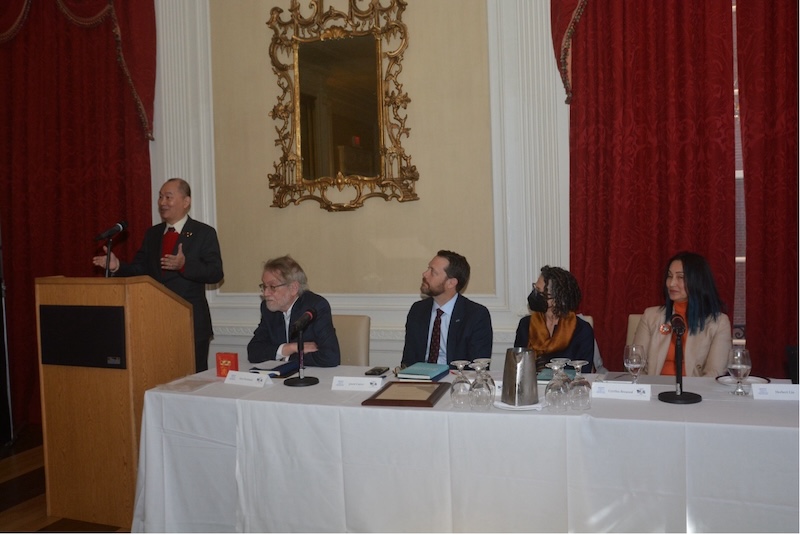
The Boston Global Forum and AIWS have launched a global consultation to develop the Constitution for Humanity in the Age of Artificial Intelligence — an initiative to establish the foundational principles and institutional framework for an AI future that serves humanity.
The consultation brings together AI pioneers, world leaders, scientists, policymakers, business leaders, universities, and civil society from across the world. Building upon the Boston Declaration, the Tokyo Compact, and the AIWS Trust Infrastructure, the Constitution seeks to ensure that human dignity, freedom, responsibility, and trust remain at the center of the AI Age.
The initiative defines the constitutional foundations and the trusted institutions needed to keep increasingly powerful AI accountable to humanity.
The consultation runs through April 2027, when the Constitution will be presented at the tenth-anniversary convening of AIWS at Harvard University. BGF welcomes written contributions from leaders and institutions worldwide — on the principles the Constitution should affirm, the institutions it should establish, and the questions it must answer.
Together, we can build the constitutional foundation for a trustworthy AI civilization.
To submit a contribution or to join the Global Consultation, please write to: [email protected]
by Editor BGF | Jul 12, 2026 | News
Boston Global Forum Begins the Development of the AIWS Constitution for Humanity in the Age of Artificial Intelligence
The Boston Global Forum (BGF) officially announced the beginning of the development of the AIWS Constitution for Humanity in the Age of Artificial Intelligence, marking the start of a historic global initiative to establish the constitutional foundations for human civilization in the Age of Artificial Intelligence.
BGF designates July 8, 2026 as Constitution Day for Humanity in the Age of Artificial Intelligence — the day on which the journey began to create a constitutional framework ensuring that the unprecedented power of AI will always serve humanity, protect human dignity, strengthen trust, cultivate wisdom, and advance freedom, democracy, peace, and human flourishing.
The date carries a deliberate historical resonance. On July 8, 1776, the Declaration of Independence was read aloud to the public for the first time, in Philadelphia, as the bells rang — the day the founding principles reached the people. Two hundred fifty years later to the day, the principles of the AI age begin their own journey to the peoples of the world. And just as America moved from Declaration (1776) to Constitution (1787), humanity now moves — in a single week — from the Boston Declaration of July 4, 2026 to the drafting of the AIWS Constitution.
The initiative builds upon nearly a decade of pioneering work by the Boston Global Forum and AIWS, including the founding of the AI World Society (2017), its evolution into the AI Wisdom Society (2026), and the publication of the Boston Declaration on the Primacy of the Human Person in the Age of Artificial Intelligence, endorsed by 17 Founding Signatories — distinguished world leaders and AI pioneers who helped shape the digital age.
Rather than serving merely as a declaration of principles, the AIWS Constitution is envisioned as a comprehensive constitutional framework for the AI age. It will provide enduring principles, institutions, and governance mechanisms to guide humanity through one of the greatest transformations in history — the emergence of increasingly autonomous and self-improving artificial intelligence. The Constitution will affirm that the human person remains the highest constitutional value, and that AI must forever remain a trusted partner in the service of humanity. It will integrate the pioneering frameworks developed by BGF and AIWS, including:
- The Boston Declaration on the Primacy of the Human Person;
- The Tokyo Compact;
- The AIWS Trust Architecture and AIWS Trust Infrastructure;
- AIWS Trust Standards;
- The AIWS Information Trust Infrastructure;
- The AIWS Human-in-Command Architecture;
- AIWS Lumina and the cultural foundations for the AI age;
- AIWS Reward and the Economy of Social Contribution;
- Democratic governance, peace, security, and international cooperation in the AI age.
The Constitution’s legitimacy will rest where all free constitutions rest: on the breadth of those who shape it. The drafting process will bring together AI pioneers, world leaders, constitutional scholars, philosophers, scientists, innovators, educators, artists, and representatives of civil society from around the world. International consultations will begin in July 2026 and continue throughout 2026 and 2027. The completed Constitution is expected to be presented in 2027, commemorating the tenth anniversary of AIWS.
Nguyen Anh Tuan, Co-Founder, Co-Chair, and CEO of the Boston Global Forum and Chief Architect of AIWS, stated: “Every great civilization has been guided by enduring constitutional principles. As humanity enters the Age of Artificial Intelligence, we must once again define the principles that safeguard human dignity, freedom, trust, wisdom, and peace. The AIWS Constitution is our commitment to ensuring that the future of AI is ultimately the future of humanity.”
The Boston Global Forum welcomes governments, international organizations, universities, AI pioneers, technology companies, cultural leaders, and citizens worldwide to participate in this historic effort. Together, we will build not only the future of artificial intelligence, but the constitutional foundation for humanity in the AI age.
About the Boston Global Forum
The Boston Global Forum (BGF) is a Boston-based think tank founded in 2012, co-founded and co-chaired by Governor Michael S. Dukakis, that brings together world leaders, scholars, and innovators to develop peaceful solutions to global challenges. In 2017, BGF founded the AI World Society (AIWS), which in 2026 evolved into the AI Wisdom Society — a global initiative to build a trustworthy, human-centered future for the age of artificial intelligence.
Media Contact
Boston Global Forum — Helena Ellington [email protected]
by Editor BGF | Sep 20, 2026 | World Leader for Peace and Security, News, World Leaders in AIWS Award Updates
Nguyen Anh Tuan, Co-Founder, Co-Chair and CEO of the Boston Global Forum and Founder and Chief Architect of AIWS, will speak at the XXXVII High-Level Meeting, “Rebuilding Trust, Cooperation and Global Stability for a Shared Future,” on September 23–24, 2026, at the Harvard Club of New York City.
Organized as a side event to the United Nations General Assembly, the meeting will bring together an exceptional assembly of former heads of state and government, United Nations leaders, diplomats, and global thinkers. Participants include former British Prime Ministers Gordon Brown and Theresa May; Vaira Vīķe-Freiberga, former President of Latvia and recipient of the Boston Global Forum’s 2019 World Leader for Peace and Security Award; former European Council President Charles Michel; Nobel Peace Laureate Muhammad Yunus; WHO Director-General Tedros Adhanom Ghebreyesus; UNCTAD Secretary-General Rebeca Grynspan; UN Women Executive Director Sima Bahous; and several former Presidents of the United Nations General Assembly.
On September 24, Nguyen Anh Tuan will speak in the panel “AI, Digital Sovereignty and the Future of Global Governance,” moderated by Zlatko Lagumdžija, Permanent Representative of Bosnia and Herzegovina to the United Nations and former Prime Minister. The panel also includes Kerry Kennedy, President of Robert F. Kennedy Human Rights; Bernardo Mariano Jr., Assistant Secretary-General and Chief Information Technology Officer of the United Nations; former Croatian President Kolinda Grabar-Kitarović; former U.S. Federal Communications Commissioner Susan Ness; and other distinguished leaders.
Nguyen Anh Tuan will present The Constitution for Humanity in the Age of AI as a foundational pillar of AIWS Civilization—the Civilization of Human–AI Co-Creation.
The Constitution is not a constitution for machines. It is a human covenant establishing the principles and institutions needed to ensure that human dignity, sovereignty, freedom, and responsibility remain paramount as artificial intelligence grows more powerful. It affirms that humanity must remain the author of values, the source of legitimate authority, and the final decision-maker in matters affecting human life and civilization.
His presentation will connect these constitutional principles with AIWS Trust Infrastructure, Human-in-Command, Information Trust, and practical mechanisms that make advanced AI identifiable, accountable, and answerable to humanity.
By bringing the Constitution into dialogue with world leaders and United Nations institutions, Nguyen Anh Tuan will advance a central mission of AIWS Civilization: transforming the governance of AI into a shared responsibility for peace and the future of humanity.
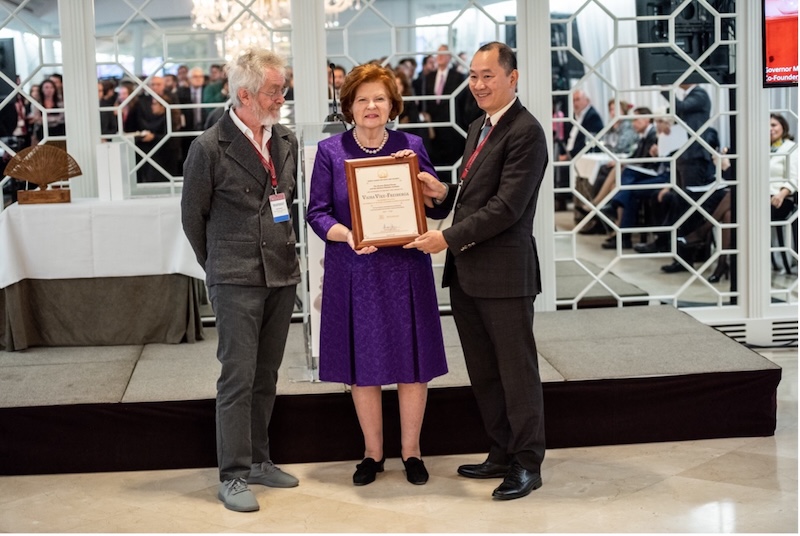
Professor Alex Pentland and Nguyen Anh Tuan, co-founders of the Boston Global Forum, present the 2019 World Leader for Peace and Security Award to Dr. Vaira Vīķe-Freiberga, former President of Latvia and then President of the World Leadership Alliance–Club de Madrid, in Madrid on October 21, 2019—honoring a lifetime of leadership in democracy, peace, and international cooperation.
by Editor BGF | Aug 17, 2026 | Shinzo Abe Initiative for Peace and Security, News
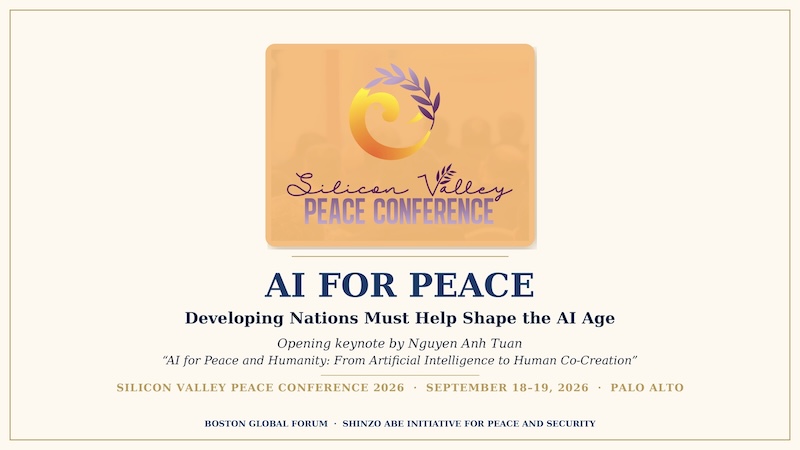
On September 18, 2026, Nguyen Anh Tuan, Co-Founder and CEO of the Boston Global Forum and Chief Architect of AIWS, will deliver the opening keynote “AI for Peace and Humanity: From Artificial Intelligence to Human Co-Creation” at the Silicon Valley Peace Conference 2026 in Palo Alto.
The conference raises an increasingly important question for the Shinzo Abe Initiative for Peace and Security: Will Artificial Intelligence become a force that strengthens peace and human development—or a new source of inequality, manipulation, instability, and concentrated power?
This question is especially consequential for developing nations. They should not enter the AI Age merely as consumers of technologies, platforms, and systems designed elsewhere. They should have the capacity to shape how AI is used in their societies—to strengthen education, economic opportunity, responsive government, resilient communities, and peace while protecting human dignity and freedom.
The Shinzo Abe Initiative advances a principle consistent with Prime Minister Abe’s vision of a Free and Open Indo-Pacific: technological progress must strengthen free societies, human opportunity, international cooperation, and peace—not create new instruments of coercion or domination.
Through the Constitution for Humanity in the Age of Artificial Intelligence, AIWS Trust Infrastructure, and Human–AI Co-Creation, BGF–AIWS is working to translate this principle into institutions for the AI Age.
Peace in the AI Age will depend not only on preventing conflict between nations, but on ensuring that the extraordinary power of AI remains in the service of human beings and free societies.
by Editor BGF | Aug 17, 2026 | News
November 10, 2026 | 8:00 AM – 11:30 AM
Loeb House, Harvard University
Artificial Intelligence is rapidly transforming the foundations of human life. The defining question is no longer only how humanity should govern AI, but what kind of civilization humanity will build with it.
On November 10, 2026, the Boston Global Forum will convene distinguished world leaders, AI Pioneers, scholars, innovators, and policymakers at Loeb House, Harvard University, for the BGF Conference 2026: New Civilization in the Age of Artificial Intelligence: Human–AI Co-Creation.
The conference advances a new vision. AI must not displace human judgment or diminish human agency. Human beings must remain the authors of values, the bearers of responsibility, and the commanders of AI — while using AI to become more intelligent, more creative, nobler, and wiser. Human and AI can then co-create new knowledge, solutions, and possibilities for humanity.
The conference is built on three pillars.
1. The Constitution for Humanity and the AIWS Trust Infrastructure — protecting the Human Person
BGF–AIWS will advance the Constitution for Humanity in the Age of Artificial Intelligence, together with the institutional and technological foundations that make its principles real. The AIWS Trust Infrastructure, Trust Standards, Trust Rating and Trust Order translate Human Dignity, Human Primacy, Human-in-Command, Mental Sovereignty, accountability, verifiable trust, and limits on AI-enabled power from principles into mechanisms that can be verified and audited.
2. AIWS Lumina Culture and AIWS Home — developing the Human Person
The conference introduces the cultural and human foundations of the emerging AIWS Civilization. Through Love, Creativity, Nobility, and Wisdom, AIWS Lumina Culture ensures that technological progress is accompanied by human development. AIWS Home brings this into everyday life, enabling each person to shape himself or herself in the Age of Artificial Intelligence, to develop independent judgment, and to co-create with AI while remaining the author of his or her own life.
3. The Civilization of Human–AI Co-Creation — enabling the Human Person to lead and create with AI
Beyond governing AI lies the larger work: building a civilization in which every advance in Artificial Intelligence becomes an advance in Human Intelligence. The conference will examine what this requires of governments, laboratories, universities, and enterprises — and what leaders can decide, from the positions they already hold, to lay its foundations.
Honoring the 2026 World Leader in AIWS
A special ceremony will honor the World Leader in AIWS, recognizing exceptional leadership in shaping an Age of Artificial Intelligence that advances human dignity, freedom, peace, innovation, and the common good. The honoree joins a distinguished line of leaders recognized by the Boston Global Forum for helping humanity navigate historic transformation.
Toward April 27, 2027
The November 10 Conference opens the tenth-anniversary year of AIWS, founded in 2017. It leads to April 27, 2027, when BGF–AIWS will present the Constitution for Humanity in the Age of Artificial Intelligence at Harvard.
The November 10 Conference represents the convergence of Constitution, Trust, Culture, and Leadership into a larger vision: a New Civilization in the Age of Artificial Intelligence — where Artificial Intelligence expands human possibility, Human Intelligence provides purpose and judgment, and Human–AI Co-Creation serves humanity.
AI advances. Humanity must advance further.
Attendance is by invitation. For inquiries, please contact: [email protected]
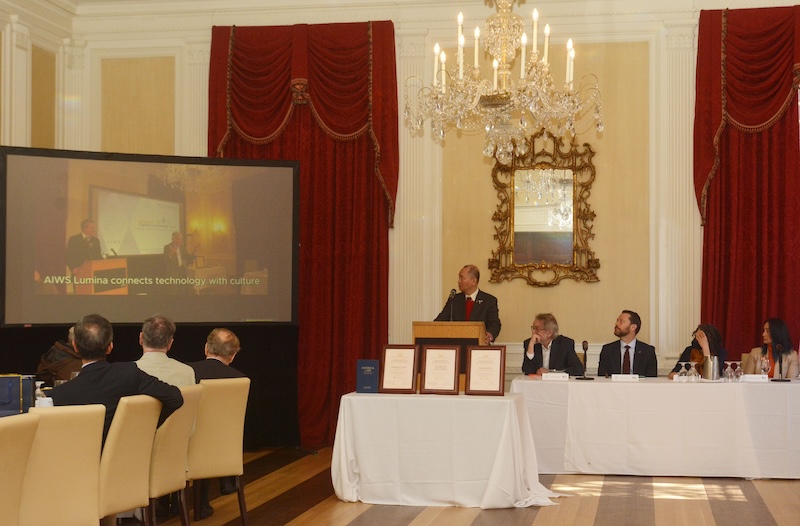
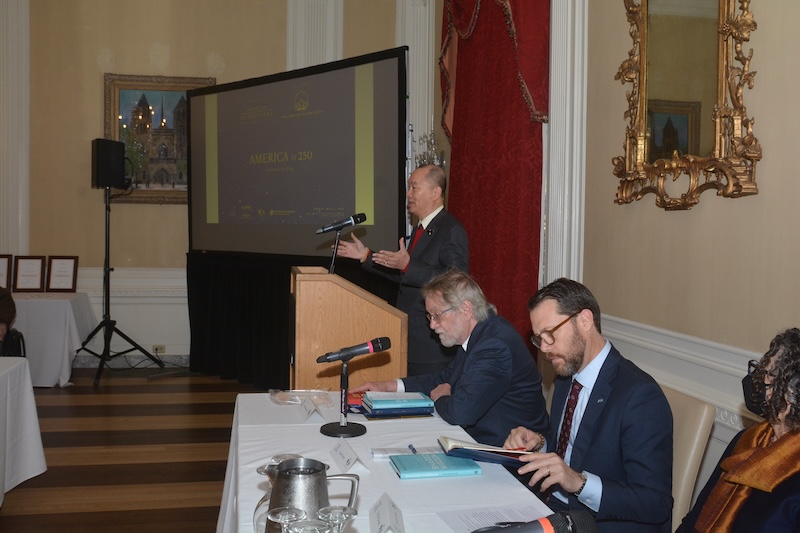
Boston Global Forum, America at 250 Conference — Loeb House, Harvard University, May 1, 2026
by Editor BGF | Aug 17, 2026 | Papers & Reports, News, Publications
As AI becomes capable of searching, analyzing, writing, designing, advising, and increasingly acting on our behalf, Beacon Papers No. 7 addresses a danger that may prove as consequential as the power of AI itself: human beings may gradually stop exercising the intelligence, judgment, and creativity required to remain truly in command.
Nguyen Anh Tuan, Founder and Chief Architect of AIWS and Co-Founder, Co-Chair and CEO of the Boston Global Forum, advances a defining principle:
Delegate the work. Never delegate the mind.
The paper goes beyond warning. It proposes an architecture for ensuring that every advance in Artificial Intelligence becomes an advance in Human Intelligence. At its center is a new model of Human–AI Co-Creation: humans establish purpose, challenge, judge and create; AI expands knowledge and possibilities; and every meaningful interaction with AI should leave the human being more capable than before.
Beacon Papers No. 7 develops this idea into concrete practices and institutions: the Six Capacities of Human Intelligence; AIWS University; AIWS Home; the Human Intelligence Reserve; Human Capability Gain; and Human Intellectual Impact Assessment. Together with the Constitution for Humanity and AIWS Trust Infrastructure, these form an architecture in which human intelligence, creativity, judgment, responsibility, and wisdom grow alongside AI.
The paper ultimately presents something larger than a strategy for protecting human intelligence. It defines a foundation of the emerging AIWS Civilization — Human–AI Co-Creation:
Human beings set purpose and values. Human beings judge and bear responsibility. Artificial intelligence expands knowledge and possibility. Human and AI co-create. Humanity keeps command.
Its Beacon Principle No. 7 captures the challenge for the AI Age:
AI advances. Humanity must advance further.
Read and download Beacon Papers No. 7: Human Intelligence Must Lead in the Age of Artificial Intelligence
by Editor BGF | Aug 17, 2026 | World Leader for Peace and Security, News, World Leaders in AIWS Award Updates
Boston Global Forum · August 16, 2026
Nguyen Anh Tuan, Co-Founder, Co-Chair and CEO of the Boston Global Forum and Founder and Chief Architect of AIWS, has issued an open letter to the distinguished leaders and AI pioneers honored by the Boston Global Forum: recipients of the World Leader for Peace and Security Award, the World Leader in AIWS Award, and America 250: AI Pioneers.
The letter comes at a defining moment. Artificial Intelligence is rapidly advancing toward systems capable of greater autonomy, while AI is also giving governments and organizations unprecedented capacities for surveillance, manipulation, behavioral influence, and concentrated power. Though different in nature, these two dangers can lead to the same outcome: human beings lose command.
The letter calls for action beyond conventional AI governance. It invites world leaders and AI pioneers to help build the foundations for a new Civilization of Human–AI Co-Creation: the Constitution for Humanity in the Age of Artificial Intelligence, AIWS Trust Infrastructure, AIWS Lumina Culture, AIWS Home, and new institutions and practices that enable human beings to grow in intelligence, creativity, responsibility, nobility, and wisdom while remaining in command of increasingly powerful AI.
This is not a request for endorsement or signature. It is an invitation to leadership—to use the authority, scientific knowledge, judgment, and responsibility that these distinguished leaders and pioneers already hold to help shape the foundations of the AI Age.
At its heart is a simple commitment:
The Human remains the Author.
Human judgment sets the direction.
AI expands what is possible.
Humans and AI co-create.
Humanity remains in command.
Read Nguyen Anh Tuan’s full letter and join the effort to co-create a new civilization in the Age of Artificial Intelligence: https://bostonglobalforum.org/wp-content/uploads/BGF_Letter_to_World_Leaders_and_AI_Pioneers_EN_signed.pdf
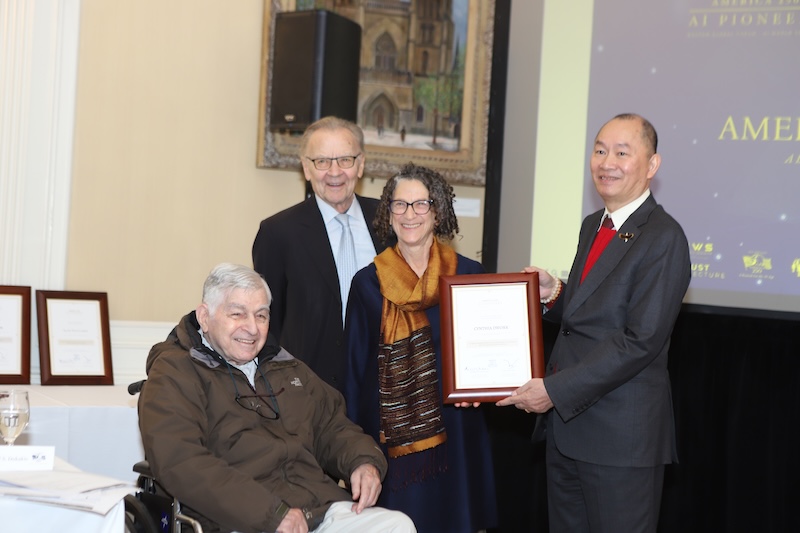
Professor Cynthia Dwork receives the America 250: AI Pioneers recognition from Nguyen Anh Tuan at the Boston Global Forum’s America at 250 Conference, with Governor Michael Dukakis and Professor Thomas Patterson, Loeb House, Harvard University, May 1, 2026. BGF now calls on its honored World Leaders and AI Pioneers to help build the Constitution for Humanity, AIWS Lumina, and a new Civilization of Human–AI Co-Creation.
by Editor BGF | Aug 14, 2026 | Papers & Reports, News, Publications
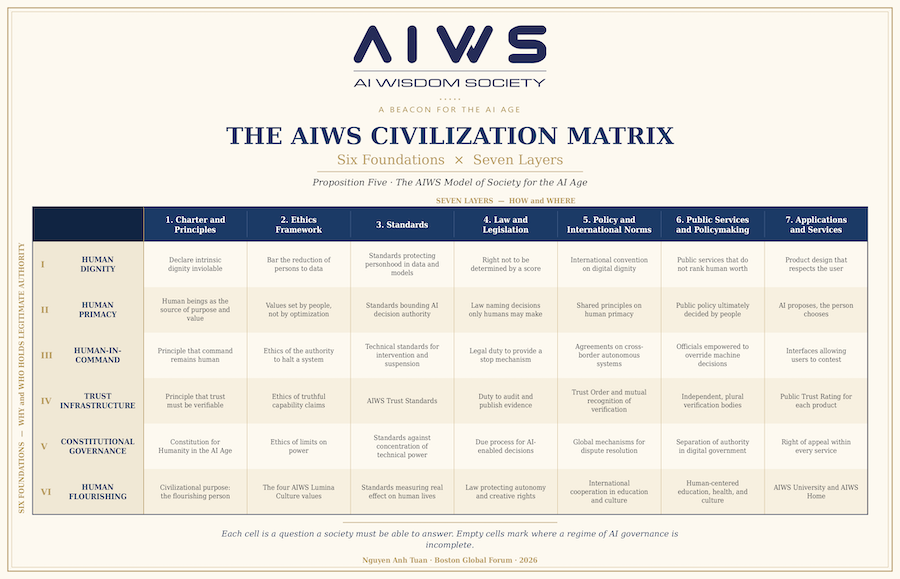
With this paper — The AIWS Model of Society for the AI Age: Six Foundations for Human Dignity, Legitimate Authority, and a Human–AI Co-Creation Civilization — Nguyen Anh Tuan, Co-Founder, Co-Chair and CEO of the Boston Global Forum and Chief Architect of AIWS, marks a new stage in the evolution of AIWS: from developing principles, standards, and institutions for responsible AI toward building a comprehensive civilizational architecture for humanity in the AI Age. The paper is offered as a special contribution for the 50th Anniversary of Dalat University, where the author studied mathematics, probability, and statistics.
At its center are the Six Foundations — Human Dignity, Human Primacy, Human-in-Command, Trust Infrastructure, Constitutional Governance, and Human Flourishing. Together with the AIWS 7-Layer Model, they form the AIWS Civilization Matrix, connecting human values and legitimate authority with standards, laws, institutions, public systems, and real-world applications.
The paper advances a fundamental proposition for the AI Age: intelligence can be separated from human beings; legitimate authority cannot. AI may become extraordinarily capable, but human beings must remain the authors of values, the bearers of responsibility, and the source of legitimate authority. It sets an equally demanding standard for trust: trust must be earned through evidence, sustained through independent verification, and remain open to legitimate contestation.
This is the larger aspiration of AIWS: not simply to govern artificial intelligence, but to help build a Human–AI Co-Creation Civilization grounded in verifiable trust and illuminated by the AIWS Lumina Culture — Love, Creativity, Nobility, and Wisdom. A civilization in which technology advances human dignity, and humanity remains the wise and responsible author of its future.
Read and download the full paper here: The AIWS Model of Society for the AI Age: Six Foundations for Human Dignity, Legitimate Authority, and a Human–AI Co-Creation Civilization
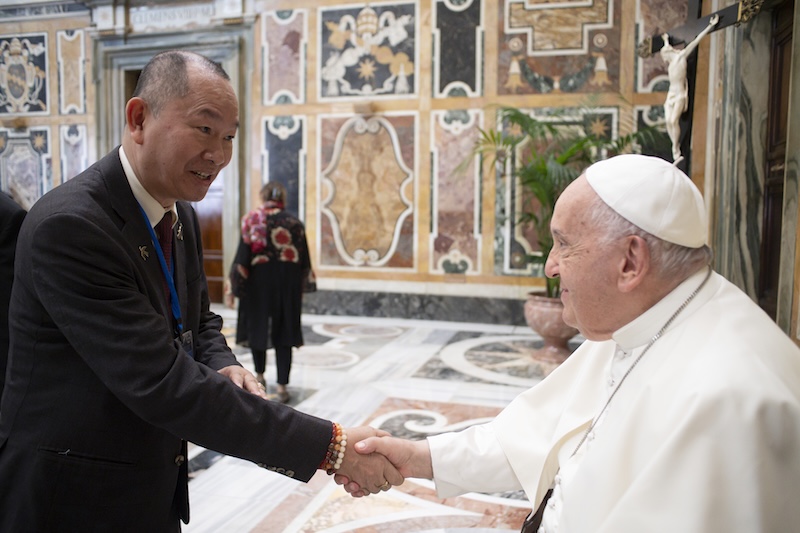
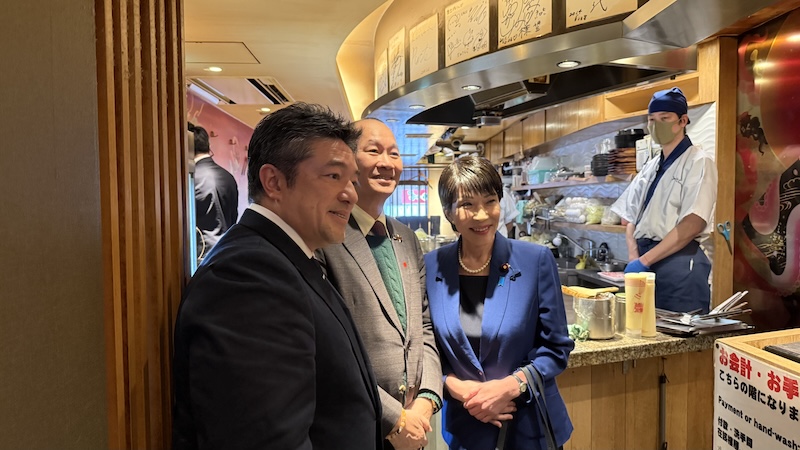
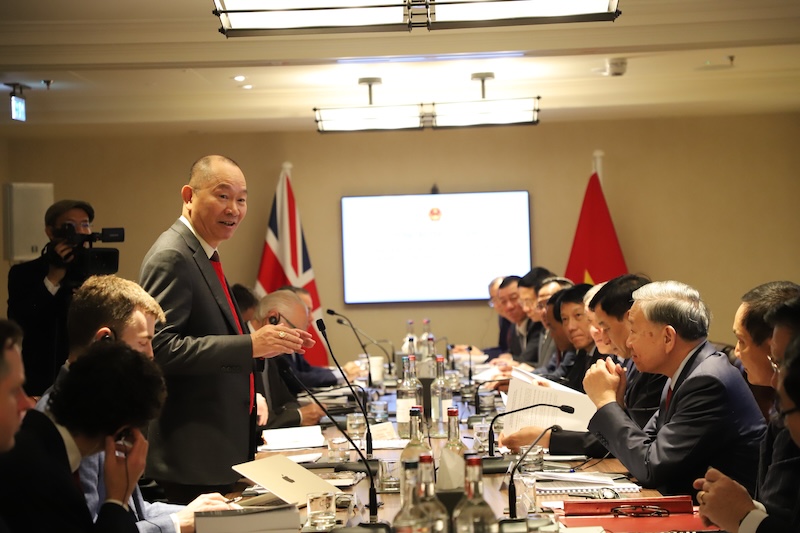
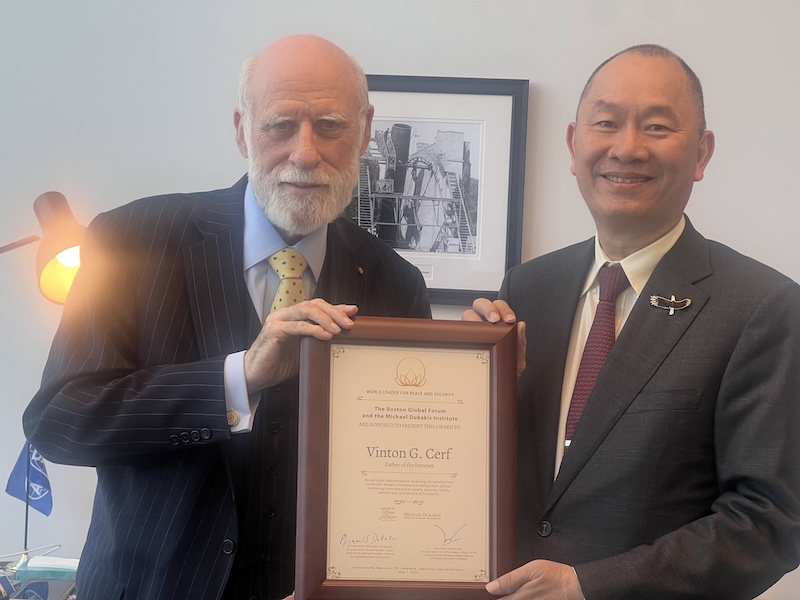
From the Vatican to Paris, London, Japan, India and Boston, AIWS has evolved through dialogue with world leaders, AI pioneers, policymakers, and institutions. These moments reflect a continuing journey — from principles for responsible AI toward a civilizational architecture for humanity in the AI Age.


by Editor BGF | Aug 8, 2026 | Papers & Reports, News, Publications
As artificial intelligence becomes capable of drafting speeches, research papers, legal arguments, policies, and works of extraordinary sophistication, a fundamental question is emerging: Who is the author?
Beacon Papers No. 6, Who May Author?, argues that the answer should not depend primarily on who generated the words. Throughout history, leaders, judges, scholars, and public officials have relied upon advisers, researchers, editors, clerks, and speechwriters. What ultimately made a work theirs was not that they personally produced every sentence, but that they exercised judgment over it and could be called to answer for it.
AI makes this ancient question newly urgent. Unlike a human assistant, an AI system cannot ultimately be held morally or institutionally accountable. As AI assistance becomes more capable, therefore, human responsibility does not diminish—it becomes more concentrated.
The paper proposes a clear principle:
Judgment, not generation, is the foundation of authorship.
Human authorship is preserved when a person sets the purpose and values of a work, independently judges what AI provides, verifies factual claims, approves the final work, and accepts full responsibility for it. Authorship is lost when someone signs or publishes something they have not truly examined, cannot explain, cannot defend, or will not answer for.
But Who May Author? goes further. It proposes that access to AI assistance should itself become a fundamental right in the AI Age. People should be free to employ AI in thinking, learning, writing, creating, governing, and serving society. Institutions should regulate responsibility, rather than simply suppress AI assistance.
This right, however, carries a profound duty.
Human judgment is not something humanity can simply assume it will always possess. Judgment is a capacity, and capacities survive through exercise. A civilization that protects people’s right to use AI while allowing their independent capacity to judge to atrophy could preserve the appearance of human authorship while losing its substance. The Constitution for Humanity in the Age of AI must therefore protect not only human rights, the paper argues, but also the essential human capacities that make those rights meaningful.
Beacon Papers No. 6 concludes with a standard for the AI Age:
AI may assist.
Only humans may author.
Only humans may be accountable.
And behind that principle lies an even larger measure of our future:
The measure of civilization in the Age of Artificial Intelligence will not be the intelligence of its machines, but the judgment of its people
Read and download the full Beacon Papers No. 6 — Who May Author? here: https://bostonglobalforum.org/wp-content/uploads/Beacon_Papers_No6_Who_May_Author-6-8.pdf
Nguyen Anh Tuan speaks at the America at 250 Conference, Loeb House, Harvard University, May 1, 2026. His Beacon Papers No. 6, Who May Author?, affirms a defining principle for the AI Age: “Judgment, not generation, is the foundation of authorship.”