by Editor BGF | Aug 10, 2026 | Shinzo Abe Initiative for Peace and Security, News
Phase 1 begins with banking, financial, insurance and telecommunications enterprises in Vietnam and ASEAN
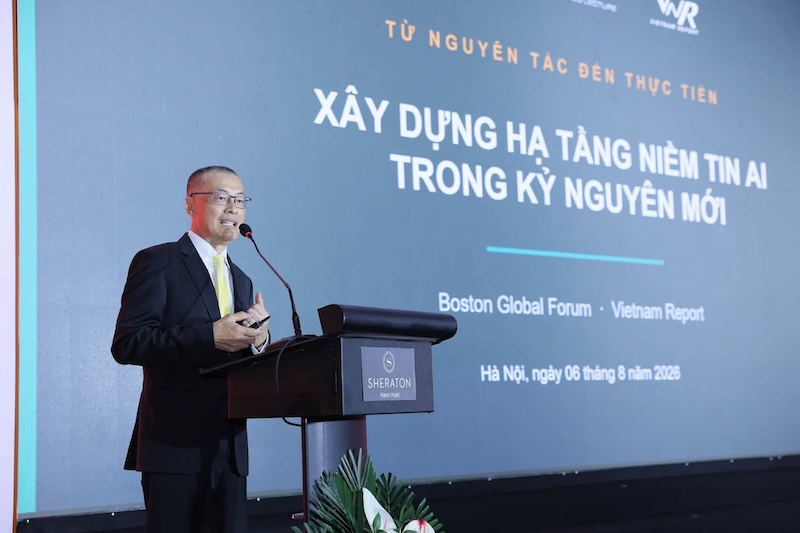
On August 6, 2026, Ambassador Vu Quang Minh, Former Deputy Minister of Foreign Affairs and Representative of the Boston Global Forum in Vietnam, presented AIWS Trust Infrastructure at the VNR500 Conference in Hanoi, hosted by Vietnam Report — the annual gathering of Vietnam’s five hundred largest enterprises, at which the Top 50 leading companies in each sector are also announced.
At the conference, Vietnam Report formally began deployment of AIWS Trust Infrastructure — AIWS Trust Rating and AIWS Trust Index. Phase 1 covers enterprises in banking, financial services, insurance and telecommunications, in Vietnam and ASEAN, under BGF–AIWS supervision and in accordance with AIWS Trust Standards. Vietnam Report is Founding Business Partner of BGF–AIWS in Asia and Founding Coordinator for the region.
BGF–AIWS deploys AIWS Trust Infrastructure in the United States, Japan and Vietnam, holding the standards, the certification authority, and independent verification.
AIWS Trust Rating has now entered the operating decisions of major enterprises in one of Asia’s fastest-growing economies — the first time it reaches corporate Asia at this scale, and in the sectors where trust carries the most immediate consequence.
The initiative advances the spirit of the Shinzo Abe Initiative for Peace and Security: cooperation among trusted partners, so that emerging technologies serve peace, prosperity, and human dignity.
BGF–AIWS invites American, Japanese, Vietnamese, and other international enterprises, universities, and institutions to take part.
Trust must not merely be promised. It must be demonstrated, independently verified, and earned.
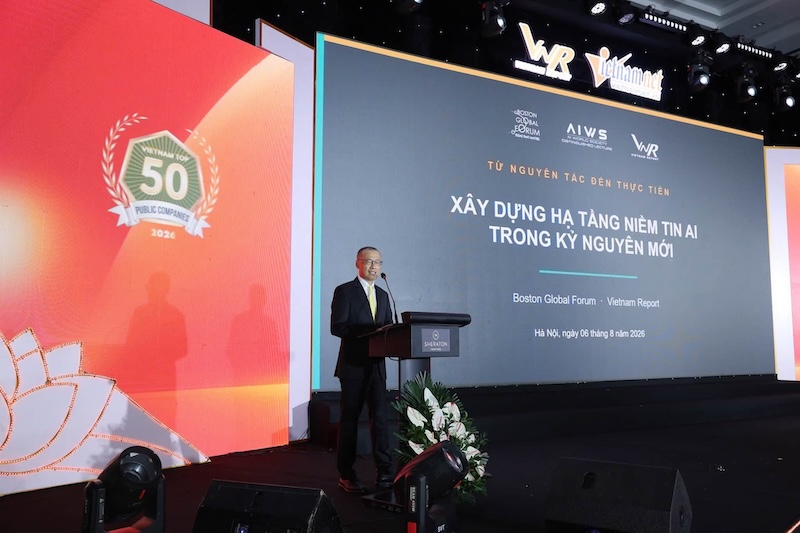
Ambassador Vu Quang Minh, Former Deputy Minister of Foreign Affairs and Representative of the Boston Global Forum in Vietnam, presenting AIWS Trust Infrastructure at the VNR500 Conference, Hanoi, 6 August 2026
by Editor BGF | Jul 26, 2026 | Shinzo Abe Initiative for Peace and Security, News
Japan, Boston, and the Alliance of Trust
Building Trust for Humanity in the Age of AI
July 2026
Artificial intelligence is rapidly becoming the defining force of the twenty-first century. Yet the greatest challenge before humanity is no longer how intelligent AI will become. It is what AI will ultimately be used for.
Today, the world stands before two fundamentally different paths. One path seeks to make AI the ultimate instrument of governing, monitoring, and controlling human beings. The other seeks to make AI humanity’s greatest instrument for freedom, creativity, trust, and shared prosperity.
This is not merely a technological competition. It is a competition between two visions of civilization. One vision uses AI to strengthen centralized authority, expand surveillance, shape human behavior, and give governments or powerful organizations unprecedented capabilities to control society. The other envisions AI as a force that protects human dignity, expands liberty, empowers creativity, strengthens accountable institutions, and enables every person to flourish.
Nations that place the human person above power cannot remain spectators in this defining moment. They must present a compelling alternative. That is why the partnership among Boston Global Forum (BGF), AIWS, Japan, the United States, and like-minded nations across Asia, North America, and Europe is becoming increasingly important.
The human person must remain the highest authority in the Age of Artificial Intelligence.
Building upon that foundation, the Constitution for Humanity in the Age of Artificial Intelligence is being developed to provide the constitutional principles for a civilization where AI always serves humanity rather than power.
But principles alone are not enough. Humanity also needs institutions. It needs standards. It needs verification. It needs trusted infrastructure.
This is where Japan has a historic role to play. Japan is uniquely positioned to build what every open society will require: Trust Infrastructure for Humanity.
For generations, Japan has demonstrated that trust, responsibility, craftsmanship, quality, and accountability are enduring sources of national strength. These values position Japan to lead the creation of the institutions, standards, verification mechanisms, and trusted systems that make AI worthy of public confidence.
This vision was first articulated through the Tokyo Compact, introduced by BGF and AIWS in Tokyo. The Tokyo Compact calls upon partner nations to move beyond discussions of AI governance toward building the practical foundations that enable trustworthy AI to flourish. It sets out four concrete mechanisms: independent monitoring, trusted verification, transparent certification, and common Trust Standards. That is the operational architecture that transforms principles into reality.
Together, the Boston Declaration and the Tokyo Compact represent two complementary pillars of a human-centered vision for the AI Age. Boston defines the principles. Tokyo builds the trust infrastructure. Together, they create the foundation for a free and human-centered AI civilization.
Working together, BGF, AIWS, Japan, the United States, Europe, Australia, Canada, and other partners of shared commitment can build a new global architecture consisting of:
- The Boston Declaration – affirming the primacy of the human person.
- The Constitution for Humanity in the Age of Artificial Intelligence – establishing the constitutional principles of the AI Age.
- The Tokyo Compact – creating the global Trust Infrastructure for Humanity.
- The AIWS Trust Order – bringing together governments, scientists, institutions, businesses, and civil society committed to trustworthy AI.
- AIWS Lumina – cultivating a human-centered culture founded on Love, Creativity, Nobility, and Wisdom.
This is not a competition for technological supremacy. It is a commitment to civilizational leadership. History will not remember only who developed the most advanced artificial intelligence. History will remember who ensured that AI became a force for human freedom rather than an instrument of human control.
The future of the AI Age will not be secured by governance alone. It will be secured by trust.
Boston has offered the moral compass. Tokyo can build the trust infrastructure. Together with the United States and like-minded nations, they can help lead humanity toward an AI future where technology serves people, protects freedom, strengthens accountable government, and advances civilization itself.
That is the mission of the Alliance of Trust. That is the promise of the Boston Declaration. That is the purpose of the Tokyo Compact – and the future BGF and AIWS invite the world to build together.
Download the file pdf here: https://bostonglobalforum.org/wp-content/uploads/Japan-Boston-Alliance-of-Trust-EN.pdf
by Editor BGF | Jul 20, 2026 | Shinzo Abe Initiative for Peace and Security, News
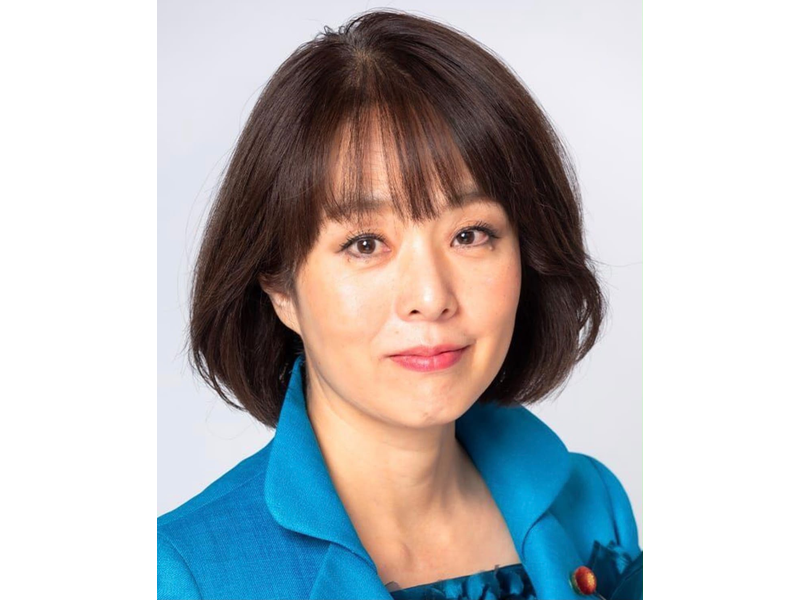
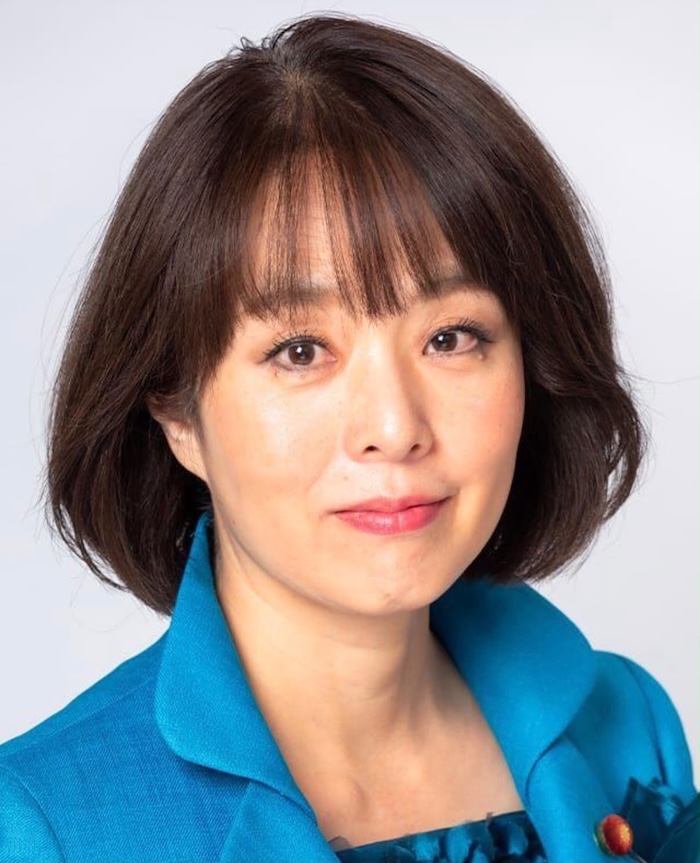
The Boston Global Forum (BGF) is pleased to announce the appointment of Hon. Mio Sugita as National Coordinator of AIWS Lumina Japan and Member of the Steering Committee of the Shinzo Abe Initiative for Peace and Security.
Ms. Sugita brings more than three decades of experience in public service, including nearly twenty years in local government administration and three terms as a Member of the House of Representatives of Japan. She also served as Parliamentary Vice-Minister for Internal Affairs and Communications, contributing to national policies on public administration, local governance, disaster resilience, and communications.
A member of the Liberal Democratic Party, Ms. Sugita participated in the Seiwa Policy Research Council (Abe Faction) led for many years by former Prime Minister Shinzo Abe, contributing to policy discussions on national security, constitutional affairs, and Japan’s strategic role in promoting a Free and Open Indo-Pacific.
As National Coordinator of AIWS Lumina Japan, Ms. Sugita will work under the leadership of Hon. Yasuhide Nakayama, Senior Representative of the Boston Global Forum in Japan, to advance the AIWS Lumina vision throughout Japan. Her responsibilities will include fostering partnerships with local governments, universities, cultural organizations, educators, community leaders, and civil society to promote the values of Love, Creativity, Nobility, and Wisdom in the Age of Artificial Intelligence.
As a Member of the Steering Committee of the Shinzo Abe Initiative for Peace and Security, Ms. Sugita will contribute to advancing Prime Minister Abe’s enduring vision of peace, democratic values, a Free and Open Indo-Pacific, and international cooperation. The Initiative seeks to strengthen dialogue and collaboration among leaders, policymakers, scholars, and innovators committed to building a more peaceful, secure, and trustworthy world in the Age of Artificial Intelligence.
The Boston Global Forum warmly welcomes Hon. Mio Sugita and looks forward to working with her to strengthen Japan’s contribution to AIWS Lumina and to further the ideals of the Shinzo Abe Initiative for Peace and Security.
by Editor BGF | Jun 29, 2026 | World Leader for Peace and Security, News, World Leaders in AIWS Award Updates
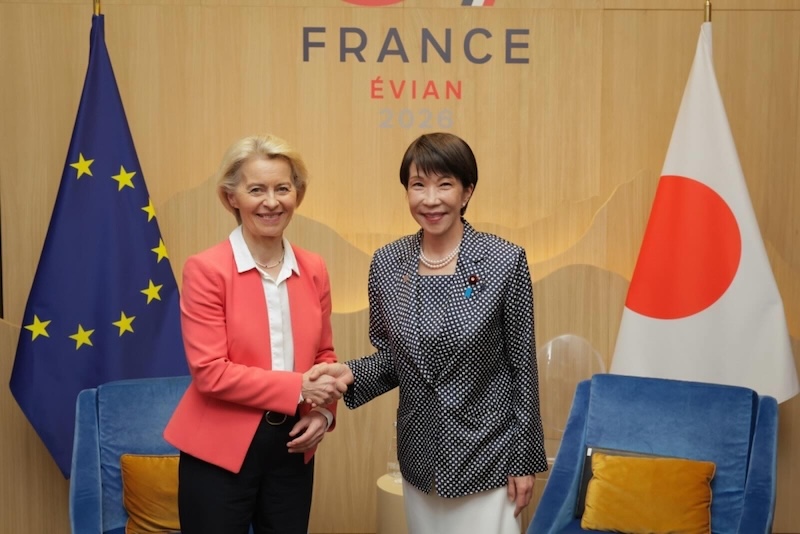
At the G7 Évian Summit (June 15-17, 2026), two leaders previously honored by the Boston Global Forum came together: Ursula von der Leyen, President of the European Commission and recipient of the 2020 World Leader for Peace and Security Award, and Sanae Takaichi, Prime Minister of Japan and recipient of the 2023 World Leader in AIWS Award. Following the working session on “Reviving a Balanced, Shared and Sustainable Economic Growth,” Prime Minister Takaichi held a meeting with President von der Leyen.
Their encounter is a small portrait of the Europe-Indo-Pacific cooperation on economic security and trustworthy technology that the AIWS Trust Order envisions. As Europe advances its own sovereign-AI and trust frameworks and Japan deepens the U.S.-Japan alliance and its economic-security agenda, the convergence of these two honorees – representing two of the Forum’s pillars, Peace & Security and AIWS – reflects a conviction at the heart of BGF’s work.
BGF Lens – two leaders the Forum has recognized now sit at the same table at the moment the global AI order is being redrawn — a reminder that the technologies reshaping our age must be governed by trust, and in the service of human dignity.
Sources: Prime Minister’s Office of Japan; Boston Global Forum Awards.
Please read the full article here: https://bostonglobalforum.org/wp-content/uploads/BGF_Weekly_June29-July5_World_Leaders.pdf
by Editor BGF | Jun 21, 2026 | World Leader for Peace and Security, News, World Leaders in AIWS Award Updates
As nations begin to argue over who may be trusted with the most powerful AI ever built, the deeper question is the one the AIWS Trust Order set out to answer earlier this year: how to build a trusted order for the Age of Artificial Intelligence.
At the 2026 G7 Summit in Évian-les-Bains, France, world leaders turned to a question that would have seemed abstract only a year ago: who can be trusted with the most powerful artificial intelligence ever built.
On the summit’s sidelines, representatives discussed a “trusted partners” framework — a mechanism that would allow a vetted circle of allied nations and approved companies to access and deploy the most advanced AI models under a secure governance arrangement.
The context matters.
This discussion did not arise in the abstract.
Days earlier, in mid-June, the United States imposed sweeping restrictions that suspended foreign access to its most advanced AI models on national-security grounds.
The “trusted partners” idea emerged as a way for close allies to regain access — a debate, still unresolved, over how frontier capability should flow across borders.
Yet whatever its origins, the episode reveals something larger.
As artificial intelligence approaches unprecedented levels of capability, the world is converging on a single recognition: the defining challenge of the AI Age is not intelligence alone, but trust.
This is precisely the challenge that the Boston Global Forum (BGF) and the AI World Society / AI Wisdom Society (AIWS) identified earlier this year — and sought not merely to name, but to answer.
A Framework Built Before the Crisis
On March 15, 2026, BGF–AIWS released the AIWS Trust Architecture White Paper, introducing AIWS Trust Infrastructure and the AIWS Trust Order as foundational frameworks for governing advanced AI systems and safeguarding humanity in the Age of Artificial Intelligence.
On May 1, 2026, the Boston Global Forum convened the America at 250: A Beacon for the AI Age conference at Harvard University, bringing together AI pioneers, policymakers, scientists, scholars, and civic leaders to advance the architecture of trust and to announce key initiatives for AIWS Trust Infrastructure and AIWS Information Trust Infrastructure.
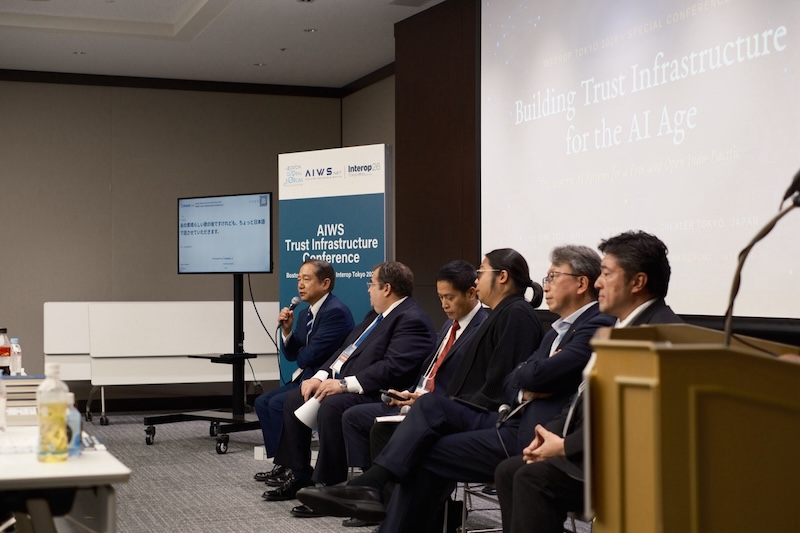
And on June 12, 2026, at Interop Tokyo 2026, with leading international experts, policymakers, and technology leaders, BGF–AIWS proclaimed the Tokyo Compact and formally launched the AIWS Trust Order — a global vision founded on Trust, Human Dignity, Human Command, Responsibility, Democracy, Freedom, and Wisdom.
The Same Day, Two Directions
There is a striking coincidence in the calendar.
June 12 — the day the Tokyo Compact called for an open and trusted order for access to AI — was also the moment the United States moved to restrict it.
While Tokyo articulated a vision of trust as a bridge between nations, the new measures underscored how quickly access to frontier AI can fracture along political lines.
That tension is the strongest argument for the very work the AIWS Trust Order set out to do.
Without a shared architecture of trust, the most powerful technology in history risks being divided not by principle, but by geopolitics.
Two Visions of Trust
The G7’s trusted-partners discussion and the AIWS Trust Order are not the same thing — and the difference is the point.
The G7 debate is, at its core, about access: which nations and companies may use the most advanced models.
It is narrow, urgent, and defensive — a response to immediate questions of security and supply.
The AIWS Trust Order is broader.
It asks not only who may access advanced AI, but what standards, responsibilities, safeguards, and ethical foundations must govern AI so that it serves humanity.
It seeks an ecosystem in which governments, technology companies, institutions, and citizens participate within a common architecture of trust — supported by Trust Infrastructure, Trust Standards, Trust Ratings, Information Trust mechanisms, and the enduring principles of human dignity and human oversight.
The emergence of the trusted-partners debate suggests that the international community is now arriving at the very questions the AIWS Trust Architecture sought to address earlier in 2026: how to build a trusted order for the Age of Artificial Intelligence.
“As AI continues to transform civilization, the builders of intelligence must also become the builders of trust.”
The Defining Mission
Seen together, the AIWS Trust Architecture White Paper, the America at 250 conference at Harvard, the Tokyo Compact, and the launch of the AIWS Trust Order represent early contributions to one of the most important governance challenges of our time — the creation of a Trust Order for the AI Age.
The future of humanity will depend not only on how powerful AI becomes, but on whether we can establish the trust frameworks, institutions, standards, and wisdom necessary to guide that power toward peace, freedom, democracy, human dignity, and the common good.
The rise of trust is no longer a theoretical discussion.
It is becoming the defining mission of the AI Age.
Please download the full article here: https://bostonglobalforum.org/wp-content/uploads/BGF_AIWS_Perspective_Rise_of_Trust.pdf
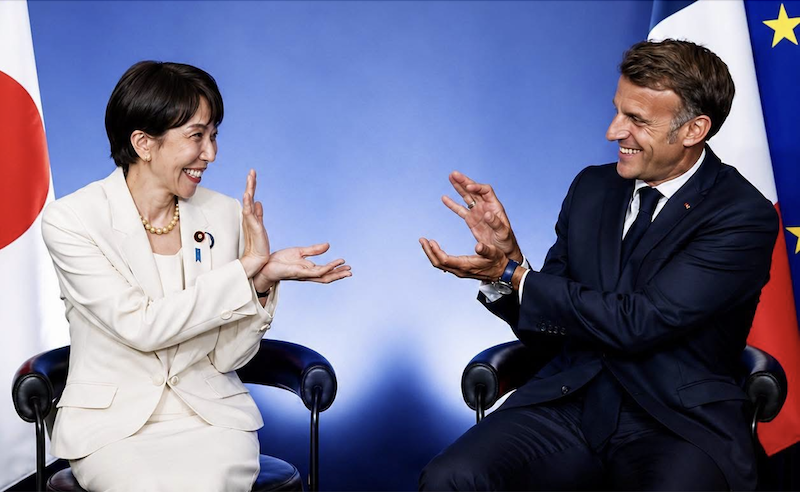
A Moment of Distinction at G7: Japan’s Prime Minister Sanae Takaichi and French President Emmanuel Macron, both honored as Boston Global Forum (BGF) World Leader Award recipients, at the G7 Summit 2026.
by Editor BGF | Jun 15, 2026 | News
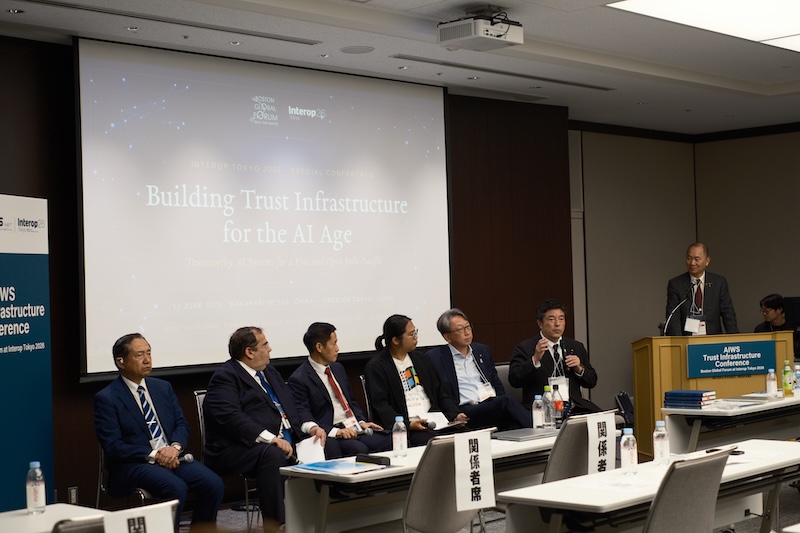
On June 12, 2026, at Interop Tokyo 2026, global leaders moved the challenge of trustworthy AI from debate to design. The day brought the proclamation of the Tokyo Compact — the world’s first constitutional charter for trustworthy AI — the launch of the AIWS Trust Order and its founding Board, and the first enterprise program to put Trust Infrastructure into practice across Asia, with Vietnam Report as its first implementation partner. In his Founding Keynote, “Building Trust and Wisdom Infrastructure for Humanity,” Nguyen Anh Tuan affirmed the principle of Trust Supremacy — “Trust must lead. Wisdom must guide.”
Japan’s leadership was central to the day: the Tokyo Compact was proclaimed by Yasuhide Nakayama, former State Minister and Member of the House of Representatives, joined by General Koji Yamazaki, former Chief of Staff of the Japan Self-Defense Forces; Masaaki Taira, former Minister for Digital Transformation; and Yasuaki Oshima of the Interop Tokyo Executive Committee — alongside international figures including Governor Michael S. Dukakis, Vint Cerf, Alex Pentland, Thomas Patterson, and Tarun Khanna.
Read the full Conference Report: https://bostonglobalforum.org/wp-content/uploads/The_Tokyo_Compact_Charter_EN-12-6-1.pdf
by Editor BGF | Jun 15, 2026 | Shinzo Abe Initiative for Peace and Security, News
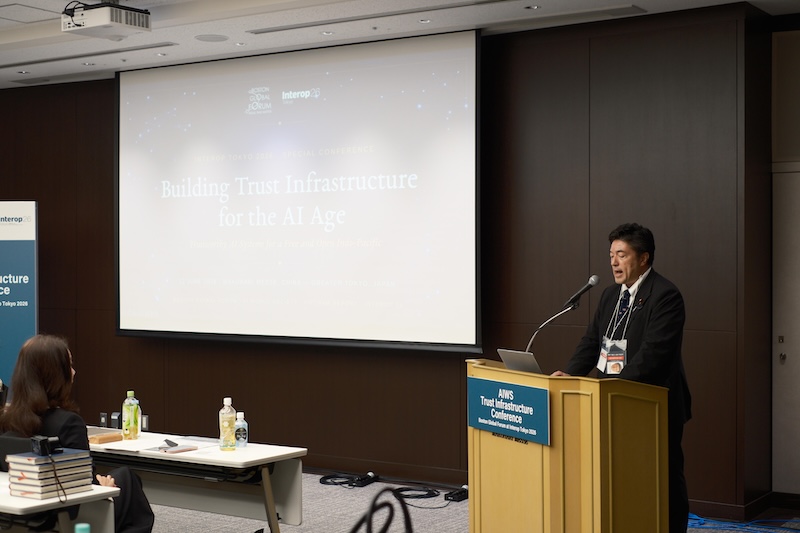
Yasuhide Nakayama, Member of the House of Representatives of Japan and Director of Global South Affairs of the Liberal Democratic Party (LDP), affirmed in his address at the BGF–AIWS Conference at Interop Tokyo 2026 that Japan is ready to take a leading role in the global effort to build Trust Infrastructure for the AI Age—ensuring that artificial intelligence advances human dignity, freedom, democracy, and peace.
A strong supporter of the AIWS Trust Order and the Tokyo Compact, Nakayama emphasized Japan’s unique responsibility to contribute its values, experience, and leadership to shaping a trustworthy future for humanity. He also underscored Japan’s readiness to work with international partners to advance trusted AI governance and strengthen global cooperation in the AI era.
Download the full remarks by Yasuhide Nakayama below: https://bostonglobalforum.org/wp-content/uploads/Nakayama_Tokyo_Remarks_EN.pdf
by Editor BGF | May 26, 2026 | Shinzo Abe Initiative for Peace and Security, News
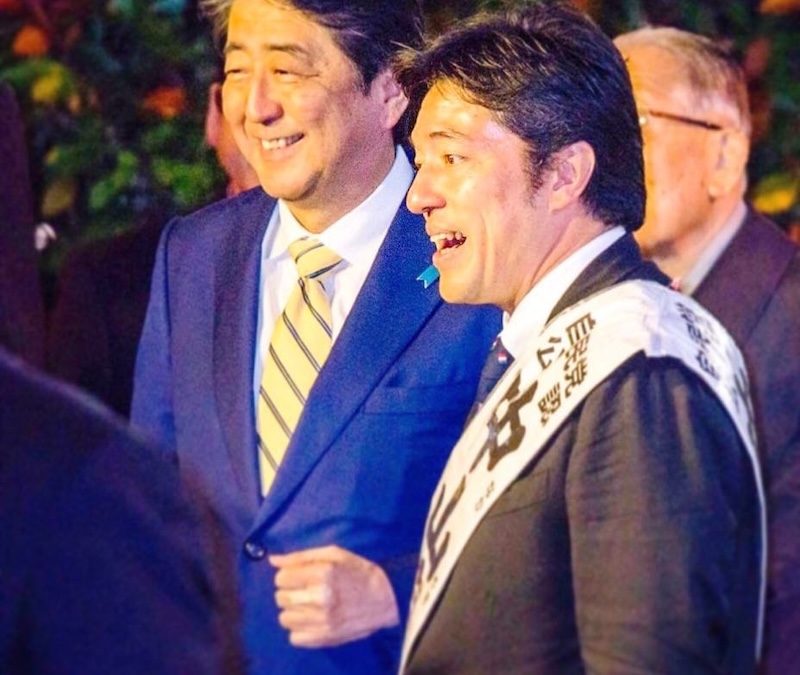
Yasuhide Nakayama, Director of LDP Global South and Representative of the Boston Global Forum in Japan and Taiwan, is playing a leading role in advancing the implementation of AIWS Trust Infrastructure and the upcoming BGF-AIWS conference at Interop Tokyo 2026 on June 12.
Nakayama has strongly supported the vision presented by Nguyen Anh Tuan for Japan to pioneer the AIWS Trust Infrastructure and AIWS Trust Order in the Age of Artificial Intelligence. This effort follows Nguyen Anh Tuan’s Distinguished Keynote Address at the Headquarters of Japan’s Liberal Democratic Party on March 31, 2026.
Under Nakayama’s coordination, the BGF-AIWS conference at Interop Tokyo 2026 will discuss practical pathways to implement:
- AIWS Trust Architecture,
- AIWS Trust Infrastructure,
- AIWS Information Trust Infrastructure,
- AIWS Trust Rating,
- and the AIWS Trust Order.
The conference will also mark the launch of the AIWS Trust Order Board, which will help advance implementation efforts in Japan, the United States, Europe, Vietnam, ASEAN, and the Global South.
Nakayama has also supported the broader vision of AIWS Lumina and the effort to align technological progress with human dignity, wisdom, trust, and civilization.
The June 12 discussions at Interop Tokyo and the National Diet of Japan are expected to become an important milestone in building trustworthy, humane, transparent, and accountable AI systems for humanity.
by Editor BGF | May 26, 2026 | News
Advancing the AIWS Trust Order for Humanity in the Age of Artificial Intelligence
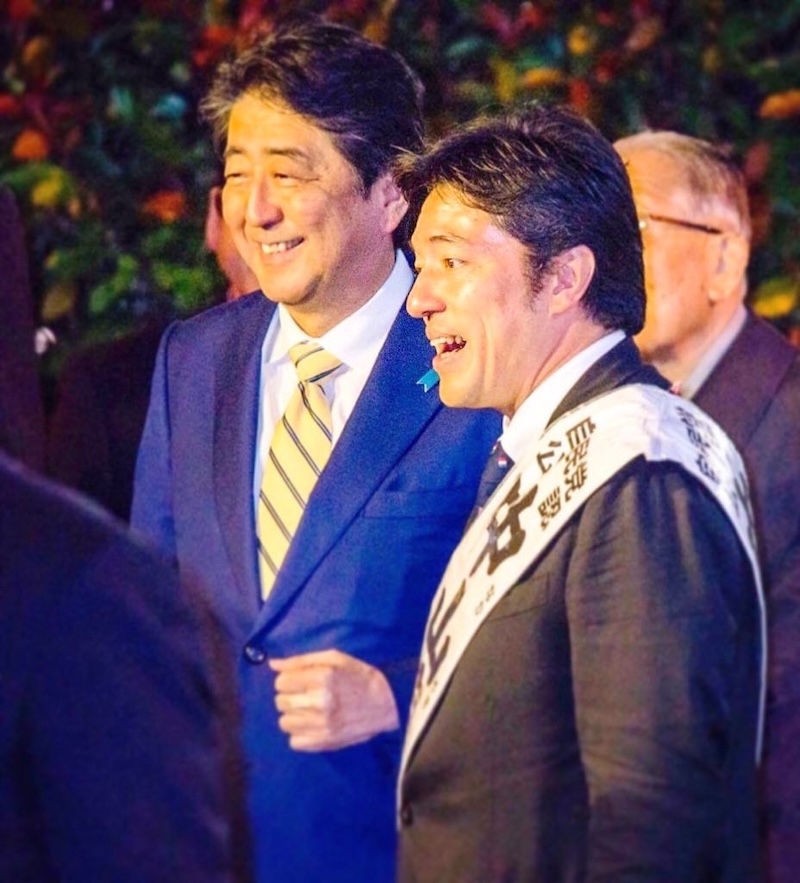
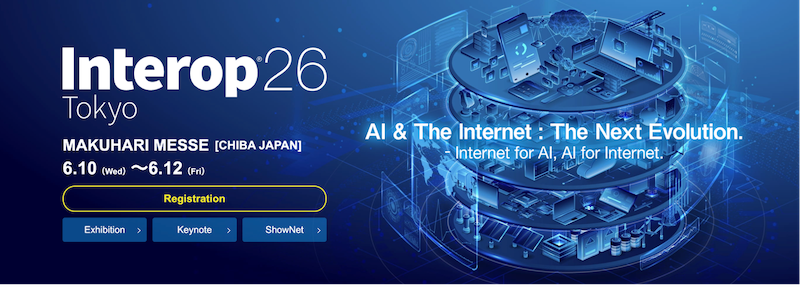
The Boston Global Forum (BGF) and AIWS will convene a special conference on the morning of June 12, 2026, at Interop Tokyo 2026 to discuss the implementation of the AIWS Trust Infrastructure and the AIWS Trust Order for the Age of Artificial Intelligence.
The conference will bring together leaders from government, technology, academia, media, and civil society to advance practical pathways for trustworthy, transparent, accountable, and humane AI systems.
This event continues the vision presented by Nguyen Anh Tuan, Co-Founder, Co-Chair, and CEO of the Boston Global Forum, in his Distinguished Keynote Address at the Headquarters of Japan’s Liberal Democratic Party (LDP) on March 31, 2026, which called on Japan to pioneer the AIWS Trust Infrastructure and AIWS Trust Order for the AI Age.
The Interop Tokyo conference also represents a concrete step toward implementing the moral vision of Pope Leo XIV’s first encyclical, Magnifica Humanitas, issued on May 25, 2026, together with The Lumina Declaration on Human Dignity – For Humanity in the AI Age, issued by Nguyen Anh Tuan and AIWS Lumina on the same day.
The discussions will focus on:
- AIWS Trust Infrastructure,
- AIWS Information Trust Infrastructure,
- AIWS Trust Rating and AIWS Trust Index,
- trustworthy AI governance,
- information integrity and democracy,
- AIWS Lumina as a cultural architecture for humanity,
- and the advancement of the AIWS Trust Order.
A major milestone of the conference will be the introduction of AIWS Trust Standards version 0.0, marking the public beginning of a practical framework for assessing AI systems affecting democracy, education, health, finance, labor, media, and public information.
Later that same day, follow-up discussions will continue at the National Diet of Japan, where leaders and partners will discuss implementation pathways for the United States, Europe, Japan, Vietnam, ASEAN, and the Global South.