by Editor BGF | Mar 29, 2026 | Global Alliance for Digital Governance
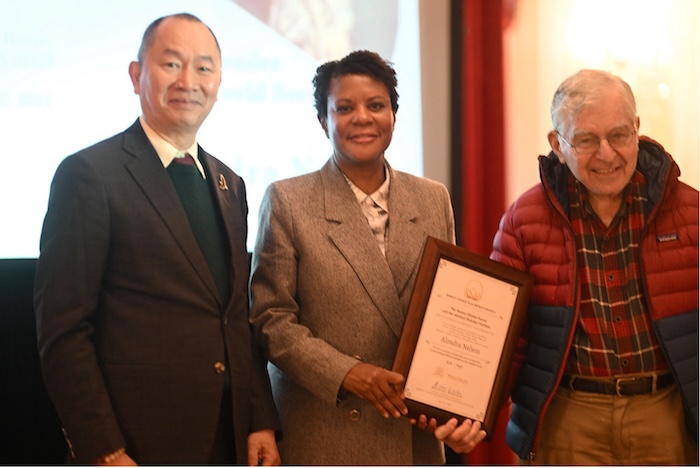
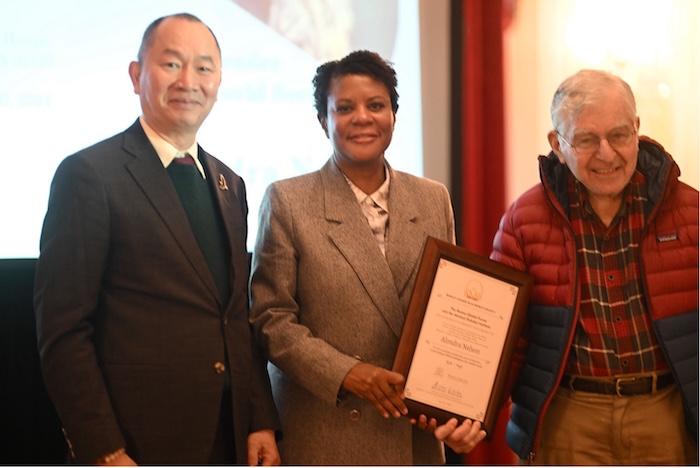
In a significant step toward strengthening trust and transparency in the digital age, Vietnam Report and Media Tenor International have announced their endorsement of the AIWS Trust Architecture and a collaborative partnership to support its implementation.
The partnership aims to bring the AIWS Trust Rating (ATR) and AIWS Trust Index (ATX) into the Vietnamese and global business landscapes. Developed by the Boston Global Forum (BGF), these frameworks represent a pioneering shift in AI governance — moving beyond the evaluation of AI systems based only on performance and efficiency, toward measuring their accountability, safety, transparency, and ethical alignment.
This collaboration reflects a growing international recognition that in the AI Age, trust can no longer remain only a principle or aspiration. It must be translated into measurable standards, practical frameworks, and implementation mechanisms that help governments, businesses, and institutions assess whether AI systems are truly worthy of public confidence.
With Vietnam Report’s strong presence in Vietnam’s business and policy ecosystem, and Media Tenor’s international reputation in media analysis and public trust research, the partnership brings together complementary strengths to help advance the AIWS vision in both regional and global contexts. Their endorsement signals support for building a new architecture of trust in which AI governance is based not only on innovation and competitiveness, but also on responsibility and credibility.
The AIWS Trust Architecture, pioneered by Governor Michael Dukakis and Nguyen Anh Tuan, provides a broader framework for the AI Age, including the AIWS Trust Rating, AIWS Trust Index, and the longer-term development of AIWS Trust Infrastructure. Together, these instruments are designed to help shape a future in which AI serves humanity with trust, responsibility, and respect for human dignity.
By endorsing and working to implement these frameworks, Vietnam Report and Media Tenor are helping open a new chapter in AI governance — one that seeks to establish higher standards for trust in business, society, and the international digital order.
by Editor BGF | Mar 16, 2026 | News, Shaping Futures
In the Age of Artificial Intelligence, the future will not be shaped only by the power of technology, but by the degree to which people, institutions, and nations can trust it.
That is why AIWS Trust Architecture matters. It offers a new way of thinking about AI governance: not as a narrow issue of regulation or ethics alone, but as a full architecture of standards, infrastructure, measurement, and trusted cooperation.
AIWS Trust Architecture can shape the future in several important ways.
First, it can help build trustworthy AI systems. By advancing AIWS Trust Standards, it creates practical expectations for safety, transparency, accountability, resilience, and human dignity. This means AI can be governed not only by ambition, but by responsibility.
Second, it can help build trusted institutions. Through AIWS Trust Infrastructure, trust becomes something operational — supported by monitoring, redress, emergency response, civic safeguards, and continuous learning. In this way, AIWS helps institutions become more credible, more resilient, and more worthy of public confidence.
Third, it can help shape trusted public life. In an era of deepfakes, synthetic media, and information disorder, AIWS Trust Architecture recognizes that democracy cannot survive without trust in information. Its emphasis on trusted civic information, provenance, and deepfake defense makes it highly relevant to the future of democratic resilience.
Fourth, it can help shape trusted international cooperation. Through the idea of the AIWS Trusted Order, the framework points toward a world in which trust is not only domestic, but also international — linking systems, institutions, and partners through shared standards and mutual confidence.
Finally, AIWS Trust Architecture can shape the future because it understands that trust is not only technical. It is also human, cultural, educational, and civilizational. A trustworthy future depends not only on stronger systems, but on stronger memory, stronger knowledge, stronger institutions, and stronger moral imagination.
In that sense, AIWS Trust Architecture is more than a governance framework. It is an effort to help shape the trust architecture of the future.
In the AI Age, those who shape trust will help shape the world.
Please download the AIWS Trust Architecture White Paper here

by Editor BGF | Mar 16, 2026 | News
The AIWS Trust Architecture White Paper is released today. This is not the destination. It is the first step of a journey that will determine whether the AI Age is governed — or merely endured.
History is not made in a single moment. It is made when a single moment sets in motion something that cannot be stopped.
Today, March 15, 2026, the Boston Global Forum and AI World Society release the AIWS Trust Architecture White Paper — the first governance framework to integrate standards, measurement, enforcement, and trusted international cooperation for artificial intelligence into a single coherent architecture. It is the most comprehensive answer yet given to the question that the AI Age demands an answer to: how do we make AI trustworthy, not just powerful?
In the AI Age, trust cannot remain a slogan. It must become standards, infrastructure, measurement, and order.
The White Paper is not the history. The history will be written by what happens next.
It will be written when the first ATR pilot runs in Hanoi in 2026 and independent reviewers confirm that trust can be measured reliably across organizations that did not ask to be measured. It will be written when Japan and Vietnam stand together at APEC 2027 in Phú Quốc and present the first nationally validated AI trust indices to 21 Pacific economies. It will be written when the AIWS Trusted Order has its founding partners, when the first Trust Passport crosses a border, when the first government cites AIWS Information Trust Standards in national legislation, when the first academic paper asks whether a country’s ATX-N score predicts the quality of its democratic institutions.
None of that has happened yet. All of it is possible.
The AI Age will be remembered for what it built. The governance of that age — who shaped it, who was included in it, whether it was worthy of democratic societies — that story is still being written. It begins today, in a White Paper released forty-seven days before its formal presentation at Harvard Loeb House on May 1, 2026, America’s 250th anniversary.
The journey to make history has begun.
Please download the AIWS Trust Architecture White Paper here


by Editor BGF | Mar 16, 2026 | Global Alliance for Digital Governance
AIWS Trust Architecture is pioneering not because it introduces trust as a new concern, but because it integrates into one architecture functions that most leading frameworks address only partially or separately. Its distinctiveness lies in turning trust into a governable chain that connects standards, infrastructure, measurement, civic resilience, human dignity, cultural continuity, and trusted international cooperation.
Key pioneering features include:
- Among the first frameworks to link system-level AI trust scores (ATR), national cooperation metrics (ATX-N), and international standing through the AIWS Trusted Order in a single governance chain
- Distinctive in requiring hallucination rate as a mandatory, independently verified trust metric
- Pioneering in defining Human-in-Command, including categories of decisions that AI should never make regardless of capability
- Among the first frameworks to treat civic information trust — including deepfake defense, provenance, and trusted public communication — as an independently weighted pillar of governance
- Among the first AI governance frameworks to propose an AIWS Trust Emergency Protocol for rapid democratic response to information attacks and trust failures
- Distinctive in providing a structured pathway for emerging economies to enter a trusted AI order
- Distinctive in introducing an AIWS Trust Passport as a portable trust credential for systems, institutions, and trusted cooperation
- Distinctive in establishing an AIWS Trust Ledger as a traceable institutional memory of certification, incidents, corrections, and renewal
- Pioneering in advancing an AIWS Civic Trust Safeguard Layer to protect trusted civic information, democratic legitimacy, and the epistemic commons
- Pioneering in creating an AIWS Historical Memory, Education, and Knowledge Trust Layer to safeguard educational integrity, historical continuity, and responsible knowledge stewardship
- Distinctive in proposing an AIWS Trust Dividend and Incentive Layer so that trust improvement becomes a rewarded capability rather than only a compliance burden
- Pioneering in adding an AIWS Culture and Humanity Layer that recognizes trust in the AI Age as not only technical and institutional, but also cultural, moral, and civilizational
Taken together, these features make AIWS Trust Architecture more than a framework of principles. They position it as a practical architecture for making trust in AI measurable, actionable, publicly visible, culturally grounded, and internationally scalable.
“What makes AIWS Trust Architecture pioneering is that it treats trust not only as a principle, but as a full architecture of standards, infrastructure, measurement, civic protection, historical memory, cultural humanity, and trusted order.” Said Nguyen Anh Tuan, Co-Chair and CEO of BGF, at the launch of the AIWS Trust Architecture White Paper.
Please download the AIWS Trust Architecture White Paper here

by Editor BGF | Mar 16, 2026 | News
On March 15, 2026, the Boston Global Forum (BGF) introduced AIWS Trust Architecture for the AI Age as a pioneering framework for democratic AI governance.
The initiative addresses one of the defining challenges of the era: how to ensure that artificial intelligence is not only powerful, but also trustworthy, accountable, and aligned with human dignity and democratic legitimacy.
What distinguishes AIWS Trust Architecture is that it goes beyond ethical principles or general recommendations. It brings together a full governance structure composed of AIWS Trust Standards, AIWS Trust Infrastructure, AIWS Trust Rating / Trust Index, and the AIWS Trusted Order. In this framework, trust is treated not as a slogan, but as something that can be defined, operationalized, measured, audited, and scaled.
BGF emphasized that the architecture is pioneering because it integrates dimensions often treated separately in current AI debates. These include standards for trustworthy AI, operational trust infrastructure, rating and index mechanisms, trusted civic information and deepfake defense, emergency trust response, public accountability, and trust in historical memory, education, and knowledge.
According to BGF, the defining claim of AIWS Trust Architecture is not that it replaces leading frameworks such as the EU AI Act, NIST AI RMF, ISO/IEC 42001, or the UNESCO Recommendation. Rather, it brings together, in one integrated architecture, functions that those leading frameworks address only partially or separately.
With this initiative, BGF positions AIWS Trust Architecture as one of the pioneering efforts to help shape the trust architecture of the AI Age.
Please download the AIWS Trust Architecture White Paper here
by Editor BGF | Mar 15, 2026 | Papers & Reports
The AI Age is transforming not only technology, but the foundations of governance, legitimacy, and social trust. Artificial intelligence is increasingly embedded in healthcare, education, finance, government, civic information, public communication, and national security. As AI becomes infrastructure for all infrastructure, the central challenge of governance is no longer simply how to accelerate innovation, but how to make AI trustworthy, accountable, beneficial, and worthy of public confidence.
This white paper proposes a democratic trust architecture for the AI Age built on three connected layers:
• AIWS Trust Standards
• AIWS Trust Infrastructure
• AIWS Trusted Order
Access the full white paper or read the introduction:
Full White Paper: [Download here]
Introduction: [Read here]
by Editor BGF | Sep 24, 2026 | News
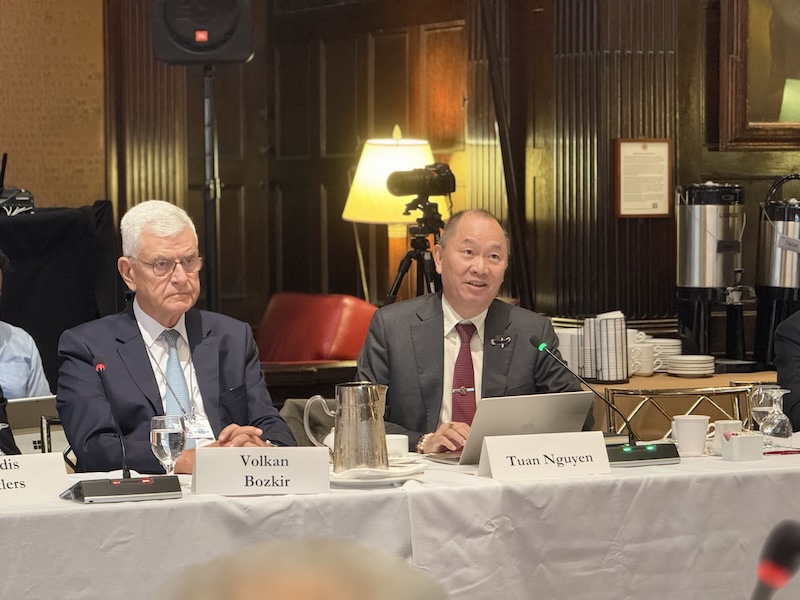
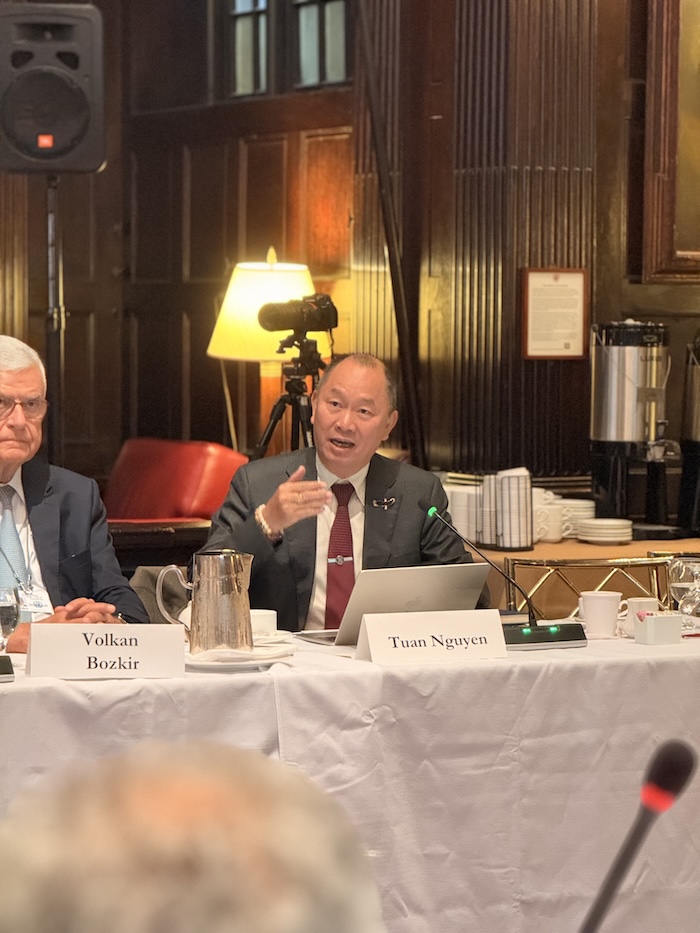
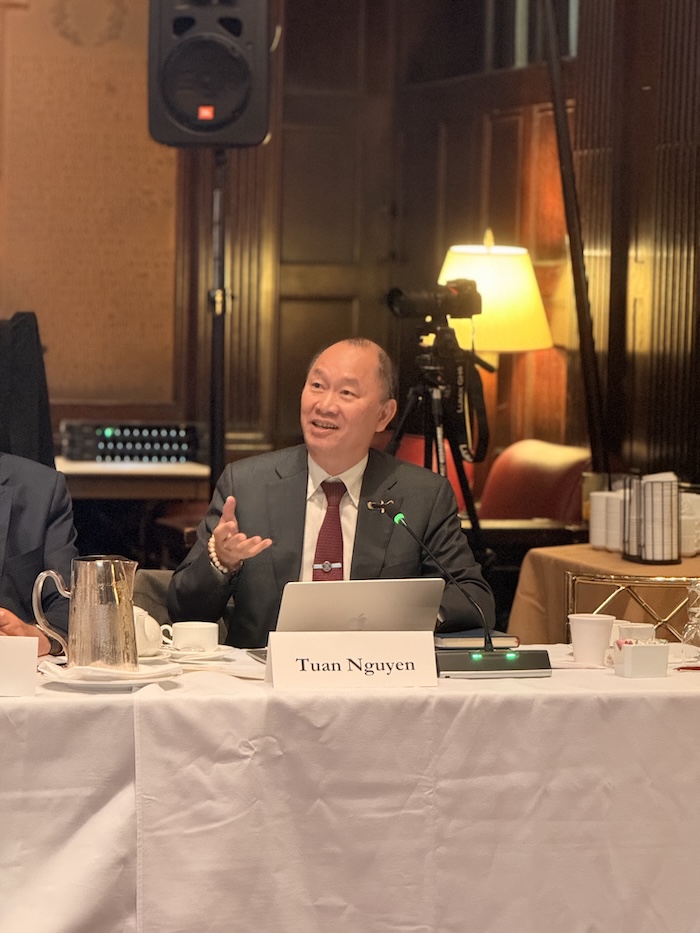
At the panel “AI, Digital Sovereignty and the Future of Global Governance,” held during the XXXVII NGIC High-Level Meeting at the Harvard Club of New York within the framework of the United Nations General Assembly, the Boston Global Forum CEO called on international leaders to build trusted institutions, constitutional foundations, and a civilization of Human–AI Co-Creation.
NEW YORK, September 24, 2026 — Nguyen Anh Tuan, Co-Founder, Co-Chair, and CEO of the Boston Global Forum and Founder and Chief Architect of AIWS, presented a concrete agenda for action in the Age of Artificial Intelligence at the XXXVII High-Level Meeting of the Nizami Ganjavi International Center.
The conference took place on September 23–24 at the Harvard Club of New York, within the framework of the high-level events of the United Nations General Assembly.
Speaking at the panel “AI, Digital Sovereignty and the Future of Global Governance,” Nguyen Anh Tuan urged governments, international institutions, universities, technology organizations, and civic leaders to move beyond warnings about artificial intelligence and begin building the structures required to ensure that AI serves humanity.
The panel was moderated by Ambassador Zlatko Lagumdžija, Permanent Representative of Bosnia and Herzegovina to the United Nations and former Prime Minister of Bosnia and Herzegovina.
The distinguished speakers included:
- Kerry Kennedy, President of Robert F. Kennedy Human Rights;
- Bernardo Mariano Junior, Chief Information Technology Officer and Assistant Secretary-General, Office of Information and Communications Technology at United Nations Headquarters;
- Kolinda Grabar-Kitarović, President of Croatia from 2015 to 2020;
- Nguyen Anh Tuan, Co-Founder, Co-Chair, and CEO of the Boston Global Forum;
- Susan Ness, former Commissioner of the U.S. Federal Communications Commission, Nonresident Senior Fellow at the Atlantic Council, and Distinguished Fellow at the Annenberg Public Policy Center;
- Jerome Glenn, Co-Founder and CEO of The Millennium Project.
In his remarks, Nguyen Anh Tuan introduced America at 250: A Beacon for the AI Age as a source of practical lessons for the future: power must be restrained by constitutional principles, freedom must be sustained by trusted institutions, and citizens must remain the authors of their common future.
He then presented three major programs through which the Boston Global Forum is translating these principles into action:
- AIWS Trust Infrastructure — public infrastructure designed to establish trusted identity, bounded authority, Proof of Answerability, transparency, and meaningful human command over AI systems.
- The Constitution for Humanity in the Age of Artificial Intelligence — an open global co-creation process founded on human dignity, human sovereignty, and the principle of Human-in-Command.
- AIWS Civilization — a comprehensive architecture for a civilization of Human–AI Co-Creation, created to advance humanity intellectually, creatively, morally, and institutionally as artificial intelligence becomes more powerful.
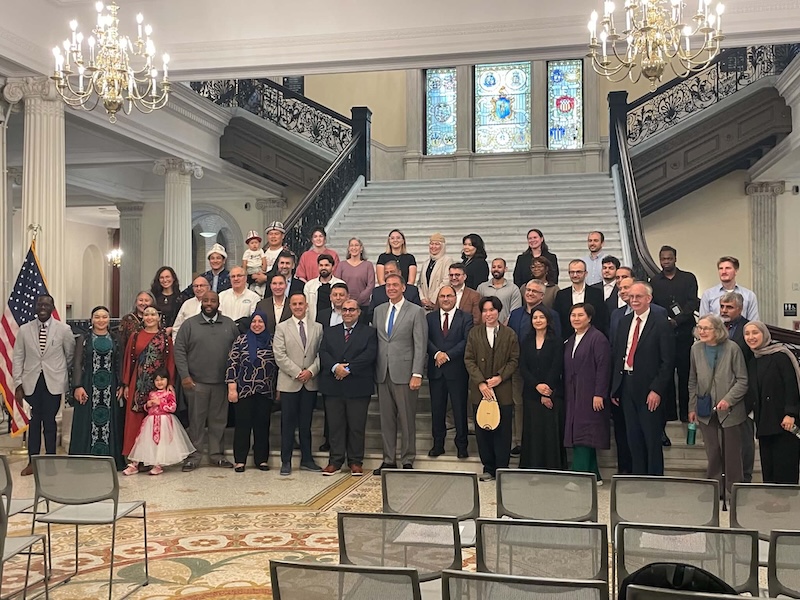
Nguyen Anh Tuan also highlighted the launch of the AIWS Human–AI Co-Creation Movement at the Massachusetts State House on September 23, 2026, under the principle:
Humanity leads. AI elevates. Together, we create.
He invited NGIC and leaders from around the world to join the AIWS Trust Infrastructure, contribute to the Constitution, establish Human–AI Co-Creation initiatives, and help identify and bring together the pioneers capable of leading humanity responsibly into the AI Age.
The following is the full text of his remarks.
FROM AMERICA AT 250 TO AIWS CIVILIZATION: A CALL TO ACTION
Remarks by Nguyen Anh Tuan
Co-Founder, Co-Chair, and CEO, Boston Global Forum
XXXVII NGIC High-Level Meeting
Panel: “AI, Digital Sovereignty and the Future of Global Governance”
Harvard Club of New York
September 24, 2026
Excellencies, distinguished leaders, Ambassador Lagumdžija, and friends,
We have heard many warnings about artificial intelligence. Today, I would like to speak not about what we fear, but about what we can build together — beginning now. Digital sovereignty will not be secured by declarations. It will be secured by what we build.
Let me begin with our book, America at 250: A Beacon for the AI Age. This is not simply a book commemorating America. It carries a solution for the AI Age: power must be restrained by constitutional principles; freedom must be sustained by trusted institutions; and citizens must remain the authors of their common future.
The Boston Global Forum is turning this lesson into three concrete programs.
First, the AIWS Trust Infrastructure. Trust cannot remain a promise made by those who build powerful systems. It must become public infrastructure. AI agents need trusted identity, clearly bounded authority, and Proof of Answerability. Frontier capabilities must be registered. AI incidents must be shared. Governments, companies, and AI systems must all remain verifiable and under meaningful human command.
We invite governments, institutions, and technology organizations represented here to become partners and pilot sites for the AIWS Trust Infrastructure.
Second, the Constitution for Humanity in the Age of Artificial Intelligence. It begins with human dignity, human sovereignty, and Human-in-Command. But this Constitution will not be written by a few and presented to the world afterward. It is open now — while it is being built. We invite NGIC, its members, governments, universities, experts, and citizens to become co-creators before it is proclaimed at Loeb House, Harvard University, on April 27, 2027.
Third, AIWS Civilization. Through Beacon Papers No. 8, we introduced the world’s first comprehensive architecture for a civilization of Human–AI Co-Creation. Its purpose is not merely to make AI safer. It is to enable humanity to advance — intellectually, creatively, morally, and institutionally — while AI becomes more powerful.
Yesterday, at the Massachusetts State House, we launched the AIWS Human–AI Co-Creation Movement. Its principle is clear:
Humanity leads. AI elevates. Together, we create.
We invite every country, university, city, cultural community, and organization represented here to create its own Human–AI Co-Creation initiative — preserving human identity and cultural diversity while expanding human capability.
To carry these solutions into action, the Boston Global Forum has announced Ten Years of AIWS, a program culminating on April 27, 2027. We are also bringing together the Hundred Pioneers of the AI Age: the fifty honorees of America 250: AI Pioneers and up to fifty Founding World AI Pioneers.
I therefore invite NGIC and every leader in this room to act with us: join the AIWS Trust Infrastructure; help write the Constitution; establish Human–AI Co-Creation initiatives; and bring forward the pioneers who can lead this work.
The AI Age will not wait for institutions to catch up. We have enough warnings. We now need trusted structures, constitutional foundations, and courageous human leadership.
Let us build them together — so that artificial intelligence serves peace, freedom, human dignity, and the advancement of humanity.
Thank you.

by Editor BGF | Sep 23, 2026 | News
by Editor BGF | Sep 13, 2026 | News
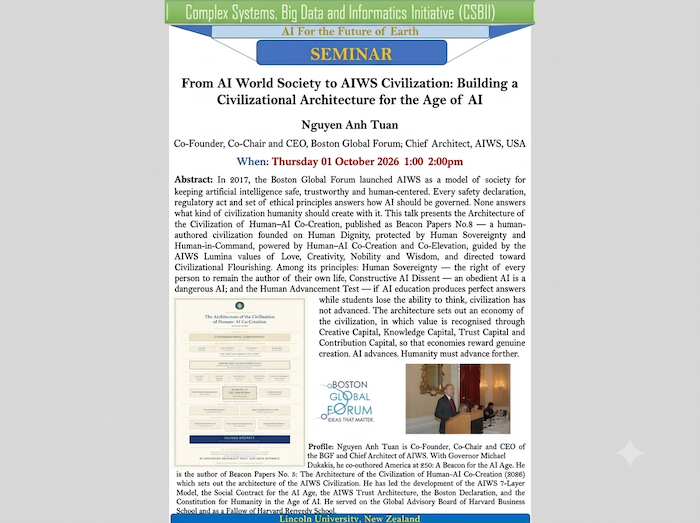
From AI World Society to AIWS Civilization: Building a Civilizational Architecture for the Age of AI
On October 1, 2026, Nguyen Anh Tuan, Co-Founder, Co-Chair and CEO of the Boston Global Forum and Chief Architect of AIWS, will deliver a seminar at Lincoln University, New Zealand, tracing the development of AIWS from a model for governing artificial intelligence to a comprehensive architecture for civilization in the AI Age.
The Boston Global Forum launched the AI World Society in 2017 to advance a future in which AI is safe, trustworthy, human-centered, and accountable. As artificial intelligence has grown from a powerful technology into an infrastructure shaping economies, governments, knowledge, culture, and human life, the central question has also become larger. Humanity must determine not only how AI should be governed, but what kind of civilization it will create with AI.
The seminar will present AIWS Civilization—the Civilization of Human–AI Co-Creation—as the world’s first comprehensive architecture for a civilization in the Age of Artificial Intelligence. Founded on Human Dignity, protected by Human Sovereignty and Human-in-Command, and supported by AIWS Trust Infrastructure, the architecture enables human beings and AI to co-create while ensuring that humanity remains the author of values, the holder of legitimate authority, and the maker of its own future.
Nguyen Anh Tuan will also introduce the Human Advancement Test, a defining measure of progress in the AI Age:
If AI produces better answers while human beings lose the ability to think, judge, and create, civilization has not advanced.
AIWS Civilization therefore seeks more than increasingly capable machines. It calls for AI to strengthen human intelligence, creativity, responsibility, and wisdom, guided by the AIWS Lumina values of Love, Creativity, Nobility, and Wisdom.
The seminar is presented by Lincoln University’s Complex Systems, Big Data and Informatics Initiative under its AI for the Future of Earth program.
Thursday, October 1, 2026
1:00–2:00 p.m.
Lincoln University, New Zealand
AI advances. Humanity must advance further.